Foucault: The Birth of Power
Douban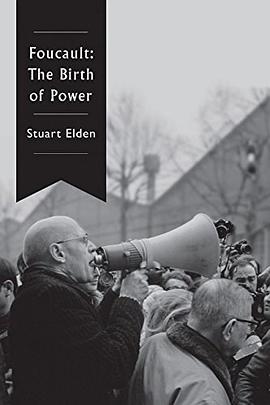
Stuart Elden
overview
Michel Foucault s The Archaeology of Knowledge was published in March 1969; Discipline and Punish in February 1975. Although only separated in time by six years, the difference in tone is stark: the former is a methodological treatise, the latter a call to arms. What accounts for the radical shift in Foucault s approach?
Several transitions took place during this period. Foucault returned to France from Tunisia, first to the experimental University of Vincennes and then to a prestigious chair at the Collège de France. Tunisia was a political awakening for him, and he returned to a France much changed by the turmoil of 1968. He quickly became involved in activist work, particularly concerning prisons but also around health issues such as abortion rights, and in his seminars he built research teams to conduct collaborative work, often around issues related to his lectures and activism.
Foucault: The Birth of Power makes use of his Collège de France courses, newly available documents at the Bibliothèque Nationale de France, as well as archival material relating to his activism and collaborative research, to provide a detailed intellectual history of Foucault as writer, researcher, lecturer and activist. Through a careful reconstruction of Foucault s work and preoccupations, Elden shows that, while Discipline and Punish may be the major published output of this period, it rests on a much wider range of concerns and projects. This is an essential companion to Foucault s Last Decade(Polity, 2016).
contents
Acknowledgements
Abbreviations
Introduction: Out of the 1960s
1. Measure: Greece, Nietzsche, Oedipus
2. Inquiry: Revolt, Ordeal, Proof
3. Examination: Punishment, War, Economy
4. Madness: Power, Psychiatry and the Asylum
5. Discipline: Surveillance, Punishment and the Prison
6. Illness: Medicine, Disease and Health
Conclusion: Towards Foucault’s Last Decade
Notes
Index