Barbara Hammer — Director (14)
Tender Fictions (1995) [Movie] WikiData TMDB IMDb
Tender Fictions
director: Barbara Hammer actor: Barbara Hammer
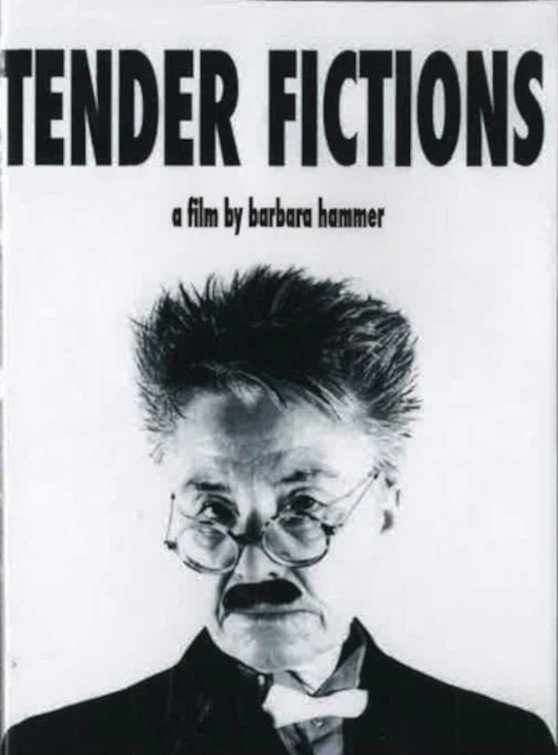
Childhood stories of the artist as a young lesbian and intimate tales of the lesbian as a young artist underscore the filmmaker's life of performances. With a Swiss army knife she robs an American Express Bank in Morocco, accosts a shepherd in a field on International Women's Day, and tap dances on Shirley Temple's star on Hollywood Boulevard. This child movie star was the ideal by which Hammer's ambitious mother measured her own Barbie. Grandma, already a cook for Lillian Gish in Hollywood, introduced the cute, loquacious child and her mother to D.W. Griffith. Lesbian autobiography is a slender genre, so Hammer draws from general culture studies for critique and to provide an ironic edge to the synthesized "voices of authority".
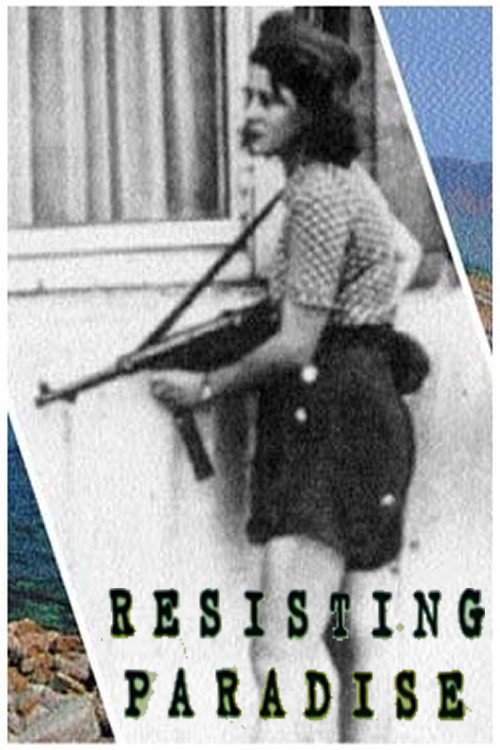
Resisting Paradise (2003) [Movie] WikiData IMDb TMDB
Resisting Paradise
director: Barbara Hammer actor: Barbara Hammer
other title: 저항하는 파라다이스
Hammer’s 2003 film Resisting Paradise, which deals with the concept of art as a tool of political resistance, was especially fascinating to me. Hammer, who was doing a painting residency in Cassis, France, when war broke out in Kosovo, found herself questioning the validity of art in the face of political conflict and unrest. She began exploring the history of the French Resistance in Cassis, and used that as a chance to reflect on how Cassis’ artistic community, both those who were threatened by the Nazi occupation of France and those who were able to remain relatively neutral, reacted to the atrocities of the Second World War.
History Lessons (2000) [Movie] IMDb TMDB
History Lessons
director: Barbara Hammer
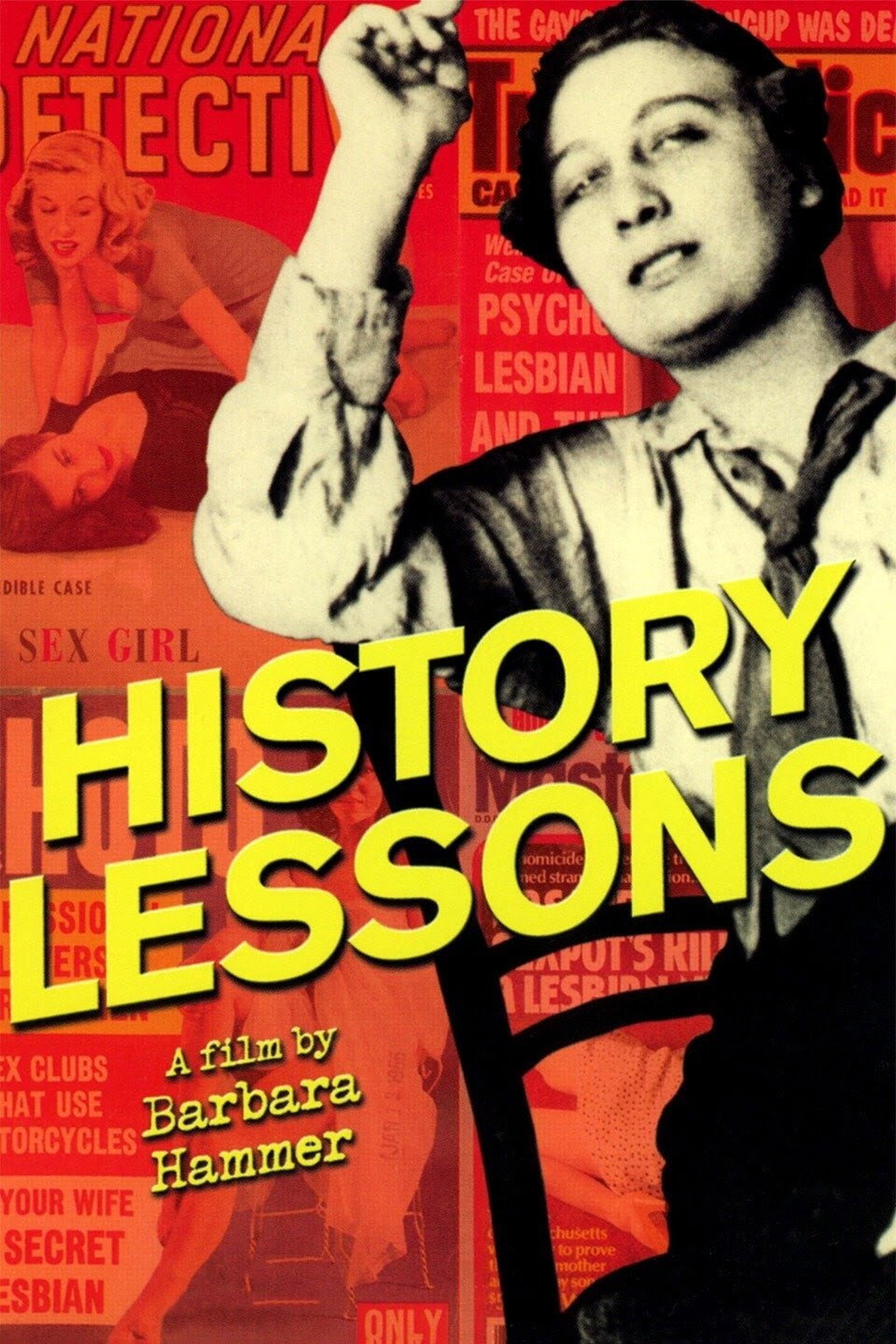
A montage of film clips and stills calling all lesbians to come out and celebrate who they are. In a trilogy of experimental documentaries, director Barbara Hammer rewrites history by inserting lesbians and lesbian imagery throughout educational films, newsreels, medical footage and more from the past century.
多重高潮 (1976) [Movie] Douban
Multiple Orgasm
director: Barbara Hammer
other title: Multiple Orgasm
A hand plays with a vagina as the same scene drifts over a sea of erotic rock formations.
Superdyke (1975) [Movie] WikiData IMDb Douban TMDB
Superdyke
other title: 超级黛克
A comedy about a troop of shield-bearing Amazons who take over city institutions before relaxing in the country. "Superdyke" takes women into the streets when Barbara arms of a platoon of vagina warriors with Amazon shields in an attempt to overthrow San Francisco. They march through City Hall, usurp the bus lines, demythologiz the consumer mentality at Macy's (to the recorded astonishment of casual shoppers), and wander through the erotic art museum. Barbara's frenetic handheld lens catches the startled reactions and the glee of the participants. SUPERDYKE has a home-movie quality to it, but its committed and loose moments in the playground confirm its comic rationale.
Welcome to This House (2015) [Movie] Douban IMDb TMDB
Welcome to This House
other title: 비숍의 집
Welcome To This House, a feature documentary film on the homes and loves of poet Elizabeth Bishop, is about life in the shadows, and the anxiety of art making without full lesbian disclosure. Hammer filmed in Bishop's best loved homes in the U.S., Canada, and Brazil, believing that buildings and landscapes bear cultural memories. Interviews with poets, friends,and scholars provide missing documents of numerous female lovers. Bishop's intimate poems and the creative music composition by Joan La Barbara bring the poet into our lives with new facts and unexpected details.
双重能量 (1978) [Movie] Douban
Double Strength
director: Barbara Hammer
other title: Double Strength
Barbara Hammer interviews a lesbian couple, both gymnasts and performance artists and photographs them doing their routines in the nude.
audience (1982) [Movie] Douban
audience
director: Barbara Hammer actor: Barbara Hammer
other title: 观众
Barbara Hammer’s Audience (1981) is a fascinating deep cut from the director’s prodigious filmography. Relatively raw in its design, this 16mm diary of audience reactions at retrospectives of Hammer’s work in San Francisco, London, Toronto, and Montreal in the early 1980s bears none of the distinctive visual flourishes and essayistic form one usually finds in her filmmaking.
The Female Closet (1998) [Movie] Douban
The Female Closet
director: Barbara Hammer
other title: 櫃中女人
本片紀錄三位女性藝術家的同性戀生活,於封閉與半封閉生活提出人文生活的詰問,從她們的生活及作品獲得啟發,背景橫跨一整個世紀。
Devotion: A Film About Ogawa Productions (2002) [Movie] Douban IMDb WikiData TMDB
Devotion: A Film About Ogawa Productions
director: 芭芭拉·汉默 actor: 大岛渚 / Sumiko Uno
other title: 奉献 / 解構小川紳介 (台)
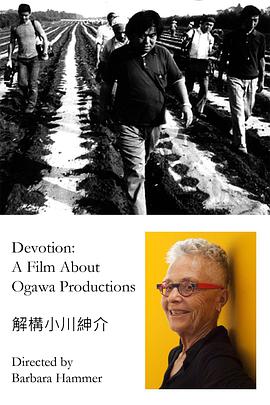
Devotion investigates the extremely complex and heirarchical relationships among a committed group of Japanese filmmakers who dedicated up to 30 years of their lives making films for one man-Ogawa Shinsuke. Members of Ogawa Pro filmed the student movement of the late 60's; the fight by farmers to save their land from government confiscaton for the Narita airport at Sanrizuka; and the village life of a small farming community, Magino Village, in northern Japan. These heartbreaking and sometimes funny stories have never been told on film before. Rare footage, stills, and diaries with interviews with Oshima Nagisa, Hara Kazuo and Robert Kramer make this historical inquiry visually exciting as well as valuable.
Dyketactics (1974) [Movie] Douban IMDb WikiData TMDB
Dyketactics
director: Barbara Hammer actor: Barbara Hammer
other title: 拉拉战术 / 레즈비언 사랑의 기술
Born in Los Angeles but a New Yorker by choice, Barbara Hammer is a whole genre unto herself. Her pioneering 1974 short film Dyketactics, a four-minute, hippie wonder consisting of frolicking naked women in the countryside, broke new ground for its exploration of lesbian identity, desire and aesthetic.
Nitrate Kisses (1992) [Movie] Douban TMDB IMDb WikiData
Nitrate Kisses
director: 芭芭拉·汉默 actor: Jerre / Maria
other title: 硝酸盐之吻 / 질산염 키스
Essay documentary explores eroded emulsions and images for lost vestiges of lesbian and gay culture. First feature by a pioneer of lesbian cinema, Hammer weaves gay and lesbian couples with footage that unearths the forbidden and invisible history of a marginalized people.
后玛雅黛伦的诗 (2011) [Movie] Douban TMDB
Maya Deren's Sink
other title: Maya Deren's Sink / 後瑪雅黛倫的詩
Maya Deren's Sink, a 30 minute experimental film, is an evocative tribute to the mother of avantgarde American film. The film calls forth the spirit of one who was larger than life as recounted by those who knew her. Teiji Ito's family, Carolee Schneemann and Judith Malvina, float through the homes recalling in tiny bits and pieces words of Deren's architectural and personal interior space. Clips from Maya Deren's films are projected back into the spaces where they were originally filmed appearing on the floorboard, furniture, and in the bowl of her former sink. Fluid light projections of intimate space provide an elusive agency for a filmmaker most of us will never know as film with its imaginary nature evokes a former time and space.
Lover Other (2006) [Movie] Douban IMDb TMDB
Lover Other
director: Barbara Hammer actor: Kathleen Chalfant / Alana Chazan
other title: 另類.愛人.同志 / The Story of Claude Cahun and Marcel Moore
Barbara Hammer's collage of photographs, documents, interviews, lyrical passages and dramatised scenes recalls the lives of two surrealist artists and lesbian Resistance fighters whose work and whose fate has largely been forgotten: Claude Cahun (whose real name was Lucie Schwob, 1894–1954) and her girlfriend and lover Marcel Moore (Suzanne Malherbe, 1892–1972).
Claude Cahun (writer Marcel Schwob's niece) and Marcel Moore were half-sisters. They fell in love around 1910 and were to spend their whole lives together; they are commonly regarded as the first lesbian couple to live and work together as artists. After studying in Oxford and at the Sorbonne, Claude Cahun made a name for herself as a writer and photographer in Paris. Her self-portraits in particular, wearing an array of different masks and costumes, were to make her famous, while Marcel Moore began to gain a reputation as an illustrator and draughtswoman. In 1932/33 they joined the anti-fascist artists association AEAR (Association des Ecrivains et Artistes Révolutionnaires), and in 1937 they moved to Jersey, one of the Channel Islands.
When the Germans occupied Jersey in 1940, the two girlfriends embarked upon a campaign of artistic resistance, putting up posters, writing mani-festos and pamphlets with which they hoped to incite the occupying forces to mutiny. In 1944, both women were arrested by the Gestapo and sentenced to death; the majority of their artistic output was destroyed. They were released from imprisonment after the island was liberated in May, 1945. Claude Cahun was never to recover from the experience.