Milo O'Shea — Actor (10)
Opportunity Knocks (1990) [Movie] TMDB IMDb WikiData
Opportunity Knocks
other title: 사랑 사기꾼 / Der Unglücksritter
Eddie and Lou are a couple of two-bit con men on the lam from a loan shark. They hide out in someone's house and they hear on the answering machine that (A) the owner of the house is out of the country for a month or two and (B) the housesitter supposed to watch the house for the absent owner won't be able to watch the house due to a new job in another part of the country. This provides for a pretty nifty arrangement for Eddie and Lou...until the relatives of the house owner drop by to visit. Eddie quickly adopts the guise of the person supposedly housesitting for the owner, and the shenanigans start from there.
Carry On Cabby (1963) [Movie] TMDB IMDb WikiData
Carry On Cabby
director: Gerald Thomas actor: Sidney James / Hattie Jacques
other title: Ist ja irre - Diese müden Taxifahrer / 的哥也瘋狂
Speedee Taxis is a great success, which means its workaholic owner Charlie starts neglecting Peggy, his wife. Suddenly a fleet of rival taxis appears from nowhere and start pinching all the fares. The rivals are Glamcabs, and they have a secret weapon. All their drivers are very attractive women! Who's behind Glamcabs? It's open warfare and only one fleet can survive!
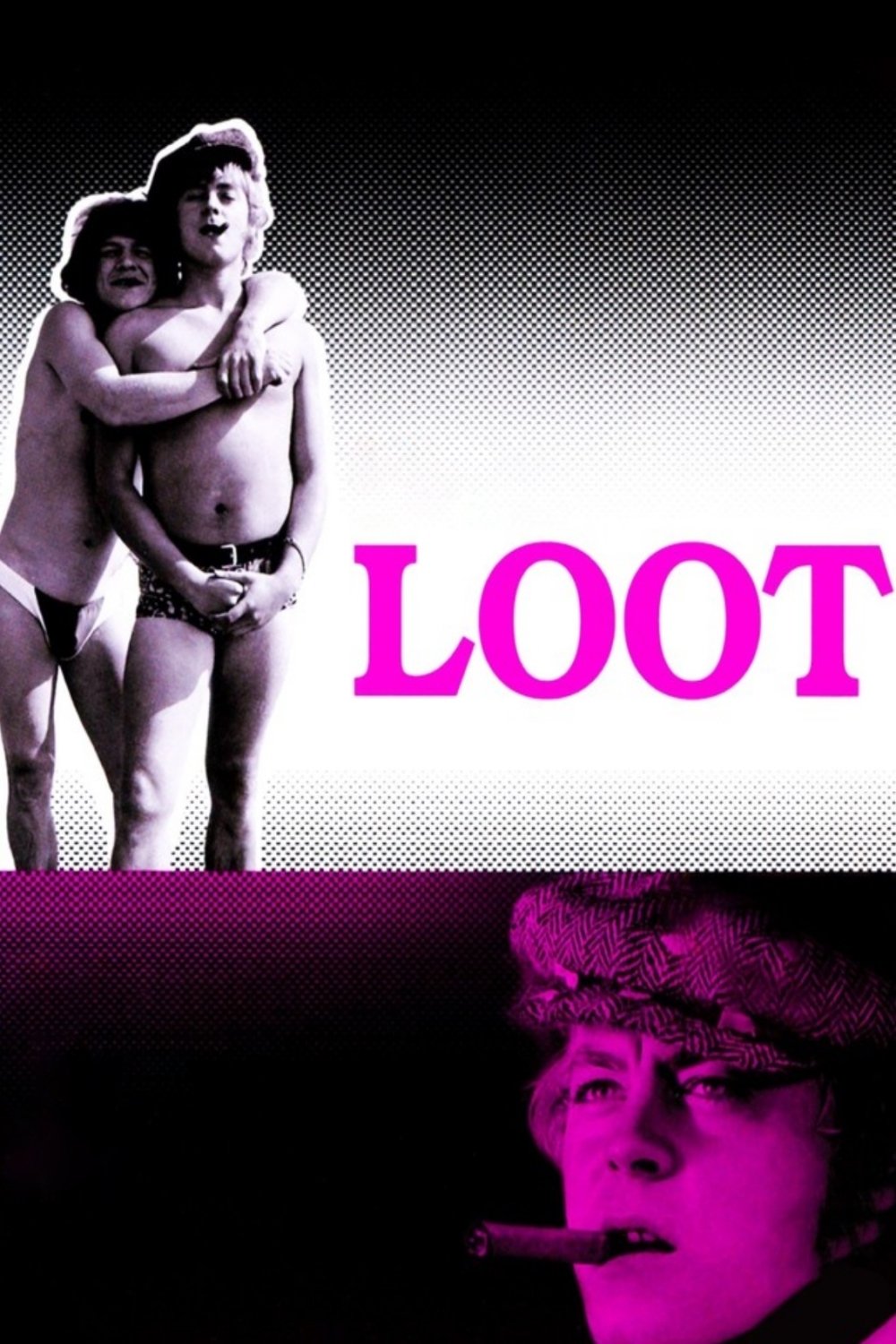
Loot (1970) [Movie] IMDb WikiData TMDB
Loot
other title: 루트 / Die größten Gauner weit und breit
Two bank robbers, Dennis and Hal, are on the run from the police after a successful heist. Needing somewhere to hide the loot, they turn to a funeral parlour where they stash the cash in Hal's recently-deceased mother's coffin. Taking the coffin, they turn to Hal's father and hide it in the bathroom of his hotel. Before long the hotel is host to the eccentric Inspector Truscott.
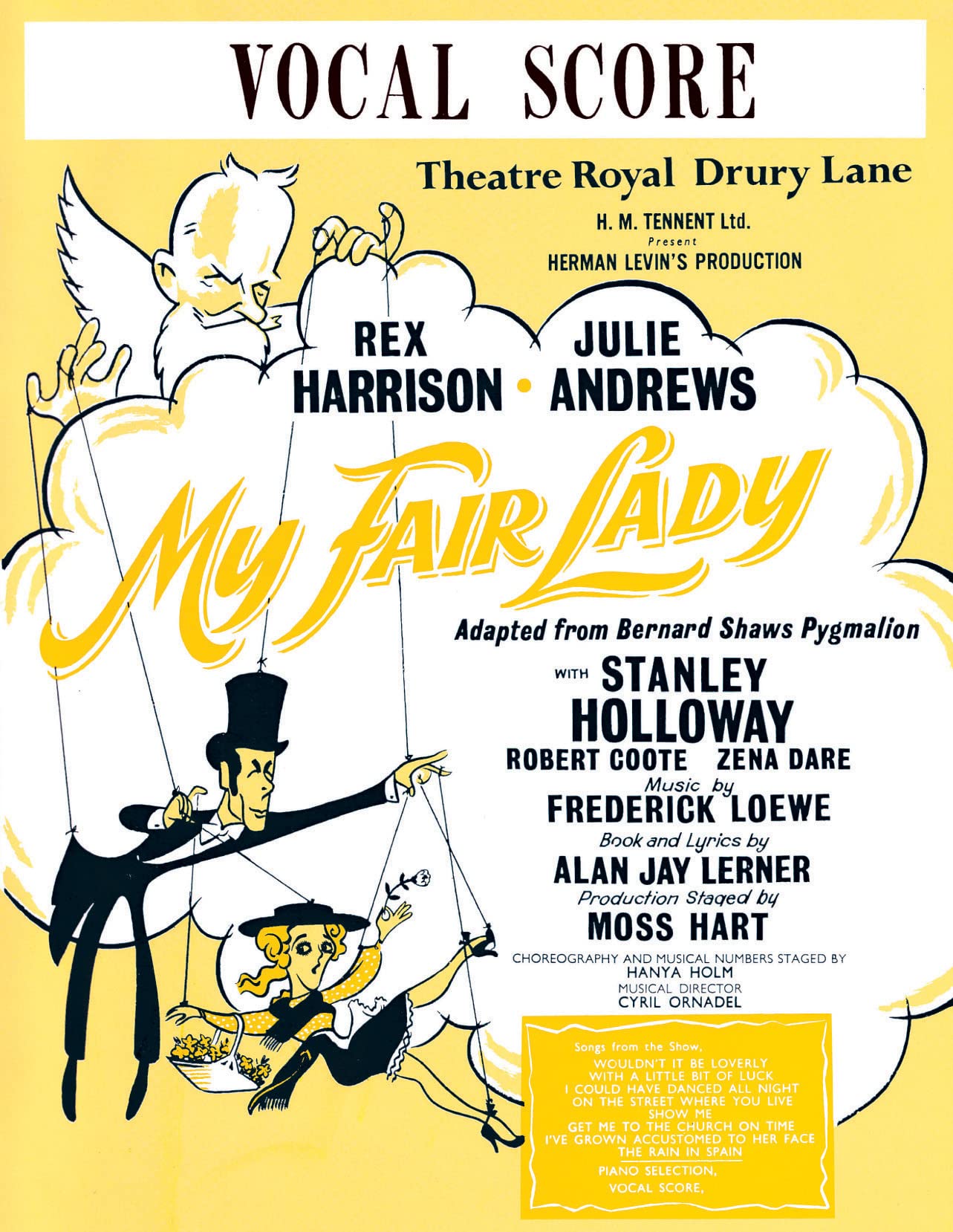
窈窕淑女 1981 Broadway Revival版 [Performance] Douban
part of Performance: 窈窕淑女
language: english 英语 theater: Uris Theatre director: Patrick Garland
other title: 1981 Broadway Revival版 playwright: Alan Jay Lerner composer: Fredrick Loewe actor: Nancy Ringham / Rex Harrison
Act I
In Edwardian London, Eliza Doolittle is a flower girl with a thick Cockney accent. The noted phonetician Professor Henry Higgins encounters Eliza at Covent Garden and laments the vulgarity of her dialect ("Why Can't the English?"). Higgins also meets Colonel Pickering, another linguist, and invites him to stay as his houseguest. Eliza and her friends wonder what it would be like to live a comfortable life ("Wouldn't It Be Loverly?").
Eliza's father, Alfred P. Doolittle, stops by the next morning searching for money for a drink ("With a Little Bit of Luck"). Soon after, Eliza comes to Higgins's house, seeking elocution lessons so that she can get a job as an assistant in a florist's shop. Higgins wagers Pickering that, within six months, by teaching Eliza to speak properly, he will enable her to pass for a proper lady.
Eliza becomes part of Higgins's household. Though Higgins sees himself as a kindhearted man who merely cannot get along with women ("I'm an Ordinary Man"), to others he appears self-absorbed and misogynistic. Eliza endures Higgins's tyrannical speech tutoring. Frustrated, she dreams of different ways to kill him ("Just You Wait"). Higgins's servants lament the stressful atmosphere ("The Servants' Chorus").
Just as Higgins is about to give up on her, Eliza suddenly recites one of her diction exercises in perfect upper-class style ("The Rain in Spain"). Though Mrs Pearce, the housekeeper, insists that Eliza go to bed, she declares she is too excited to sleep ("I Could Have Danced All Night").
For her first public tryout, Higgins takes Eliza to his mother's box at Ascot Racecourse ("Ascot Gavotte"). Though Eliza shocks everyone when she forgets herself while watching a race and reverts to foul language, she does capture the heart of Freddy Eynsford-Hill. Freddy calls on Eliza that evening, and he declares that he will wait for her in the street outside Higgins' house ("On the Street Where You Live").
Eliza's final test requires her to pass as a lady at the Embassy Ball. After more weeks of preparation, she is ready. All the ladies and gentlemen at the ball admire her, and the Queen of Transylvania invites her to dance with the prince ("Embassy Waltz"). A Hungarian phonetician, Zoltan Karpathy, attempts to discover Eliza's origins. Higgins allows Karpathy to dance with Eliza.
Act II
The ball is a success; Karpathy has declared Eliza to be a Hungarian princess. Pickering and Higgins revel in their triumph ("You Did It"), failing to pay attention to Eliza. Eliza is insulted at receiving no credit for her success, packing up and leaving the Higgins house. As she leaves she finds Freddy, who begins to tell her how much he loves her, but she tells him that she has heard enough words; if he really loves her, he should show it ("Show Me").
Eliza and Freddy return to Covent Garden but she finds she no longer feels at home there. Her father is there as well, and he tells her that he has received a surprise bequest from an American millionaire, which has raised him to middle-class respectability, and now must marry his lover. Doolittle and his friends have one last spree before the wedding ("Get Me to the Church on Time").
Higgins awakens the next morning. He finds himself out of sorts without Eliza. He wonders why she left after the triumph at the ball and concludes that men (especially himself) are far superior to women ("A Hymn to Him"). Pickering notices the Professor's lack of consideration, and also leaves the Higgins house.
Higgins despondently visits his mother's house, where he finds Eliza. Eliza declares she no longer needs Higgins ("Without You"). As Higgins walks home, he realizes he's grown attached to Eliza ("I've Grown Accustomed to Her Face"). At home, he sentimentally reviews the recording he made the day Eliza first came to him for lessons, hearing his own harsh words. Eliza suddenly appears in his home. In suppressed joy at their reunion, Professor Higgins scoffs and asks, "Eliza, where the devil are my slippers?"
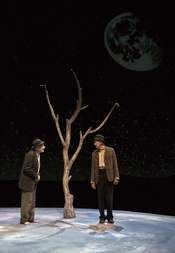
Waiting for Godot 1978年版 [Performance] Douban
part of Performance: Waiting for Godot
director: 未知
other title: 1978年版 playwright: Samuel Beckett actor: Austin Pendleton / Sam Waterston
On a bare country road Vladimir and his friend Estragon wait in hope of salvation from a man called Godot. Their hope of salvation lies in Godot's arrival. While waiting they play games, entertain one another with vaudevillian tricks, question whether Godot will arrive and how they will benefit when he does. They are interrupted by the arrival of Pozzo (a land owner) and Lucky (Pozzo's slave). Pozzo questions their reasoning for waiting. Lucky performs a staggering burst of a monologue. Pozzo and Lucky exit, night falls and a young boy arrives and tells Vladimir and Estragon that "Mr Godot won’t come here today but he'll surely arrive tomorrow.” In Act two Pozzo returns but he is blind and Lucky is mute. Vladimir and Estragon continue waiting. Still determining to go, the tramps do not move.

“I cannot express how much this show means to me,” writes artistic director, Peter Reid. “It is undoubtedly the greatest show of the 20th Century and has revolutionised the fabric of theatre.”
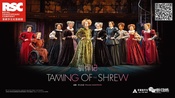
The Taming of the Shrew [Performance] Douban
The Taming of the Shrew
8.4 (5 ratings) genre: theater playwright: 莎士比亚 William Shakespeare / William Shakespeare
other title: 驯悍记 director: J.R. Planché / Samuel Phelps actor: Louisa Cranstoun Nisbett / Ada Rehan / Milo O'Shea / Anna Manahan / Peter O'Toole
Prior to the first act, an induction frames the play as a "kind of history" played in front of a befuddled drunkard named Christopher Sly who is tricked into believing that he is a lord.
In the play performed for Sly, the "Shrew" is Katherina Minola, the eldest daughter of Baptista Minola, a lord in Padua. Katherina's temper is notorious and it is thought no man would ever wish to marry her. On the other hand, two men – Hortensio and Gremio – are eager to marry her younger sister Bianca. However, Baptista has sworn not to allow his younger daughter to marry before Katherina is wed, much to the despair of her suitors, who agree that they will work together to marry off Katherina so that they will be free to compete for Bianca.
The plot becomes more complex when Lucentio, who has recently come to Padua to attend university, sees Bianca and instantly falls in love with her. Lucentio overhears Baptista announce that he is on the lookout for tutors for his daughters, so he has his servant Tranio pretend to be him while he disguises himself as a Latin tutor named Cambio, so that he can woo Bianca behind Baptista's back.
In the meantime, Petruchio arrives in Padua, accompanied by his servant, Grumio. Petruchio tells his old friend Hortensio that he has set out to enjoy life after the death of his father and that his main goal is to wed. Hearing this, Hortensio seizes the opportunity to recruit Petruchio as a suitor for Katherina. He also has Petruchio present to Baptista a music tutor named Litio (Hortensio himself in disguise). Thus, Lucentio and Hortensio, pretending to be the teachers Cambio and Litio, attempt to woo Bianca unbeknownst to her father, and to one another.
Petruchio, to counter Katherina's shrewish nature, woos her with reverse psychology, pretending that every harsh thing she says or does is kind and gentle. Katherina allows herself to become engaged to Petruchio, and they are married in a farcical ceremony during which (amongst other things) he strikes the priest and drinks the communion wine, and then takes her home against her will. Once they are gone, Gremio and Tranio (disguised as Lucentio) formally bid for Bianca, with Tranio easily outbidding Gremio. However, in his zeal to win, he promises much more than the real Lucentio actually possesses, and Baptista determines that once Lucentio's father confirms the dowry, Bianca and Tranio can marry. Tranio thus decides that they will need someone to pretend to be Vincentio, Lucentio's father, at some point in the near future. Elsewhere, as part of their scheme, Tranio persuades Hortensio that Bianca is not worthy of his attentions, thus removing any problems he may cause.
Meanwhile, in Petruchio's house, he begins the "taming" of his new wife. She is refused food and clothing because nothing – according to Petruchio – is good enough for her; he claims perfectly cooked meat is overcooked, a beautiful dress doesn't fit right, and a stylish hat is not fashionable. He also sets about disagreeing with everything she says, and forcing her to agree with everything he says, no matter how absurd; on their way back to Padua to attend Bianca's wedding, she agrees with Petruchio that the sun is the moon, and proclaims that "if you please to call it a rush-candle,/Henceforth I vow it shall be so for me" (4.5.14–15). Along the way, they meet Vincentio who is also on his way to Padua, and Katherina agrees with Petruchio when he declares that Vincentio is a woman and then apologises to Vincentio when Petruchio tells her he is a man.
Meanwhile, back in Padua, Lucentio and Tranio convince a passing pedant to pretend to be Vincentio and confirm the dowry for Bianca. The man does so, and Baptista is happy for Bianca to wed Lucentio (actually Tranio in disguise). Bianca then secretly elopes with the real Lucentio. However, Vincentio arrives in Padua, and encounters the Pedant, who claims to be Lucentio's father. Tranio (still disguised as Lucentio) appears, and the Pedant acknowledges him to be his son Lucentio. There is much confusion about identities, and the real Vincentio is set to be arrested when the real Lucentio appears with his newly betrothed Bianca, and reveals all to a bewildered Baptista and Vincentio. Lucentio explains everything that has happened and all is forgiven by the two fathers.
Meanwhile, Hortensio has married a rich widow, and so in the final scene of the play there are three newly married couples at Baptista's banquet; Bianca and Lucentio, the widow and Hortensio, and Katherina and Petruchio. Because of the general opinion that Petruchio is married to a shrew, a quarrel breaks out about whose wife is the most obedient. Petruchio proposes a wager whereby each will send a servant to call for their wives, and whichever comes most obediently will have won the wager for her husband. Katherina is the only one of the three who comes, winning the wager for Petruchio. At the end of the play, after the other two wives have been hauled into the room by Katherina, she gives a speech on the subject of why wives should always obey their husbands and the play ends with Baptista, Hortensio and Lucentio marvelling at how successfully Petruchio has tamed the shrew.

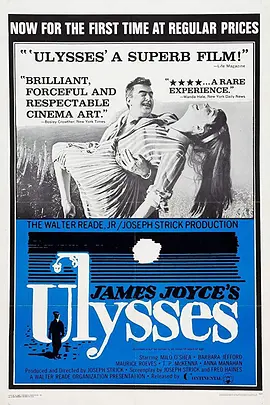
Ulysses (1967) [Movie] Douban IMDb WikiData TMDB
Ulysses
director: Jack Couffer (Joseph Strick) actor: Maurice Roëves / Barbara Jefford
other title: 尤利西斯 / Ulises
Dublin; June 16, 1904. Stephen Dedalus, who fancies himself as a poet, embarks on a day of wandering about the city during which he finds friendship and a father figure in Leopold Bloom, a middle-aged Jew. Meanwhile, Bloom's day, illuminated by a funeral and an evening of drinking and revelry that stirs paternal feelings toward Stephen, ends with a rapprochement with Molly, his earthy wife.