Chantal Akerman — Actor (31)
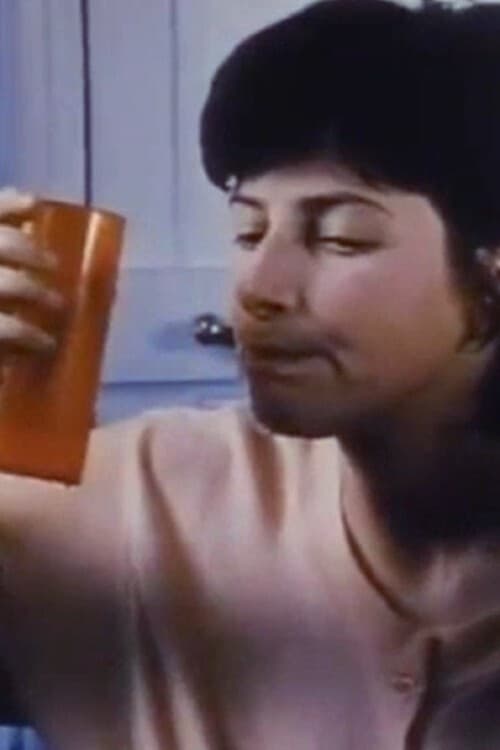
8月15日 (1975) [Movie] Douban WikiData IMDb TMDB
Le 15/8
director: 香特尔·阿克曼 / Samy Szlingerbaum actor: 香特尔·阿克曼 / Chris Myllykoski
other title: Le 15/8 / 8월 15일
Mid-August in Paris (the title is a date: August 15) in a sunny, quiet apartment a young woman talks, thinks, reflects about herself, everyday life and little events in a long, uninterrupted monologue. The camera pictures her and her gestures in long, fixed shots moving around the rooms, the space, the light and shadows of a summer day.
Dis-moi (1980) [Movie] Douban TMDB IMDb WikiData
Dis-moi
other title: 告诉我 / Tell me
Chantal Akerman meets with elderly Jewish women in Paris, all of them survivors of the Shoah, and listens to their family stories. Between interviews, Akerman's mother Natalia speaks of her own family. Made for a French miniseries on grandmothers.
与妈妈对话:娜塔莉亚·阿克曼 (2007) [Movie] Douban
Entretien avec ma mère, Natalia Akerman
director: 香特尔·阿克曼 actor: 娜塔莉亚·阿克曼 / 香特尔·阿克曼
other title: Entretien avec ma mère, Natalia Akerman / Natalia Akerman
"My mother because, in one way or another, I talk about her constantly in my films, and often, I wonder if I have really worked so hard for her, about her, in relation to her, also my mother and her relationship with the movies, a relationship sometimes of recognition, sometimes of negation". – Chantal Akerman
In this 2007 interview, an off-camera Chantal Akerman interviews her mother about her films. The producers of the interview originally intended to edit out Akerman’s questions but ultimately decided to keep them in to preserve the candor of the mother-daughter rapport.
The Beloved Child, or I Play at Being a Married Woman (1971) [Movie] Douban TMDB IMDb
L'enfant aimé ou je joue à être une femme mariée
director: 香特尔·阿克曼 actor: 香特尔·阿克曼 / Daphné Merzer
other title: 可爱的孩子,或我扮演已婚女人 / L'enfant aimé ou je joue à être une femme mariée
A young mother, alone with her daughter, confides in a friend who happens to be the director herself. Chantal Akerman, although she sympathizes with the mother, does not say a word.
Family Business: Chantal Akerman Speaks About Film (1984) [Movie] Douban
Family Business: Chantal Akerman Speaks About Film
director: 香特尔·阿克曼 actor: 香特尔·阿克曼 / 奥萝尔·克莱芒
other title: 家庭琐事
Chantal Akerman was commissioned by Visions to make this short film for £20,000. It was first shown on 21 November 1984, on Channel 4. Akerman herself plays the role of a director visiting Hollywood to find financing from an uncle she hardly knows. Very little goes to plan… Also stars Aurore Clement and Colleen Camp.
The Camera: Je, La Camera: I (1977) [Movie] Douban
The Camera: Je, La Camera: I
director: Babette Mangolte actor: 香特尔·阿克曼 / 伊冯·雷奈尔
other title: 摄影机,我
In this radical meditation on image-making, Babette Mangolte puts the viewer of the film in a vantage similar to that of the photographer looking at her subject. This structural device reveals a series of studio portraits not as neutral observational exercises, but as a subtle accumulation of interpersonal tensions and meanderings. In the film’s second half, Mangolte captures street scenes and reflections from SoHo buildings in a light-drenched metaphor of interiority and exteriority equal to the artist’s legendary work lensing the films of Yvonne Rainer and Chantal Akerman (who appears in the film). In a work replete with dualities, the most revelatory is the film’s existence as both “a description of the act of making photographs” and a self-portrait at a singular moment in time.
Down There (2006) [Movie] Douban WikiData IMDb TMDB
Là-bas
7.8 (9 ratings) director: Chantal Akerman actor: Chantal Akerman
other title: 那里 / Là-bas
The Belgian filmmaker spent a period of time, unspecified, a week or two, in an apartment in Tel Aviv that was lent to her. She lived there alone, in virtually complete isolation, indirectly filming and narrating the experience, sustained only by "provisions" found in the kitchen, especially rice and carrots, having had stomach trouble from an Israeli salad; didn't go to cafes or supermarkets, and rarely even went out, except for a couple of forays to the sea; the apartment was a block or so from the beach.
La-bàs is a series of long stationary shots out the windows, often showing figures of old people on balconies on the roof or buildings opposite. A woman, immobile, is tended to by her husband. One man sits for long periods motionless. Ackerman in voice-over says she thinks he's watching his plants grow. "But I don't think plants grow any faster in Israel," she says.
Is this any better than the proverbial watching paint dry? Two aspects, visual and auditory, save this thin, dry, austere documentary from being a sterile art piece and make it both thought-provoking and haunting, for those who have the patience to sit through it; many will not.
To begin with, screens filter the light of the windows in a beautiful way: the shots are often handsome, not unworthy of something by Hou Hsiau-hsien or Tsai Ming-liang, if without their human figures moving about.
Further, Ackerman's voice overs, spoken off-camera during the shots, though skimpy, provide fleetingly penetrating, brutally frank self-revelations and contexts that range from the personal to the universal. Her father was once going to emigrate to Israal just after WWII and was waiting in Marseille to go, but he was warned that the Palestine environment was too harsh. The family settled in Belgium instead. She speaks of an aunt who committed suicide. Is she herself depressed? She speaks of passivity and laziness. She may be agoraphobic. She clearly is going through an agoraphobic period. She may also be afraid of bombs. A parent calls and expresses concern about her going out to dangerous places; she promises she won't. She speaks of prisons, external and self-imposed: this is one of the latter kind.
People call and invite her out. She says she can't because she's working. This devotion to the enterprise makes something positive and substantial, even noble, about this otherwise evanescent, uncertain project. This is an act of painfully heightened self-consciousness, a self-examination, a journal both Zen-like and intensive. She also speaks of reading; making extensive notes; having "complex" thoughts. A certain ambivalence toward her Jewishness is also involved. Finally, with minimal means, Ackerman has forged something unique.
A telling image: a Chasidic family leaving the beach. The man, in his quaint outfit, symbolizes the oddity of the Israeli enterprise. Ackerman doesn't comment on the oppression of Palestinians or Israeli dependence on the US. Her seclusion in the middle of Israel's largest city may be comment enough. This is something she apparently can't be a part of. But in her alienation, she couldn't be more Jewish.
Birth of a Nation (1997) [Movie] Douban
Birth of a Nation
director: 乔纳斯·梅卡斯 actor: 香特尔·阿克曼 / 肯尼思·安格
other title: 一个国家的诞生
One hundred and sixty portraits or rather appearances, sketches and glimpses of avant-garde, independent filmmakers and film activists between 1955 and 1996.
Why BIRTH OF A NATION? Because the film independents IS a nation in itself. We are surrounded by commercial cinema Nation same way as the indigenous people of the United States or of any other country are surrounded by Ruling Powers.
We are the invisible, but essential nation of cinema. We are Cinema.
From the Other Side (2002) [Movie] Douban IMDb TMDB WikiData
De l'autre côté
other title: 另一边 / De l'autre côté
From the Other Side is a haunting and minimalist documentary that explores the tragic realities of illegal immigration along the U.S.–Mexico border, focusing on the twin towns of Agua Prieta, Sonora, and Douglas, Arizona. Director Chantal Akerman utilizes her signature long, observational takes and static shots to capture the harsh desert landscape and the architectural starkness of the border wall. Through deeply personal interviews with Mexican migrants and grieving families, contrasted against the high-tech tracking systems and perspectives of white American ranchers, the film highlights how tightened border security forced migrants into increasingly perilous terrain. Ultimately, the documentary serves as a poetic, empathetic, and politically charged meditation on xenophobia, separation, and the human cost of geographic boundaries.
But elsewhere is always better (2016) [Movie] Douban
But elsewhere is always better
other title: 他方总是更好 / 他方總是更好(台)
A new short film by Vivian Ostrovsky remembering Chantal Akerman, beginning with their first meeting in the early 1970s. Using her own footage of Chantal Akerman, the filmmaker remembers a few moments that illustrate Chantal's personality. Forty years of friendship condensed into four minutes...
What Is Cinema? (2013) [Movie] Douban TMDB IMDb
What Is Cinema?
other title: 什么是电影? / Qu'est ce que le cinéma?
Featuring interviews with the likes of Hitchcock, Kurosawa, Robert Bresson and David Lynch, What is Cinema? is documentarian Chuck Workman’s engrossing visual essay about mastery of cinematic form. Our world premiere will be followed by a live conversation with Workman.
阿克曼自画像 (1997) [Movie] Douban TMDB
Chantal Akerman par Chantal Akerman
8.0 (8 ratings) director: 香特尔·阿克曼 actor: 香特尔·阿克曼
other title: Chantal Akerman par Chantal Akerman
When asked to participate in the Cinema, of Our Time series, Chantal Akerman jokingly suggested herself as subject matter. She envisioned a film consisting solely of excerpts from her films, but when pressed by the producers to include footage of herself, Akerman grudgingly agreed, and divided the film into two parts. The first part opens with Akerman in her apartment, reading from a text directly to the camera, describing the problems she encountered making this film. What emerges from this mise-en-scene is a funny, often personal, and always thoughtful confession from this extremely perceptive filmmaker. Part two lets Akerman's films speak for her, taking clips from her extensive filmography and linking them anonymously until they form a new film. There are scenes from JEANNE DIELMAN, her best-known film, but also glimpses of several other works - forays into experimental film, comedic shorts, musicals, narrative features - including an early short that stars a very young Chantal.