Pier Paolo Pasolini — Director (27)
关于描写污秽之地小说的笔记 (1970) [Movie] TMDB IMDb
Appunti per un romanzo sull'immondezza
other title: 關於描寫汙穢之地小説的筆記 / Appunti per un romanzo sull'immondezza
1970年春天,在拍摄《非洲奥瑞斯提亚》与《十日谈》的间隙,帕索里尼拍摄了一部影片。他为这部影片撰写了诗体解说词,却始终未能完成剪辑。这部影片的诞生源于帕索里尼标志性的社会介入——记录罗马清洁工人的罢工运动。当时这些工人处于极其恶劣的健康条件下工作,帕索里尼用镜头捕捉他们在广场街巷间,于社会废弃物中从事日常劳作的卑微身影。他还记录了清洁工们进行诉求讨论时的面容,最终呈现出一幅展现未知人群的非凡人类学图景。
关于一部印度影片的拍摄记录 (1968) [Movie] Douban
Appunti per un film sull'india
other title: Appunti per un film sull'india / Appunti per un film indiano
Appunti per un film sull'India is a 1968 short documentary film by Pier Paolo Pasolini where he visits India to do a recces for his proposed film with India as its background about a king who gives up his body to feed a starving tiger.
The film was shot around post-independent India when it was facing grave challenges of poverty, population and caste system. Pasolini narrates the challenges of India and its charms amidst all the problems the country faces. The 33-minute-long documentary is composed of short interviews from random people about their opinions on matters such as family planning. The documentary also shows short interviews of journalists and one politician about the challenges India faces in modernizing itself without becoming westernized or losing the Indian identity in the process.
The film opens and ends with a shot of a Sikh soldier, who, Pasolini identifies, in his commentary, as the one who would play the role of Maharaja in his film. Among others Pasolini interviewed for his film the former Maharaja of Bhavanagar and his wife and well-known Urdu story writer and filmmaker Rajinder Singh Bedi.
The documentary was shot in many places including New Delhi, Jaipur, Rishikesh and Varanasi etc.
12月12日 (1972) [Movie] Douban
12 dicembre
director: Giovanni Bonfanti / 皮埃尔·保罗·帕索里尼 actor: 莱恩佐·蒙特纳尼 / 吉安·马里亚·沃隆特
other title: 12 dicembre
此片是帕索里尼和极左组"不懈斗争"合作拍摄的,这个组织本身就牵扯进影片里相关的事件颇深,影片内容也相当激进。1969年12月12日,一枚炸弹在米兰喷泉广场的农业银行爆炸,导致16人死亡。该事件当时马上被政府归罪为左翼无政府主义者所为,并对左翼组织展开大规模追捕。实际真相扑朔迷离。
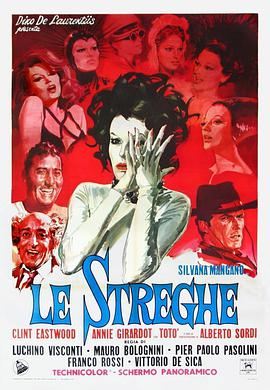
The Witches (1967) [Movie] Douban
Le streghe
director: 莫洛·鲍罗尼尼 / 维托里奥·德西卡 actor: 西尔瓦娜·曼加诺 / 安妮·吉拉尔多
other title: 女巫 / Le streghe
"The Witch Burnt Alive"
After a very long, but visually arresting animated opening credits sequence, Luchino Visconti (Death in Venice) directs the first story, which is the longest of the five, taking approximately a third of the film's running length. Mangano plays a superstar actress and model who travels to a mountain resort, only to find the well-to-do inhabitants have prejudices and preconceived notions about her based on her public persona. The women are all jealous and the men all want to sleep with her, but all Mangano wants is to be left alone. It's a mostly somber satirical piece, but story-wise, it languishes in its modest idea a bit long, becoming inconsequential to all but those fascinated by the realities of being famous.
"Community Spirit"
Bolognini's piece isn't really a story. It's more of a visual gag, in a short segment that features Mangano offering to take an injured man to a hospital, driving him at breakneck speed throughout the city, but not stopping at locations where he might find aid. I won't give away the punchline here, but it succeeds in being amusing, even if it's the kind of thing that only is interesting the first time through.
"The Earth Seen from the Moon"
The esteemed writer/director, Pier Paolo Pasolini (Salo), crafts the middle segment, which is the most artistic and memorable of the five. Reminiscent in style to "Don Quixote", a recently widowed father and his son travel around the country in search of a new wife and mother, and after a long period, they discover the literally speechless Mangano. She brings joy into their lives, but they are poor, and in order to find a better life for themselves, they concoct a scheme to try to make some quick cash. The story is contrived, and not completely interesting, but the outlandish performances, artwork, and costumes does evoke great charm and likeability. Although mute, it's probably the most appealing of Mangano's five performances, and Toto is terrific.
"The Sicilian"
Franco Rossi directs the fourth an shortest piece, a straight-forward revenge story that comes and goes before it ever has a chance of becoming interesting. It's violent, but easily the least satisfying of the five stories.
"A Night Like Any Other"
Eastwood's appearance is clearly the biggest attraction here, which was filmed in between the Sergio Leone "Dollars" trilogy. It's an enjoyable departure from his normal roles, playing a comedic romantic lead, and he is affably fun to watch. Famed Italian director, Vittorio de Sica (The Bicycle Thief, Umberto D.) does a masterful job with the story, which perfectly blends the mundane and the fantasy in a visually satisfying way. The story is about a bored housewife (Mangano, of course), who tries in vain to get her husband to realize that he is not as romantic as he used to be. The scene is interspersed with comedic romance sequences revolving around the couple's past romantic interludes, and dreams of how their lives should be.
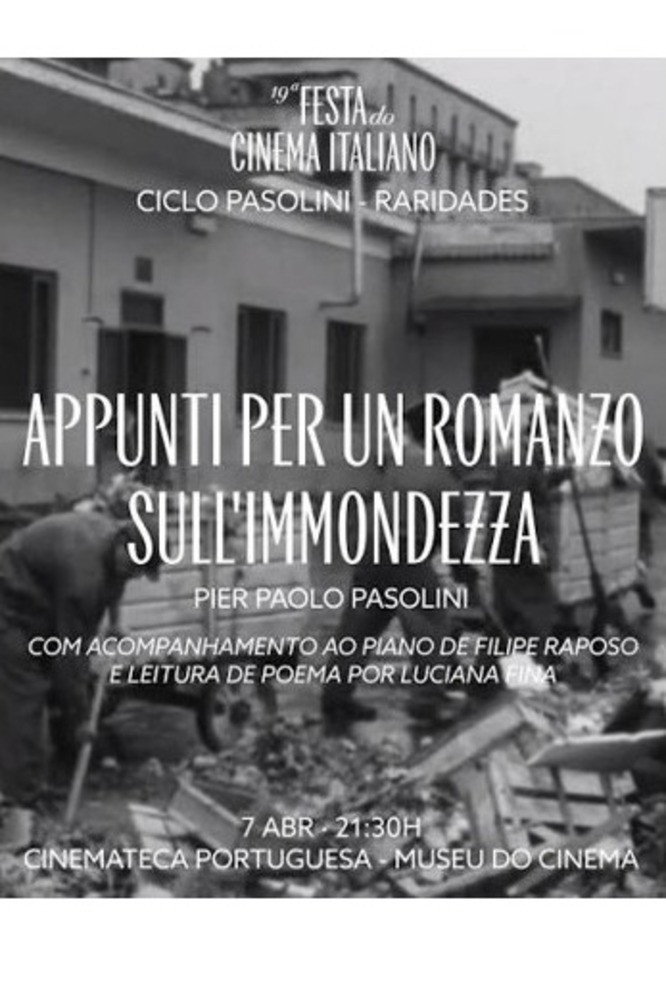
Love and Anger (1969) [Movie] Douban
Amore e rabbia
5.6 (5 ratings) director: 马可·贝洛基奥 / 贝纳尔多·贝托鲁奇 actor: Tom Baker / Julian Beck
other title: 爱情与愤怒 / Amore e rabbia
◎ 简  介:
看点: 拍摄于越战期间,通过5段不同的故事表达出五位导演对当时政局的看法
第一部分的主题是冷漠,楼下一桩抢劫杀人的案正在进行,楼上所有人都熟视无睹。街边发生一起交通事故,没有任何车停下来救人。直到在警察的帮助下一位司机出现,他理所当然地拒绝,但是迫于无奈只好就范,却于中途逃走,故事原来是这样的。
第二部分是一段行为艺术表演。临死的人进行死前最后的忏悔,很有意思,比现在的好多所谓行为艺术好看多了。
第三部分是帕索里尼的贡献:他的最爱演员Ninetto Davoli漫步在大街上,手握着一大扎纸花去见情人。一路走来充满阳光,这个世界的另一些地方却是另一中摸样。
第四部分是戈达尔的“爱”。有两种含义:政治层面的故事聚焦在古巴,有点自我批评的感觉。
第五部分,大学教室里正在上课,一群自称学生会的人闯了进来,声称要改革对文化的压迫,于是辩论展开。
◎ 关于影片:
意大利/法国1969年五位大师(贝尔托鲁奇、帕索里尼、戈达尔、贝洛奇奥、卡罗里扎尼)联手合导的经典名作,荣获1969年柏林影展提名金熊奖。
导演们的信条,拒绝把电影当作是故事;至少在此说:并不是因为你看多了电影就懂得了“电影”;第七艺术就好比在欧几里德之前的数学;而且导演并没有表示说“新浪潮”就是欧几里德。
La Rabbia (1963) [Movie] Douban TMDB IMDb WikiData
La Rabbia
director: 乔瓦尼·瓜雷斯基 / 皮埃尔·保罗·帕索里尼 actor: 乔治·巴萨尼 / Renato Guttuso
other title: 狂暴 / La Rage
Documentary footage (from the 1950s) and accompanying commentary to attempt to answer the existential question, Why are our lives characterized by discontent, anguish, and fear? The film is in two completely separate parts, and the directors of these respective sections, left-wing Pier Paolo Pasolini and conservative Giovanni Guareschi, offer the viewer contrasting analyses of and prescriptions for modern society. Part I, by Pasolini, is a denunciation of the offenses of Western culture, particularly those against colonized Africa. It is at the same time a chronicle of the liberation and independence of the former African colonies, portraying these peoples as the new protagonists of the world stage, holding up Marxism as their "salvation", and suggesting that their "innocent ferocity" will be the new religion of the era. Guareschi's part, by contrast, constitutes a defense of Western civilization and a word of hope, couched in traditional Christian terms, for man's future.
愤怒的帕索里尼 (2008) [Movie] Douban
La rabbia di Pasolini
director: 皮埃尔·保罗·帕索里尼 / 朱塞佩·贝托鲁奇 actor: 乔治·巴萨尼 / Renato Guttuso
other title: La rabbia di Pasolini / 帕索里尼的《狂暴》
本片根据意大利著名导演帕索里尼制作的新闻电影片段整理修复,影片以新闻影像为素材,加入了电影拍摄画面和旁白诗歌,诠释了十九到二十世纪的大量西方历史事件,具有珍贵的政治和人文价值。
Porcile (1969) [Movie] IMDb WikiData Douban TMDB
Porcile
7.4 (19 ratings) director: 皮埃尔·保罗·帕索里尼 actor: 皮埃尔·克里蒙地 / 让-皮埃尔·利奥德
other title: 猪圈 / 猪栏
Two dramatic stories. In an undetermined past, a young cannibal (who killed his own father) is condemned to be torn to pieces by some wild beasts. In the second story, Julian, the young son of a post-war German industrialist, is on the way to lie down with his farm's pigs, because he doesn't like human relationships.
Assembly of Love (1964) [Movie] Douban WikiData IMDb TMDB
Comizi d'amore
other title: 幽会百科 / Comizi d'amore
Pier Paolo Pasolini sets out to interview Italians about sex, apparently their least favorite thing to talk about in public: he asks children if they know where do babies come from; asks old and young women if they support gender equality; asks both sexes if a woman's virginity still matters, what do they think of homosexuality, if divorce should be legal, or if they support the recent abolition of brothels. He interviews blue-collar workers, intellectuals, college students, rural farmers, the bourgeoisie, and every other kind of people, painting a vivid portrait of a rapidly-industrializing Italy, hanging between modernity and tradition — toward both of which Pasolini shows equal distrust.
The Walls of Sana'a (1971) [Movie] Douban TMDB IMDb WikiData
Le mura di Sana'a
other title: 萨那的城墙 / Le mura di Sana'a
Pasolini's documentary is an appeal to UNESCO to save the destruction of a beautiful Yemen's ancient town of Sana'a. The old, fortified city has been inhabited for more than 2500 years and contains a wealth of intact architectural gems. It was declared a World Heritage City by the United Nations in 1984.