Don Cherry — Artist (49)
Don Cherry [Music] Douban
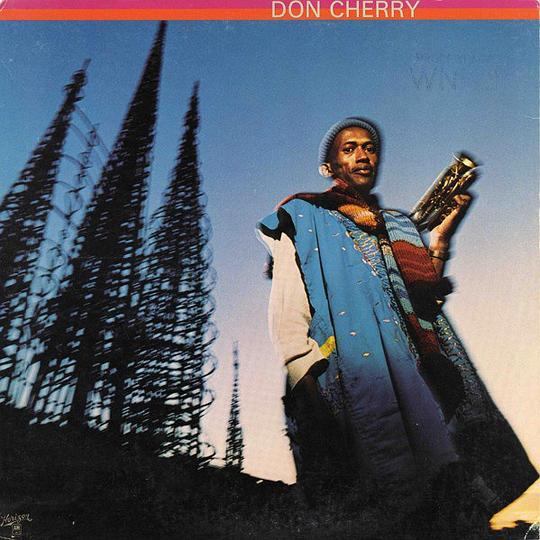
Don Cherry genre: Jazz
release date 1997-06-03 publisher: Horizon (3) – SP-717, A&M Records – SP-717
Donald Stewart Cherry (born February 5, 1934) is a Canadian former ice hockey player, coach, and television commentator. Cherry played one game in the National Hockey League (NHL) with the Boston Bruins, and later coached the team for five seasons after concluding a successful playing career in the American Hockey League, leading the team to four division titles and two appearances in the Stanley Cup Finals.
Roundtrip [Music] Douban
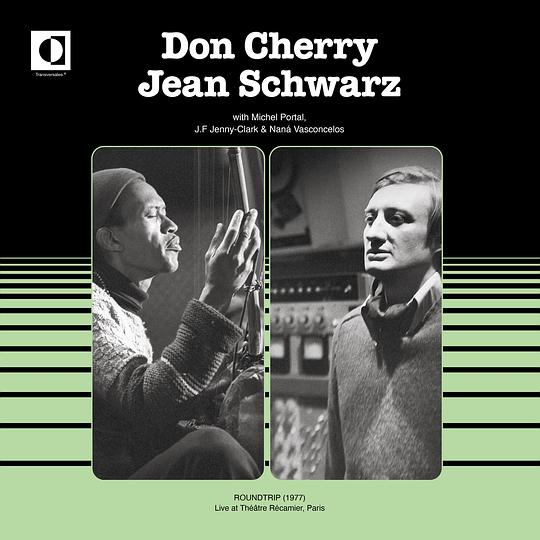
Don Cherry / Jean Schwarz genre: Jazz
release date 2023-01-27 publisher: Transversales Disques
Bass – Jean François Jenny Clark
Executive-Producer – Jonathan Fitoussi, Sébastien Rosat
Graphic Design – Jean-Philippe Talaga
Liner Notes – Francis Marmande
Mastered By – Benjamin Joubert
Percussion – Naná Vasconcelos
Photography By – Christian Rose
Saxophone, Bass Clarinet, Bandoneon – Michel Portal
Tape, Synthesizer [Synthesizers], Performer [Treatments] – Jean Schwarz
Trumpet [Pocket Trumpet], Vocals, Ngoni [Doussn' gouni], Whistle [Whistles] – Don Cherry
Recorded during G.R.M. Festival : MIX "Musique, Image, eXpérience";
at Théâtre Récamier, 12/02/1977, Paris
Spirits To Ghosts Revisited [Music] Douban
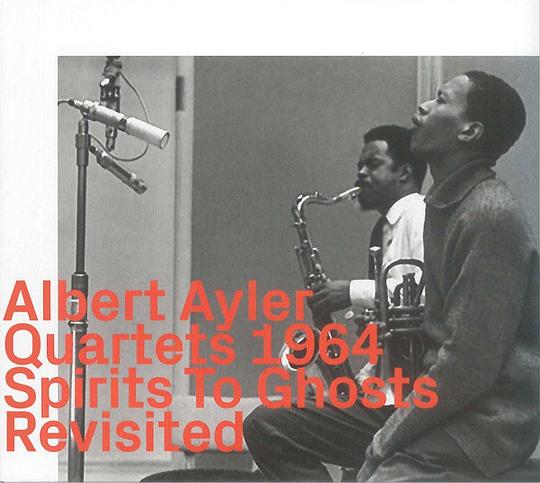
Albert Ayler Quartets / Albert Ayler genre: Jazz
release date 2020-02-01 publisher: Hat Hut Recrods Ltd.
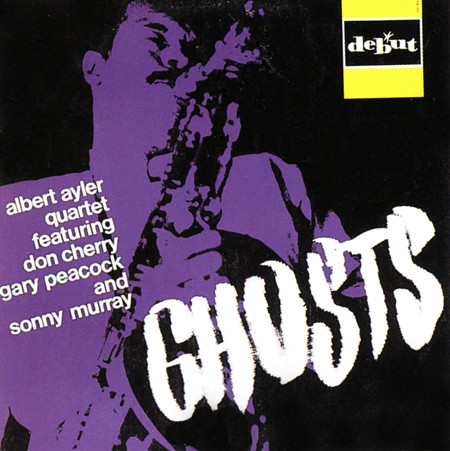
Three variations of quartet settings from iconoclastic free jazz saxophonist Albert Ayler, remastering and combining two Debut Records albums, "Spirits" from 1964 and 1965's "Ghosts"
The mystery of Albert Ayler's musical legacy - as much as that of his still-unexplained death in 1970 - remains today, more than 54 years after these explosive, enigmatic studio recordings were made in early and late 1964, a source of conjecture and controversy. Primarily because his stunningly powerful projection, unorthodox technique, and unique vision resisted the typical methods of description and analysis, critics and scholars (the major exception, of course, being Ekkehard Jost) have sought to illuminate or, on the other hand, discredit Ayler's extraordinarily original creations largely through speculation and metaphor.
It's hard to blame them. Although it did not emerge from a vacuum, there were no obvious immediate precedents to prepare listeners for Ayler's idiosyncratic, iconoclastic improvisational concept. Consider even the most progressive of his peers. Ornette Coleman had issued his most radical statement, the album Free Jazz, in 1960, but except for three live recordings and the 1965 "soundtrack" to the film Chappaqua Suite he provided nothing of note between March 1961 and September 1966. John Coltrane would not record A Love Supreme until December 1964, and in the period before this released music that was no more advanced - and in some cases much more conservative - than that which he performed at the Village Vanguard in 1961. In 1962 and '63, Sonny Rollins was performing the most adventurous music of his career, freely improvised escapades in tandem with the everpresent trumpeter Don Cherry, but except for one edited RCA album, the bulk of this amazing music was not heard until years later. Archie Shepp had worked with Cecil Taylor and the New York Contemporary Five, but was still in the process of developing a cogent approach to the consequences of freedom. Eric Dolphy, after suggesting an alternative direction to total freedom alongside Coltrane and Charles Mingus, died in June 1964.
A few clues may be gleaned from Ayler's initial efforts once out of the Army. A pair of haphazardly recorded albums of standards from Stockholm in October 1962 (First Recordings, Vol. 1 & 2) and a third from Copenhagen three months later (My Name is Albert Ayler) revealed a puzzlingly inchoate perspective - wickedly abused melodies, a seemingly random wandering through keys, and a willfully distorted saxophone tone ranging from pinched squeals to hoarse guttural braying - which seems even more disoriented due to the conventional support of the Scandinavian rhythm sections. What makes these albums unsettling and spellbinding is Ayler's intuitive albeit disruptive lyricism and deadly serious nature - there is no sense of Sonny Rollins' spontaneous wit or constructivist irony to be heard, none of Coltrane's relentless "Chasin' the Trane" style of thematic elaboration, or Dolphy's harmonic and rhythmic angularity. Ayler's demeanor is neither nihilistic disdain nor absurdist whimsy; the tunes are simply vehicles for expressive - indeed, sometimes painfully exaggerated - gestures of abstracted sound.
Nevertheless, the leap from there to the music on this disc (as well as his Trio recordings of 1964 Prophecy and Spiritual Unity with Gary Peacock and Sunny Murray, which will for the first time be released in one complete edition by Hat Hut Records under agreement with the Albert Ayler Estate) in just over a year is a large one, and accounts for the mature, uncompromising, uninhibited, revelatory Ayler canon. He sounds strengthened in his resolve to exploit
Thus the unfettered cries were associated with field hollers; the ensemble's simultaneous exhortations became New Orleans-style polyphony; Ayler's wide saxophone vibrato found a link to Sidney Bechet; episodes of intense abandon signified political and social unrest; the wailing ballads were heard as hymns and invocations to a spiritual transcendence; and so on. But this is not to suggest that these are imagined or inconsequential explanations; Ayler's own statements and song titles may or may not provide validation. Nevertheless, they do tend to obscure a deeper sense of the originality and courage of Ayler's conception in distinctly musical terms. And although in his final years the idea of pure sound values as emotional weight and communicative essence. Hence the abandoning of familiar standards in favor of his own simpler, "folk-derived" themes. Yet the new expressive vocabulary - the hyperextreme wails, growls, and whimpers, devoid of quotations or references to familiar musical experiences - that he and his cohorts sustained while disposing of conventional tonality and phrasing in song form seemed so alienating that interpretations required a conventional, if metaphorical rather than musical, logic.
Ayler shifted his approach to a simplified rock and r&b style, either for commercial or communicative considerations, the expressive qualities of his example have been carried on and extended (or unfortunately in many cases diluted), remaining highly influential among free jazz practitioners today - so much so, that we can no longer hear this music with the amazement of those 1964 listeners. And yet it has lost none of its impact."- Art Lange
Untitled Gift [Music] Douban
Billy Bang / Don Cherry genre: Jazz
release date 1982-04-05 publisher: Anima Productions
Credits
Bass – Wilber Morris
Drums – Dennis Charles*
Engineer – Martin Bisi
Executive-Producer – John Mingione
Trumpet [Pocket Trumpet], Flute, Bells – Don Cherry
Violin, Flute [Yokobue Flute], Bells, Congas, Producer – Billy Bang
Notes
Recorded February 7, 1982, OAO Studio, Brooklyn, N.Y.
The Summer House Sessions [Music] Douban Eggplant.place MusicBrainz
Don Cherry genre: experimental / brooklyn / Jazz
release date 2021-06-18 publisher: Blank Forms Editions
In 1968, Don Cherry had already established himself as one of the leading voices of the avant-garde. Having pioneered free jazz as a member of Ornette Coleman’s classic quartet, and with a high profile collaboration with John Coltrane under his belt, the globetrotting jazz trumpeter settled in Sweden with his partner Moki and her daughter Neneh. There, he assembled a group of Swedish musicians and led a series of weekly workshops at the ABF, or Workers’ Educational Association, from February to April of 1968, with lessons on extended forms of improvisation including breathing, drones, Turkish rhythms, overtones, silence, natural voices, and Indian scales. That summer, saxophonist and recording engineer Göran Freese—who later recorded Don’s classic Organic Music Society and Eternal Now LPs—invited Don, members of his two working bands, and a Turkish drummer to his summer house in Kummelnäs, just outside of Stockholm, for a series of rehearsals and jam sessions that put the prior months’ workshops into practice. Long relegated to the status of a mysterious footnote in Don’s sessionography, tapes from this session, as well as one professionally mixed tape intended for release, were recently found in the vaults of the Swedish Jazz Archive, and the lost Summer House Sessions are finally available over fifty years after they were recorded.
On July 20, the musicians gathered at Freese’s summer house included Bernt Rosengren (tenor saxophone, flutes, clarinet), Tommy Koverhult (tenor saxophone, flutes), Leif Wennerström (drums), and Torbjörn Hultcrantz (bass) from Don’s Swedish group; Jacques Thollot (drums) and Kent Carter (bass) from his newly formed international band New York Total Music Company; Bülent Ateş (hand drum, drums), who was visiting from Turkey; and Don (pocket trumpet, flutes, percussion) himself. Lacking a common language, the players used music as their common means of communication. In this way, these frenetic and freewheeling sessions anticipate Don’s turn to more explicitly panethnic expression, preceding his epochal Eternal Rhythm dates by four months. The octet, comprising musicians from America, France, Sweden, and Turkey, was a perfect vehicle for Don’s budding pursuit of “collage music,” a concept inspired by the shortwave radio on which Don listened to sounds from around the world. Using the collage metaphor, Don eliminated solos and the introduction of tunes, transforming a wealth of melodies, sounds, and rhythms into poetic suites of different moods and changing forms. The Summer House Sessions ensemble joyously layers manifold cultural idioms, traversing the airy peaks and serene valleys of Cherry’s earthly vision.
In the Swedish Jazz Archive quite a few other recordings from the same day were to be found. Some of the highlights are heard as bonus material on the CD edition of this album. The octet is augmented by producer and saxophone player Gunnar Lindqvist, who led the Swedish free jazz orchestra G.L. Unit on the album Orangutang, and drummer Sune Spångberg, who recorded with Albert Ayler in 1962. The bonus CD also includes a track without Cherry featuring Jacques Thollot joined by five Swedes including Lindqvist, Tommy Koverhult, Sune Spångberg, and others.
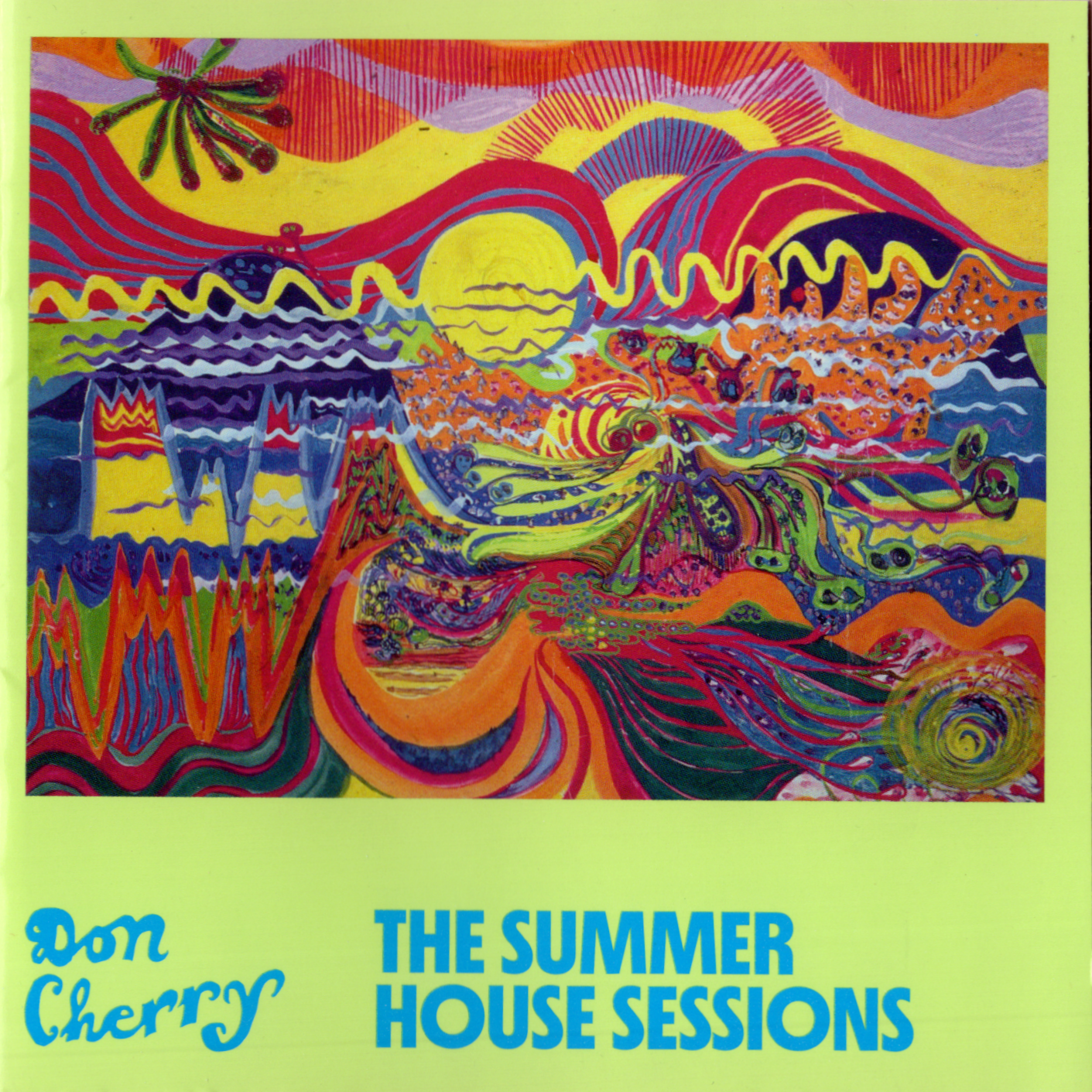
With liner notes by Magnus Nygren and album art featuring a cover painting by Moki Cherry: Untitled, ca. 1967–68.
releases June 18, 2021
Recorded July 20, 1968 at Kummelnäs, Sweden by Göran Freese
Audio restoration by Robbie Lee
Mastering for vinyl by Kassian Troyer at Dubplates & Mastering, Berlin
Cover painting by Moki Cherry: Untitled, ca. 1967-68
Design by Alec Mapes-Frances
Thanks to: Magnus Nygren, Naima Karlsson, Roger Bergner and the Centre for Swedish Folk Music and Jazz Research in Stockholm, Anna Freese & Lisa Freese, David Grubbs, Caroline de Bendern, Åsa Engel, and Bengt Rosengren
Bura-Bura [Music] Douban
Masahiko Togashi / Sreve Lacy genre: Jazz
release date 1986-01-01 publisher: ALFA
Masahiko Togashi(d)
Sreve Lacy(sax)
Don Cherry(p-tp,p,vo)
Dave Holland(b)
May 14, 1986 : Live at Yubin Chokin Kaikan Hall, Tokyo
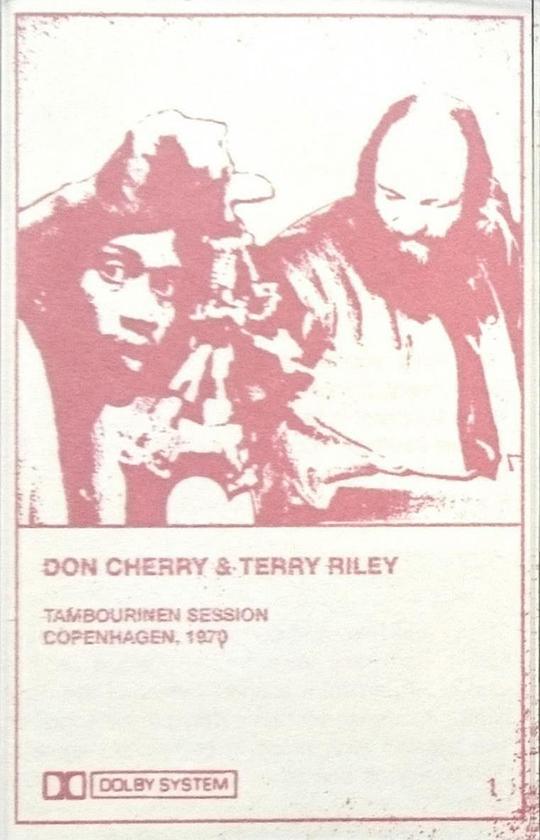
Tambourinen Session, Copenhagen, 1970 [Music] Douban
Don Cherry / Terry Riley
release date 2014-01-01 publisher: Anökumena
Bass, Cello – Poul Ehlers
Flute, Drum – Knud Bjørnø
Soprano Saxophone, Organ – Terry Riley
Soprano Saxophone, Tenor Saxophone, Tambourine, Flute – Jesper Zeuthen
Trumpet, Drum [Wood Drum] – Don Cherry
Cherry and Riley had met in Sweden and Riley invited Cherry along for this session. Apart from a short rehearsal the night before it was the first time they played together. The session took place in complete darkness, the musicians seated in a circle on the studio floor.
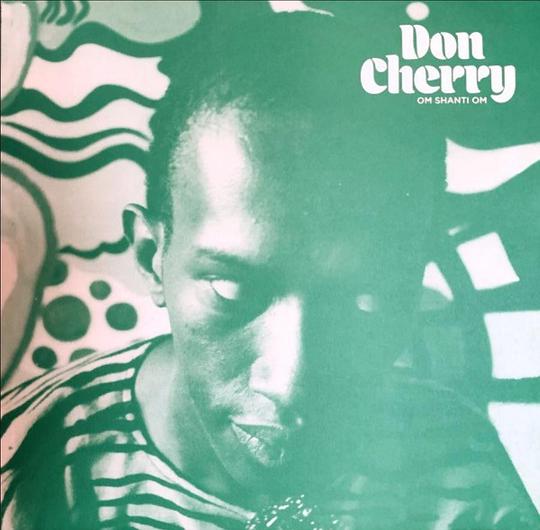
Om Shanti Om [Music] Douban
Don Cherry genre: Jazz
release date 2020-01-01 publisher: Black Sweat Records
Guitar, Flute – Gian Piero Pramaggiore
Mastered By – Arne Ziemann
Percussion, Berimbau – Nana Vasconcelos
Photography By – Peder Björkegren
Tambura [Tanpura] – Moki Cherry
Trumpet [Pocket Trumpet], Flute, Kora – Don Cherry
Recorded at RAI studios [Rome, Italy] in 1976 for the television broadcast “Incontro con Don Cherry” presented by Franco Fayenz.
Previously unreleased. Includes a digital download code and a postcard reproduction of Moki Cherry's «Organic Music Tapestry», 1975. Photo: Prallan Allsten. © Moki Cherry
Licensed by MOKI / the Estate of Moki Cherry
Master tape licensed by RAI [Radiotelevisione Italiana]
Mastering work by Arne Ziemann at Oakfield Studio
Photos by Peder Björkegren
Thanks to Umberto Marongiu, Fabio Carboni, Naima Karlsson
Black Sweat Records
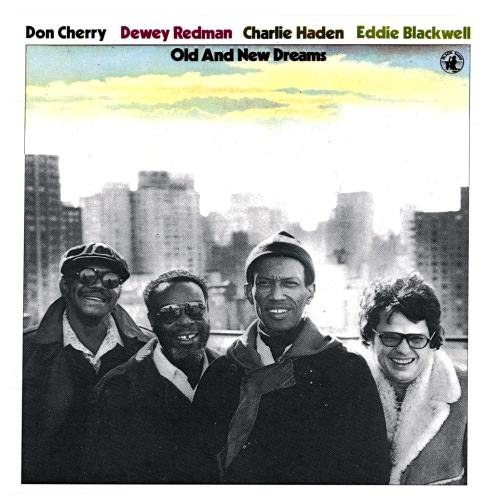
Old And New Dreams [Music] Douban
Don Cherry / Dewey Redman genre: Jazz
release date 2009-12-03 publisher: BLACK SAINT
Donald Eugene Cherry (November 18, 1936 – October 19, 1995) was an American jazz trumpeter. Cherry had a long association with free jazz saxophonist Ornette Coleman, which began in the late 1950s. Cherry was also a pioneer in world fusion music in the 1960s and 1970s
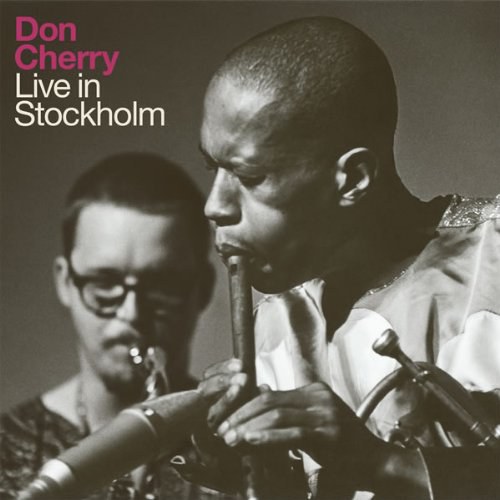
Don Cherry Live in Stockholm [Music] Douban
Tommy Koverhult / Bernt Rosengren genre: Jazz
release date 2013-10-29 publisher: Caprice Records
Bass – Rolf Olsson (tracks: 3), Torbjörn Hultcrantz (tracks: 1, 2)
Drums – Leif Wennerström (tracks: 1, 2), Okay Temiz (tracks: 3)
Tenor Saxophone, Flute, Percussion – Bernt Rosengren (tracks: 1, 2), Tommy Koverhult
Trumpet [Pocket], Flute, Piano, Percussion, Vocals – Don Cherry
Trumpet, Flute, Percussion – Maffy Falay
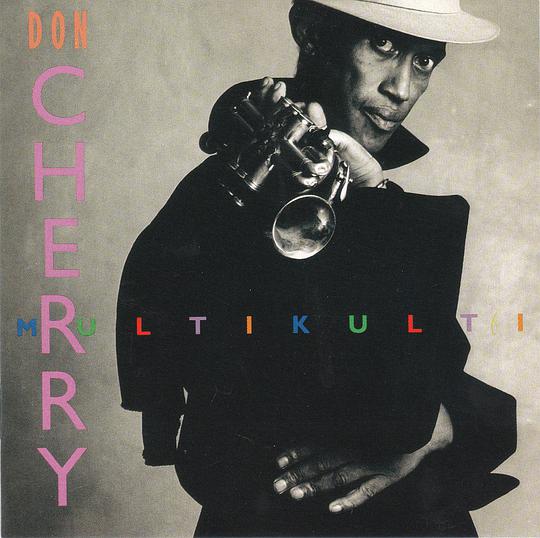
Multikulti [Music] Douban
Don Cherry genre: Jazz
release date 1988-01-01 publisher: A&M
It's obvious right from the title that Multikulti is another of Don Cherry's trademark fusions of jazz and world music, this time around with a heavy African influence. Cherry is joined on several tracks by members of multi-instrumentalist Peter Apfelbaum's Hieroglyphics Ensemble (plus the full band on "Until the Rain Comes" and "Divinity-Tree"), and their shared affinity for African music is what produces most of the album's best moments. (Listeners who prefer Cherry in a stricter jazz context are hereby warned.) The percolating, polyrhythmic grooves of "Dedication to Thomas Mapfumo," "Until the Rain Comes" (parts of it, anyway), "Divinity-Tree," and "Rhumba Multikulti" make for an infectious celebration of pan-cultural awareness that fully lives up to the promise of the album's title. Other highlights include the spare bounce of "Birdboy" and the more traditional free bop of "Pettiford Bridge." There are a few unfortunate indulgences, however. The brief instrumental sketches that punctuate the album actually detract from the flow and consistency, and if you've never been a fan of poetry recitations over jazz backing, the ones here won't change your mind. A few cuts just don't quite go anywhere, and at 12 minutes, "Until the Rain Comes" -- despite some undeniably great sections -- just starts to meander after a while. There's definitely enough good music here to make Multikulti worthwhile for fans of Cherry's world fusion explorations, but it isn't quite consistent enough to become essential. ~ Steve Huey, All Music Guide
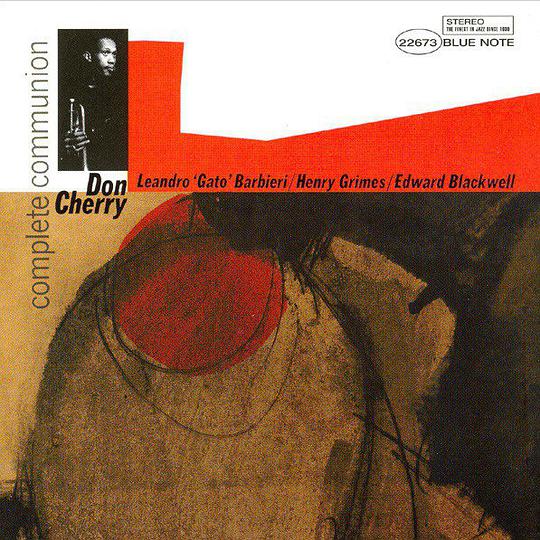
Complete Communion [Music] Douban
Don Cherry genre: Jazz
release date 2000-02-15 publisher: Blue Note Records
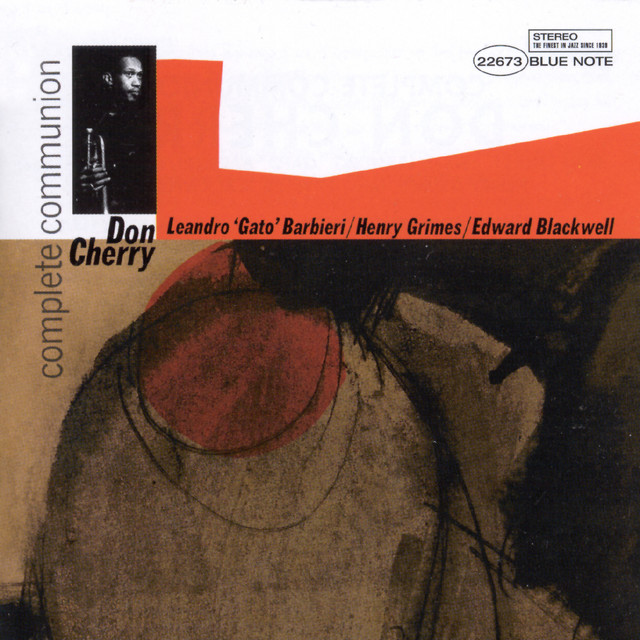
Recorded at the Van Gelder Studio, Englewood Cliffs, New Jersey on December 24, 1965
Cornet, Composed By – Don Cherry
Bass – Henry Grimes
Drums – Edward Blackwell*
Engineer [Recording] – Rudy Van Gelder
Liner Notes [Original] – Nat Hentoff
Mastered By [Transferred Using 24-bit Resolution] – Ron McMaster
Photography By [Cover And Liner Photographs] – Francis Wolff
Producer [Original Session Produced By] – Alfred Lion
Reissue Producer [Reissue Produced By] – Michael Cuscuna
Tenor Saxophone – Leandro "Gato" Barbieri*
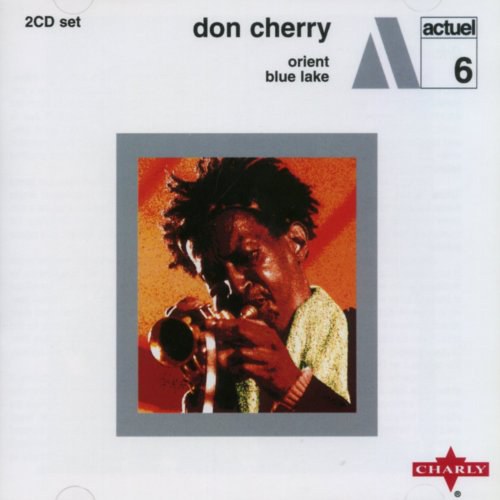
Orient/Blue Lake [Music] Douban
Don Cherry genre: Pop
release date 2003-09-22 publisher: Charly Records
Donald Eugene Cherry (November 18, 1936 – October 19, 1995) was an American jazz trumpeter. Cherry had a long association with free jazz saxophonist Ornette Coleman, which began in the late 1950s. Cherry was also a pioneer in world fusion music in the 1960s and 1970s