Jean-Marie Straub — Playwright (14)
Umiliati (2003) [Movie] Douban
Umiliati
director: 达尼埃尔·于伊耶 / 让-马里·斯特劳布 actor: Rosalba Curatola / Aldo Fruttuosi
other title: 乌米利亚蒂
The Return of the Prodigal Son/Humiliated (Il Ritorno del figlio prodigo/Umiliati), Dirs. Jean-Marie Straub and Danièle Huillet, Italy, 2001–03, 64 min., Italian with English subtitles
The diptych The Return of the Prodigal Son/Humiliated (Il Ritorno del figlio prodigo/Umiliati) (2001–03) is a segue from Workers, Peasants (2001) and Straub and Huillet’s third film based on the writings of Elio Vittorini. The film returns to Vittorini’s Marxist novel The Women of Messina (1973) about a community founded after World War II by workers and peasants from different regions of Italy. In the film, the commune is threatened by the pressures of a restructured post-war world, of its laws and politics, and by the forces of history from which they had hoped to protect themselves.

Dolando (2003), was made as a gesture from the filmmakers to their crew. One of the film’s actors, Dolando Bernardini – who also starred in From the Cloud to the Resistance (1979) – sings a capella three verses from Torquato Tasso’s Jerusalem Delivered (1581).

The Return of the Prodigal Son/Humiliated will be screened in its original 35mm format.

Programme

The Return of the Prodigal Son/Humiliated (Il Ritorno del figlio prodigo/Umiliati), Dirs. Jean-Marie Straub and Danièle Huillet, Italy, 2001–03, 64 min., Italian with English subtitles.

Incantati, Dirs. Jean-Marie Straub and Danièle Huillet, 2002, Italy/France/Germany, 35mm, 6 min., Italian with English subtitles.

Dolando, Dirs. Jean-Marie Straub and Danièle Huillet, 2003, Italy/France/Germany, 7 min., Italian with English subtitles.

豺狗和阿拉伯人 (2011) [Movie] Douban
Schakale und Araber
director: 让-马里·斯特劳布 actor: Barbara Ulrich / Giorgio Passerone
other title: Schakale und Araber
A European traveler from the North, accompanied by Arab guides, is camped in the desert. When night falls, and the Arabs are at a distance, the traveler is accosted by talking jackals. The jackals speak of an age-old hatred for Arabs, whom they associate with uncleanliness. They relate a belief passed down from their ancestors, that a man such as the protagonist would be the one to "end the quarrel which divides the world in two". The jackals attempt to enlist the traveler's assistance in destroying them, offering him old rusted scissors with which to slit the throats of the Arabs.
Geschichtsunterricht (1972) [Movie] Douban WikiData TMDB IMDb
Geschichtsunterricht
director: 达尼埃尔·于伊耶 / 让-马里·斯特劳布 actor: Gottfried Bold / Johann Unterpertinger
other title: 历史课 / History Lessons
An extended shot from a car coursing through the streets of Rome in 1972—which is to say, the ancient Republic in ruins—sets the stage for Straub-Huillet’s complex interpretation of Brecht’s unfinished experimental novel The Business Affairs of Mr. Julius Caesar. The work explores history as it has been written by the victors, with their hero worship of tyrannical leaders (whether Caesar or Hitler), and offers an alternate view of history writing as fractured and potentially revolutionary. Caesar’s former slave and former banker are both featured, providing their own differing perspectives on the Emperor’s career in the political, economic, and military life of ancient Rome.
让·布里卡尔的足迹 (2008) [Movie] Douban
Itinéraire de Jean Bricard
director: 让-马里·斯特劳布 / 达尼埃尔·于伊耶 actor: Jean Bricard
other title: Itinéraire de Jean Bricard
The film is a commemoration of the lost livelihood of the earth, the lost lives of the War and to the work of two of the cinema's greatest artists.@
Black Sin (1989) [Movie] Douban TMDB IMDb WikiData
Schwarze Sünde
director: 让-马里·斯特劳布 / 达尼埃尔·于伊耶 actor: Andréas von Rausch / Vladimir Baratta
other title: 黑色的罪恶 / Schwarze Sünde
A companion piece to the earlier film ‘The Death of Empedocles’, 'Black Sin' is an adaptation of the third version of Friedrich Hölderlin’s play ‘Der Tod Des Empedokles’.
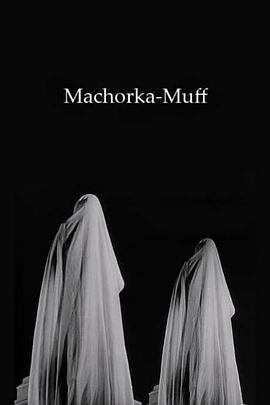
Machorka-Muff (1963) [Movie] Douban TMDB IMDb WikiData
Machorka-Muff
director: 让-马里·斯特劳布 / 达尼埃尔·于伊耶 actor: Erich Kuby / Renate Lang
other title: 马霍卡-莫夫 / 마쇼르카-머프
Straub-Huillet’s adaptation of Heinrich Böll’s biting satire Bonn Diary presents the reflections of a reactivated officer who is summon ed to the West German capital by the Ministry of Defense to establish an Academy for Military Memories. Straub considered his film to be an intervention against German rearmament in the Adenauer era: "Machorka-Muff is the story of a rape, the rape of a country on which an army has been imposed, a country which would have been happier without one."
In "Machorka-Muff," Mr. Straub, employing the cold, somewhat expressionistic but always loquacious approach of his other films, comes closest to underlining the almost subliminal irony of his themes. He briefly outlines, through the performance of Colonel Machorka-Muff, a former Nazi who is reinstated in the Adenauer regime, the unchanging thinking of the Nazi and/or the military mind. As the colonel of the title, Dr. Johannes Eckhardt is properly cold and convincing as the believer in the rights of the soldier. Although it is the shortest and earliest of Mr. Straub's films, it is both the most lucid of his works and the most clearly indicative of his potential as an imaginative filmmaker.
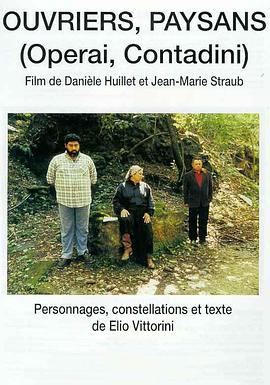
Workers, Peasants (2001) [Movie] Douban IMDb WikiData TMDB
Operai, contadini
director: 达尼埃尔·于伊耶 / 让-马里·斯特劳布 actor: Angela Nugara / Giacinto Di Pascoli
other title: 工人,农民 / Operai, contadini
"Veteran experimental filmmakers Danielle Huillet and Jean-Marie Straub helmed this unusual adaptation of a novel by Elio Vittorini. Focused on the triumphs and failures of a group of laborers and farm hands who pooled their resources to operate an alternative collective farm after the end of World War II, Operai, Contadini features a cast of 12 actors who read aloud from Vittorini's book for the duration of the film, either reciting from memory or using a clearly visible script. Hardly designed to be a crowd pleaser, Operai, Contadini proved to be controversial among the audiences for its showings at the 2001 Cannes Film Festival, where it was screened as part of the Directors' Fortnight series." ~ Mark Deming, All Movie Guide
"The group makes up a primitive community which seeks to erase not only the distress created by the war but also the hardships of life and hunger, and to protect them from violence, misery and fear. Amid the ruins of this post-war period, the characters build and invent a rapport both in their professional and daily lives between themselves, the sexes, generations, diverse social and geographical origins, and antagonistic political camps.
The group maintains a 'register', a kind of diary, as if it were entering the minutes of an inquiry or a trial." -Steve Grayson
"my favorite Straub-Huillet films are Too Early, Too Late and Operai, contadini (2001), both color landscape films with especially acute senses of place as well as of nature in all its harsh beauty." - Jonathan Rosenbaum
Not Reconciled (1965) [Movie] Douban IMDb TMDB WikiData
Nicht versöhnt oder Es hilft nur Gewalt wo Gewalt herrscht
director: 让-马里·斯特劳布 / 达尼埃尔·于伊耶 actor: Heinrich Hargesheimer / Carlheinz Hargesheimer
other title: 没有和解 / Nicht versöhnt oder Es hilft nur Gewalt wo Gewalt herrscht
The subtitle of Jean-Marie Straub and Danièle Huillet’s first feature, from 1965, “Only Violence Helps Where Violence Reigns,” suggests the fierce political program evoked by their rigorous aesthetic. The pretext of the film, set in Cologne, is Heinrich Böll’s novel “Billiards at Half Past Nine,” which they strip down to a handful of stark events and film with a confrontational angularity akin to Bartók’s music that adorns the soundtrack. The subtlest of cues accompany the story’s complex flashbacks. The middle-aged Robert Fähmel tells a young hotel bellhop of persecutions under the Third Reich; his elderly father, Heinrich, an architect famed for a local abbey, recalls the militarism of the First World War, when his wife, Johanna, incurred trouble for insulting the Kaiser. A third-generation Fähmel is considering architecture, just as the exiled brother of Robert’s late wife, returns, only to be met by their former torturer, now a West German official taking part in a celebratory parade of war veterans. Straub and Huillet make the layers of history live in the present tense, which they judge severely. The tamped-down acting and the spare, tense visual rhetoric suggest a state of moral crisis as well as the response—as much in style as in substance—that it demands.
The Bridegroom, the Actress, and the Pimp (1968) [Movie] Douban IMDb TMDB WikiData
Bräutigam, die Komödiantin und der Zuhälter
7.0 (6 ratings) director: Jean-Marie Straub / Danièle Huillet actor: Irm Hermann / Kristin Peterson
other title: 新郎,女骗子和皮条客 / Bräutigam, die Komödiantin und der Zuhälter
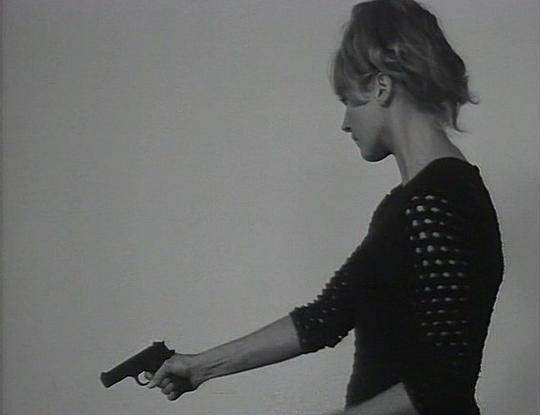
Three sequences are linked together in this short film by Straub; the first sequence is a long tracking shot from a car of prostitutes plying their trade on the night-time streets of Germany; the second is a staged play, cut down to 10 minutes by Straub and photographed in a single take; the final sequence covers the marriage of James and Lilith, and Lilith's subsequent execution of her pimp, played by Rainer Werner Fassbinder.