Ward Kimball — Director (3)
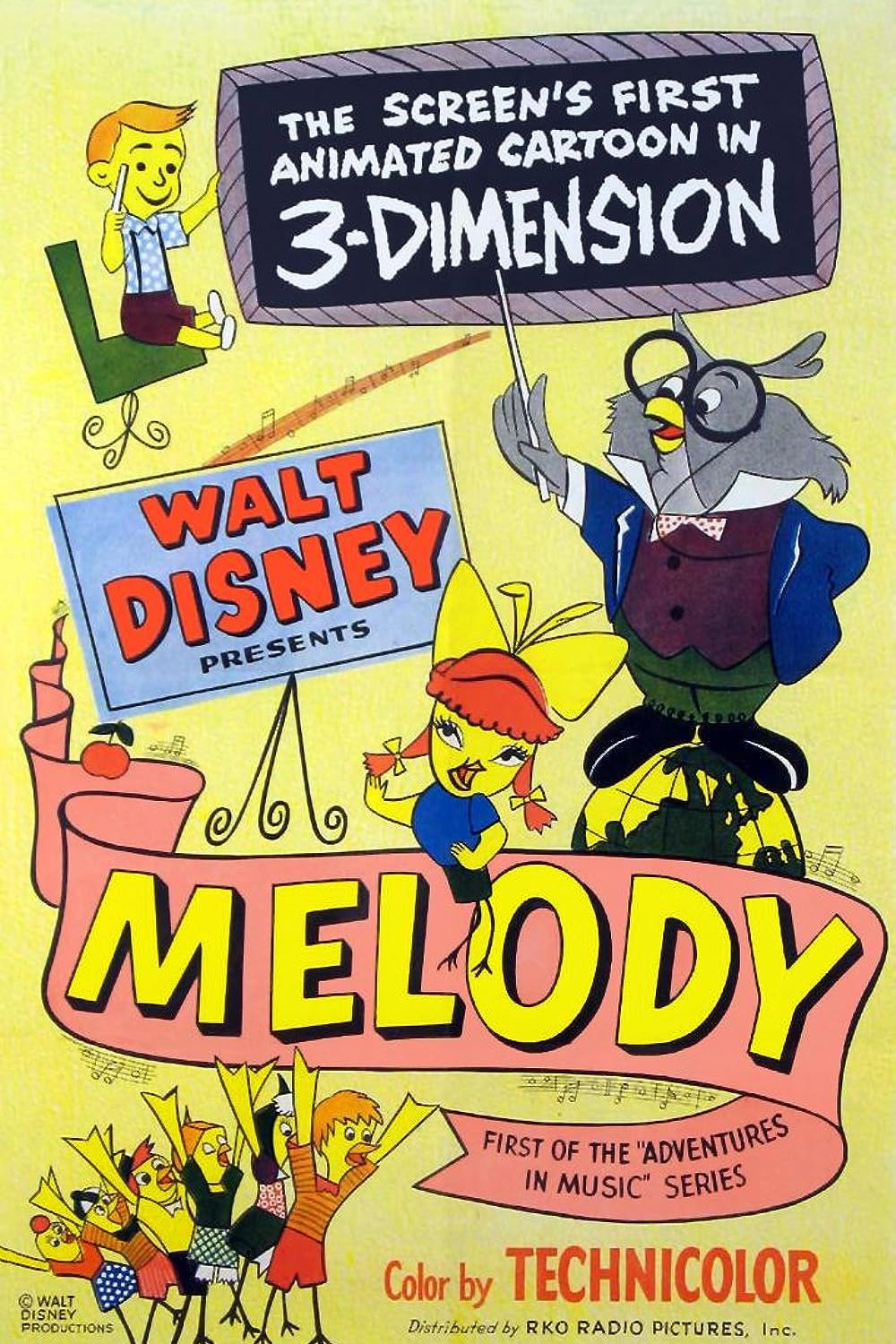
Melody (1953) [Movie] TMDB IMDb WikiData
Melody
other title: メロディ (映画) / 초안:Melody (1953년 영화)
An owl teaches his class full of birds about melody. It's all around in nature. Only birds and man can sing; man "sings" even when he speaks. We see a quick survey of the stages of life, as captured by songs: the alphabet song for primary school, Here Comes the Bride, The Old Gray Mare, etc. Some inspirations for song are outlined in song: love, sailing, trains, the West, motherhood, etc., but "we never sing about brains." Finally, an example of how a simple melody can be expanded into a symphony: an elaborate version of the simple tune that opened the lesson
Man in Space (1956) [Movie] Douban
Man in Space
director: Ward Kimball actor: Ward Kimball / Walt Disney
other title: 太空漫谈
n a 2-minute introduction to this piece, Leonard Maltin briefly discusses Disney animator Ward Kimball's impact on the series, for which he was director and producer. He also explains the reception to this episode. He reveals it was later edited into a featurette, accompanying Davy Crockett and the River Pirates and meriting an Academy Award nomination for Best Documentary Short. As the title implies, this episode looks into the potential of people traveling to space.
This new series is launched with a brief, and often light-hearted history of experiments with rockets. The possibilites of satellites are considered. And then a practical look at what a spaceman shall have to physically and psychologically face: momentum, weightlessness, radiation, and perhaps space sickness. These animated sequences on the spaceman are most inspired, providing a factually accurate and visually amusing fashion. The episode concludes with a simulation of a launch into space.
Mars and Beyond (1957) [Movie] Douban
Mars and Beyond
director: Ward Kimball actor: Paul Frees / Walt Disney
other title: 移居火星
Garco the Robot introduces Walt, who introduces this exciting episode of "Tomorrowland" which covers life on other planets.We begin with a history of man, who seeks to understand the world they inhabit and begin to notice patterns in the stars. Mankind begins to develop certain beliefs regarding the celestial bodies. Theories from scientists and philosophists are covered. Ptolemy's inaccurate, but accepted theories, and then Copernicus.
Then life on other planets is considered. Some wonderfully imaginative imagination depicts the theorized inhabitants of other planets. Soon, Mars becomes the focus of this episode. Ideas from H.G. Wells and Edgar Rice Burroughs are brought to life with more colorful animation. Pulp science fiction comics of the time are parodied in the same straightforward tone as everything else. As the segment plays out, you can see freedom in the production, Ward Kimball's comic tone, and even a cameo from Donald Duck.
After this, the program adopts a more serious tone as it profiles each of the planets in the solar system, from the perspective of what would happen to a man on them. Life in Mars could almost be normal, the program declares. Something that is of increasing importance for the future, we're told. Dr. E.C. Slipher, a foremost Mars authority, discusses the red planet and the possibility that life is there. More animation speculates what the conditions in Mars might be like. This section is filled with striking, inventive and decidedly atypical Disney animation. The program wraps up with what a trip to Mars would entail for a space crew and its vessels. Over the end credits, Old Yeller is advertised.