Michael Gambon — Actor (30)
Squanto: A Warrior's Tale (1994) [Movie] TMDB IMDb WikiData
Squanto: A Warrior's Tale
other title: O Último Grande Guerreiro / Squanto - Der große Krieger
It's the 17th century, and Native American Squanto roams free in the New World until he's captured by visiting sailors who take him back to England. Monk Brother Daniel teaches him social customs, but other Englishmen aren't as kind. Squanto becomes the unwilling star of performances that highlight his fighting skills, but he eventually engineers a return trip to America. He finds that his home has changed forever, and he must chart a new path for his people.
Christmas Carol: The Movie (2001) [Movie] TMDB WikiData IMDb
Christmas Carol: The Movie
other title: Ein Weihnachtsmärchen / Un chant de Noël
Animated version of the classic Charles Dickens story. Warned by the ghost of his old business partner Marley that his sins would lead to punishment in the afterlife, the cruel and greedy Scrooge is visited by the Ghosts of Christmas Past, Present and Future to show him how the course of his life led him to where he is - and where it will lead if he doesn't change his ways.
Emma (2009) [TV] TMDB IMDb WikiData
Emma
8.2 (112 ratings) director: Jim O'Hanlon actor: 罗莫拉·加莱 / 迈克尔·甘本
other title: 엠마 / エマ 恋するキューピッド
Emma Woodhouse is a congenial young lady who delights in meddling in other people’s affairs. She is perpetually trying to unite men and women who are utterly wrong for each other. Despite her interest in romance, Emma is clueless about her own feelings, and her relationship with gentle Mr. Knightley.
Little Women (2017) [TV] IMDb TMDB WikiData
Little Women
7.0 (25 ratings) director: Heidi Thomas actor: 玛雅·霍克 / 薇拉·菲茨杰拉德
other title: 작은 아씨들 / Les quatre filles du docteur March
Set against the backdrop of the American Civil War, the story follows sisters Jo, Meg, Beth and Amy March on their journey from childhood to adulthood. With the help of their mother, Marmee, and while their father is away at war, the girls navigate what it means to be a young woman: from sibling rivalry and first love, to loss and marriage.
The Beast Must Die (1974) [Movie] IMDb WikiData TMDB
The Beast Must Die
director: Paul Annett actor: Calvin Lockhart / 彼得·库欣
other title: 비스트 머스트 다이 / Mondblut
Wealthy big game hunter Tom Newcliffe has tracked and killed practically every type of animal in the world. But one creature still evades him, the biggest game of all - a werewolf.
Sky Captain and the World of Tomorrow (2004) [Movie] Min reol
Sky Captain and the World of Tomorrow
director: Kerry Conran actor: Jude Law / Gwyneth Paltrow
other title: Capitaine Sky et le monde de demain / 월드 오브 투모로우
When gigantic robots attack New York City, "Sky Captain" uses his private air force to fight them off. His ex-girlfriend, reporter Polly Perkins, has been investigating the recent disappearance of prominent scientists. Suspecting a link between the global robot attacks and missing men, Sky Captain and Polly decide to work together. They fly to the Himalayas in pursuit of the mysterious Dr. Totenkopf, the mastermind behind the robots.
The Death & Life of John F. Donovan (2019) [Movie] Min reol
The Death & Life of John F. Donovan
director: Xavier Dolan actor: Kit Harington / Natalie Portman
other title: Ma vie avec John F. Donovan / 존 F. 도노반의 죽음과 삶
A decade after the death of an American TV star, a young actor reminisces about the written correspondence he once shared with the former, as well as the impact those letters had on both their lives.
Ali G Indahouse (2002) [Movie] Min reol
Ali G Indahouse
other title: Ali G / Ali G in da House
Ali G unwittingly becomes a pawn in the evil Chancellor's plot to overthrow the Prime Minister of Great Britain. However, instead of bringing the Prime Minister down, Ali is embraced by the nation as the voice of youth and 'realness', making the Prime Minister and his government more popular than ever.
Betrayal [Performance] Douban
genre: theater playwright: Harold Pinter
director: Peter Hall / Trevor Nunn actor: Penelope Wilton / Michael Gambon / Daniel Massey / Artro Morris / Raul Julia
The years between 1968 and 1977 occur in reverse order; scenes within years 1977 and 1973 move forward.
1977
Scene One: Pub. 1977. Spring.
Emma and Jerry meet for the first time in two years. For 7 years they had an affair and a secret flat, and Jerry says no-one else knew. Now Emma is having an affair with Casey, an author whose agent is Jerry and whose publisher is Robert, Emma’s husband. Emma says she found out last night that Robert has betrayed her with other women for years, and admits she revealed her affair with Jerry.
Scene Two: Jerry's House. Later the same day.
Jerry meets Robert to talk about the affair. Robert reveals that in fact he learned about it 4 years ago. Since then their friendship has continued, albeit without playing squash.
1975
Scene Three: Flat. 1975. Winter.
It is the end of Jerry and Emma’s affair. They rarely meet, and Emma’s hopes that the flat would be a different kind of home are unfulfilled. They agree to give it up.
1974
Scene Four: Robert and Emma's House. Living room. 1974. Autumn.
Jerry visits Robert and Emma at home. He reveals that Casey has left his wife and is living nearby. Jerry and Robert plan to play squash, but Jerry reveals that first he is visiting New York with Casey.
1973
Scene Five: Hotel Room. 1973. Summer.
Robert and Emma are on holiday, intending to visit Torcello tomorrow. Emma is reading a book by Spinks, another author whose agent is Jerry. Robert says he refused to publish it because there is not much more to say about betrayal. Robert has discovered that Emma has received a private letter from Jerry. Emma admits they are having an affair.
Scene Six: Flat. 1973. Summer.
Emma has returned from the holiday with Robert in Venice. She has bought a tablecloth for the flat. Jerry reveals that despite the affair he continues to lunch with Robert.
Scene Seven: Restaurant. 1973. Summer.
Robert gets drunk over lunch with Jerry. He says he hates modern novels, and that he went to Torcello on his own and read Yeats.
1971
Scene Eight: Flat. 1971. Summer.
Emma wants to know whether Jerry’s wife suspects his affair, and announces that while Jerry was in America she became pregnant with Robert’s child.
1968
Scene Nine: Robert and Emma's House. Bedroom. 1968. Winter.
During a party Jerry surprises Emma in her bedroom and declares his love for her. He tells Robert he is his oldest friend as well as his best man.
英国国家剧院五十周年庆典 National Theatre: 50 Years on Stage [Performance] Douban
9.7 (7 ratings) genre: theater
other title: 英国国家剧院50周年庆典 theater: National Theatre director: Nicholas Hytner actor: Maggie Smith / Simon Russell Beale / Benedict Cumberbatch / Helen Mirren / Judi Dench


From Rosencrantz and Guildenstern Are Dead to The History Boys, from The Mysteries to Angels in America, from Guys and Dolls to London Road – join us for a thrilling evening of live performance and rare glimpses from the archive, featuring many of the most celebrated actors who have performed on our stages over the past five decades and directed by Nicholas Hytner.

Skylight [Performance] Douban
Skylight
8.7 (12 ratings) genre: theater playwright: David Hare / 大卫·海尔 David Hare
other title: 天窗 director: Richard Eyre / Stephen Daldry actor: Lia Williams / Daniel Betts / Michael Gambon / Carey Mulligan / Bill Nighy
East London school teacher Kyra Hollis is visited on the same night by son Edward and father Tom Sargeant. Kyra had been living with the Sargeant family years earlier, but left after her affair with Tom was discovered by Tom's wife, who has since died. Edward now accuses Kyra of having left him as well, as he saw her as a big sister; and he demands to know why she left his life.
Shortly thereafter, Tom, a wealthy restaurateur, with real life references to Terence Conran, appears unheralded and for no apparent reason. Kyra's less than glamorous lifestyle leads him to poke fun at her to the point of insult, accusing her of self-punishment. After Kyra cooks a spaghetti dinner (which the actress actually cooks on stage), the talk turns to their relationship, and it becomes clear that their chances to be rekindled rest on whether one of them can change their preconceived notions of the other.
No Man's Land 2008年版 [Performance] Douban
part of Performance: No Man's Land
theater: Gate Theatre director: Rupert Goold
other title: 2008年版 playwright: Harold Pinter actor: David Bradley / Michael Gambon
The first act opens with Hirst's offering a drink to Spooner: "As it is?" – that is, neat (UK) or straight (U.S.) – and Spooner's reply: "As it is, yes please, absolutely as it is" (15). During the first act, Spooner claims to be a fellow poet and to have known his more illustrious literary host and mutual acquaintances and relationships in the past. Toward the end of act one, Hirst's keepers (quasi-body guards) "vagabond cock" Foster and Briggs seek to fend off the self-insinuating Spooner, leading Hirst "out of the room (52) and away from him. The act ends with a "Blackout" – visually demonstrating Foster's taunt: "Listen. You know what it's like when you're in a room with the light on and then suddenly the light goes out? I'll show you. It's like this. ... He turns the light out" (53).
During Act Two, in his increasingly inebriated state, Hirst may mistake or feign recognition of Spooner as an Oxbridge classmate from the 1930s, an apparently false impression which Spooner nevertheless encourages (68–78), leading both of them into a series of increasingly questionable reminiscences, which Hirst finally and abruptly undercuts: "This is outrageous! Who are you? What are you doing in my house?" going on to accuse Spooner of being an impostor: "You are clearly a lout. The Charles Wetherby I knew was a gentleman. I see a figure reduced. I am sorry for you. Where is the moral ardour that sustained you once? Gone down the hatch." – allusively and both wistfully and comically combining the clichés "Gone with the wind" and "Down the hatch," after which, Briggs "enters, pours whisky and soda, gives it to" Hirst, who "looks at it" and then says, "Down the hatch. Right down the hatch. (He drinks.)" (78). Hirst proclaims, "Let us change the subject. Pause. For the last time." (91), but immediately asks, "What have I said?" That leads the characters to debate what Hirst's phrase for the last time precisely "means" (91–94), leaving all of them, according to Spooner, "in no man's land. Which never moves, which never changes, which never grows older, but which remains forever icy and silent." Following the illustrative "Silence", Hirst utters the play's final words and provides its final action: "I'll drink to that" (95): "He drinks," paralleling the opening words of the first act ("As it comes?"), and the play ends, ambiguously, with a "SLOW FADE" of lights (95).
《我是哪一个》 [Performance] Douban
A Number
genre: theater playwright: Caryl Churchill / 卡罗尔·丘吉尔
other title: A Number / 好几个 / 二十一分之一 director: Stephen Daldry / Scott Barber actor: Michael Gambon / Daniel Craig / Vince Campbell / Mark Coyan / John Shrapnel
一个儿子从小到大都以为自己是家里的独生子,偶然间发现自己不过是好几个克隆版本其中之一。面对儿子的质问,父亲支支吾吾地承认说亲生儿子早年夭折,于是决定让医生克隆一个一模一样的儿子,但医生违背医学伦理,偷偷克隆了好几个。父亲决定要起诉医院。
然而父亲的说法不尽不实:亲生儿子不但没有过世,而且也才得知父亲竟然抛弃了他而克隆出另外的儿子。父子对峙的过程牵出一系列谜团:父亲当年为何要克隆儿子?母亲哪去了?克隆版本的存在对亲生儿子的成长和自我认同产生了怎样的冲击?而克隆人的身份和尊严又如何定义?
The play begins with a father, Salter, and his son Bernard (B2) discussing the fact that the son has found out that he has been cloned. The father claims not to have known this and claims that a hospital must have stolen his cells at some point and made illegal copies of him. He talks about suing the hospital for money. The son then mentions that there were others and the father admits that the son is a clone. He says that the original son and his mother died in a car crash and that he wanted his son back so he had him cloned. Then the original son confronts Salter and has a discussion about the clones, Salter again denies knowledge about the others. It turns out Salter lied about the mother dying in a car crash; she killed herself by throwing herself under a train; and that the original son did not die, but was instead 'sent away' by Salter, unable or unwilling to care for him due to his grief. The first clone then finds out the original is still alive. Bernard (B1) meets with Bernard (B2) and murders him, and then proceeds to commit suicide. Salter then meets with Michael Black, another clone. Michael Black lives a very normal life, has a wife and three children, and is happy. Salter ends up miserable and seemingly alone even though he knows that there are 19 more clones.
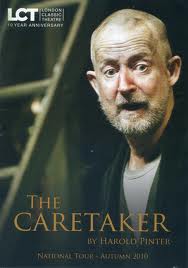
The Caretaker 2000 London版 [Performance] Douban
part of Performance: The Caretaker
theater: Comedy Theatre director: Patrick Marber
other title: 2000 London版 playwright: Harold Pinter actor: Michael Gambon / Rupert Graves
Act I

A night in winter

[Scene 1]

Aston has invited Davies, a homeless man, into his apartment after rescuing him from a bar fight (7–9). Davies comments on the apartment and criticizes the fact that it is cluttered and badly kept. Aston attempts to find a pair of shoes for Davies but Davies rejects all the offers. Once he turns down a pair that doesn’t fit well enough and another that has the wrong colour laces. Early on, Davies reveals to Aston that his real name is not "Bernard Jenkins", his "assumed name", but really "Mac Davies" (19–20, 25). He claims that his papers validating this fact are in Sidcup and that he must and will return there to retrieve them just as soon as he has a good pair of shoes. Aston and Davies discuss where he will sleep and the problem of the "bucket" attached to the ceiling to catch dripping rain water from the leaky roof (20–21) and Davies "gets into bed" while "ASTON sits, poking his [electrical] plug (21).

[Scene 2]
The LIGHTS FADE OUT. Darkness.

LIGHTS UP. Morning. (21) As Aston dresses for the day, Davies awakes with a start, and Aston informs Davies that he was kept up all night by Davies muttering in his sleep. Davies denies that he made any noise and blames the racket on the neighbors, revealing his fear of foreigners: "I tell you what, maybe it were them Blacks" (23). Aston informs Davies that he is going out but invites him to stay if he likes, indicating that he trusts him (23–24), something unexpected by Davies; for, as soon as Aston does leave the room (27), Davies begins rummaging through Aston's "stuff" (27–28) but he is interrupted when Mick, Aston’s brother, unexpectedly arrives, "moves upstage, silently," "slides across the room" and then suddenly "seizes Davies' "arm and forces it up his back," in response to which "DAVIES screams," and they engage in a minutely-choreographed struggle, which Mick wins (28–29), ending Act One with the "Curtain" line, "What's the game?" (29).
Act II

[Scene 1]
A few seconds later

Mick demands to know Davies' name, which the latter gives as "Jenkins" (30), interrogates him about how well he slept the night before (30), wonders whether or not Davies is actually "a foreigner"—to which Davies retorts that he "was" indeed (in Mick's phrase) "Born and bred in the British Isles" (33)—going on to accuse Davies of being "an old robber […] an old skate" who is "stinking the place out" (35), and spinning a verbal web full of banking jargon designed to confuse Davies, while stating, hyperbolically, that his brother Aston is "a number one decorator" (36), either an outright lie or self-deceptive wishful thinking on his part. Just as Mick reaches the climactic line of his diatribe geared to put the old tramp off balance—"Who do you bank with?" (36), Aston enters with a "bag" ostensibly for Davies, and the brothers debate how to fix the leaking roof and Davies interrupts to inject the more practical question: "What do you do . . . when that bucket's full?" (37) and Aston simply says, "Empty it" (37). The three battle over the "bag" that Aston has brought Davies, one of the most comic and often-cited Beckettian routines in the play (38–39). After Mick leaves, and Davies recognises him to be "a real joker, that lad" (40), they discuss Mick's work in "the building trade" and Davies ultimately discloses that the bag they have fought over and that he was so determined to hold on to "ain't my bag" at all (41). Aston offers Davies the job of Caretaker, (42–43), leading to Davies' various assorted animadversions about the dangers that he faces for "going under an assumed name" and possibly being found out by anyone who might "ring the bell called Caretaker" (44).

[Scene 2]

THE LIGHTS FADE TO BLACKOUT.
THEN UP TO DIM LIGHT THROUGH THE WINDOW.
A door bangs.
Sound of a key in the door of the room.
DAVIES enters, closes the door, and tries the light switch, on, off, on, off.

It appears to Davies that "the damn light's gone now," but, it becomes clear that Mick has sneaked back into the room in the dark and removed the bulb; he starts up "the electrolux" and scares Davies almost witless before claiming "I was just doing some spring cleaning" and returning the bulb to its socket (45). After a discussion with Davies about the place being his "responsibility" and his ambitions to fix it up, Mick also offers Davies the job of "caretaker" (46–50), but pushes his luck with Mick when he observes negative things about Aston, like the idea that he "doesn't like work" or is "a bit of a funny bloke" for "Not liking work" (Davies' camouflage of what he really is referring to), leading Mick to observe that Davies is "getting hypocritical" and "too glib" (50), and they turn to the absurd details of "a small financial agreement" relating to Davies' possibly doing "a bit of caretaking" or "looking after the place" for Mick (51), and then back to the inevitable call for "references" and the perpetually-necessary trip to Sidcup to get Davies' identity "papers" (51–52).

[Scene 3]
Morning

Davies wakes up and complains to Aston about how badly he slept. He blames various aspects of the apartment's set up. Aston suggests adjustments but Davies proves to be callous and inflexible. Aston tells the story of how he was checked into a mental hospital and given electric shock therapy, but when he tried to escape from the hospital he was shocked while standing, leaving him with permanent brain damage; he ends by saying, "I've often thought of going back and trying to find the man who did that to me. But I want to do something first. I want to build that shed out in the garden" (54–57). Critics regard Aston's monologue, the longest of the play, as the "climax" of the plot.[3] In dramaturgical terms, what follows is part of the plot's "falling action".
Act III

[Scene 1]
Two weeks later [… ]Afternoon.

Davies and Mick discuss the apartment. Mick relates "(ruminatively)" in great detail what he would do to redecorate it (60). When asked who "would live there," Mick's response "My brother and me" leads Davies to complain about Aston's inability to be social and just about every other aspect of Aston's behaviour (61–63). Though initially invited to be a "caretaker," first by Aston and then by Mick, he begins to ingratiate himself with Mick, who acts as if he were an unwitting accomplice in Davies' eventual conspiracy to take over and fix up the apartment without Aston's involvement (64) an outright betrayal of the brother who actually took him in and attempted to find his "belongings"; but just then Aston enters and gives Davies yet another pair of shoes which he grudgingly accepts, speaking of "going down to Sidcup" in order "to get" his "papers" again (65–66).

[Scene 2]
That night

Davies brings up his plan when talking to Aston, whom he insults by throwing back in his face the details of his treatment in the mental institution (66–67), leading Aston, in a vast understatement, to respond: "I . . . I think it's about time you found somewhere else. I don't think we're hitting it off" (68). When finally threatened by Davies pointing a knife at him, Aston tells Davies to leave: "Get your stuff" (69). Davies, outraged, claims that Mick will take his side and kick Aston out instead and leaves in a fury, concluding (mistakenly): "Now I know who I can trust" (69).

[Scene 3]
Later

Davies reenters with Mick explaining the fight that occurred earlier and complaining still more bitterly about Mick's brother, Aston (70–71). Eventually, Mick takes Aston's side, beginning with the observation "You get a bit out of your depth sometimes, don't you?" (71). Mick forces Davies to disclose that his "real name" is Davies and his "assumed name" is "Jenkins" and, after Davies calls Aston "nutty", Mick appears to take offense at what he terms Davies' "impertinent thing to say," concludes, "I'm compelled to pay you off for your caretaking work. Here's half a dollar," and stresses his need to turn back to his own "business" affairs (74). When Aston comes back into the apartment, the brothers face each other," "They look at each other. Both are smiling, faintly" (75). Using the excuse of having returned for his "pipe" (given to him earlier through the generosity of Aston), Davies turns to beg Aston to let him stay (75–77). But Aston rebuffs each of Davies' rationalisations of his past complaints (75–76). The play ends with a "Long silence" as Aston, who "remains still, his back to him [Davies], at the window, apparently unrelenting as he gazes at his garden and makes no response at all to Davies' futile plea, which is sprinkled with many dots (". . .") of elliptical hesitations (77–78).

"British Legends of Stage and Screen":Michael Gambon (TV) (2012) [Movie] Douban
director: Anthony Fabian actor: Michael Gambon
In the first of a series of interviews with leading British actors, Michael Gambon discusses his life and work, including his upbringing in Dublin and the role luck has played in guiding his career. He also talks about a selection of his most notable appearances on stage and screen, including roles in the BBC's The Singing Detective, The King's Speech, Gosford Park, Lord Marchmain in the 2008 remake of Brideshead Revisited and Professor Albus Dumbledore in JK Rowling's Harry Potter movies.
"Arena" The National Theatre: Part Two - War and Peace (2013) [Movie] Douban
"Arena" The National Theatre: Part Two - War and Peace
director: Adam Low actor: Penelope Wilton / Alan Ayckbourn
other title: 英国国家剧院(下)—战争与和平 / BBC Four - Arena - The National Theatre
The National Theatre is 50 in October 2013 and has given the BBC unprecedented access to make two Arena documentaries for BBC Four.
In the second film Peter Hall, Richard Eyre, Trevor Nunn and Nicholas Hytner talk about running the new National Theatre - the biggest job in the British theatre - from its opening by the Queen in 1976 through the strikes which nearly forced it to close in the 1970s, clashes with the government, the controversy of the play Romans in Britain, to the fulfilment of Olivier's original dream with the huge success of shows like Amadeus, Guys and Dolls, War Horse and One Man Two Guvnors.
With contributions from Ian McKellen, Judi Dench, James Corden and many others.
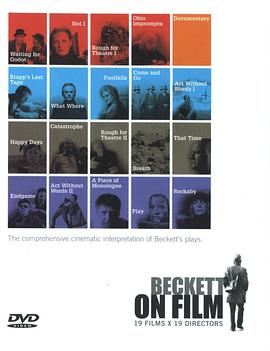
Beckett on Film - Endgame (2000) [Movie] Douban
One of the best from the series of Beckett on Film.

Endgame was written (by Samuel Beckett) in French in 1957. Hamm, who is blind and unable to walk, and Clov, Hamm's servant, occupy 'a bare interior'. Nagg and Nell, Hamm's parents, are in dustbins in a corner, and sometimes pop up to talk. Clov looks out of the two small windows with a telescope. The world outside seems dead and grey. Daily rituals are performed ad nauseam. 'Why this farce, day after day?' asks Nell. Hamm and Clov have both 'had enough'. They repeatedly discuss whether or not Clov will leave, and why he stays. Hamm asks Clov to kill him, but he won't. However, Nell dies. Finally, Clov says he's leaving once again and returns 'dressed for the road', but he stands watching Hamm until the curtain falls.

Synopsis most from:


Script


Other useful link: