
Frederick Wiseman — Director (17)
聋 (1986) [Movie]
director:
Frederick Wiseman
Basic Training (1971) [Movie] IMDb Douban TMDB
Basic Training
director:
弗雷德里克·怀斯曼
other title:
基础训练
/
기초 군사 훈련
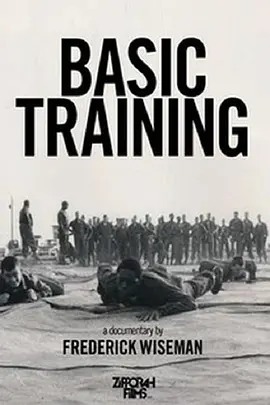
BASIC TRAINING follows a company of draftees and enlisted men through the nine weeks of the basic
training cycle. The varieties of training techniques used by the army in converting civilians to soldiers are
illustrated in scenes of drills, M-16 and bayonet use, gas chamber, mines, night crawl, infiltration course and
the many forms of ideological training familiar to millions of men and women who have served in the armed
forces.
training cycle. The varieties of training techniques used by the army in converting civilians to soldiers are
illustrated in scenes of drills, M-16 and bayonet use, gas chamber, mines, night crawl, infiltration course and
the many forms of ideological training familiar to millions of men and women who have served in the armed
forces.

Menus-Plaisirs - Les Troisgros (2023) [Movie] WikiData IMDb Douban TMDB
Menus Plaisirs - Les Troisgros
7.8 (8 ratings)
director:
Frederick Wiseman
other title:
Menus Plaisirs - Les Troisgros
/
Menu plaisirs
…
Founded in 1930, the Troisgros family restaurant has been holding 3 Michelin stars for 55 years over four generations. Michel Troisgros, the third generation to head the restaurant, has turned over the responsibility for the cuisine to his son César, the 4th generation of Troisgros chefs. Wiseman embarks us on a mouthwatering and sense-pleasing journey into the family’s three restaurant kitchens. An immersive experience, showing the great artistry, ingenuity, imagination, and hard work of the restaurant staff in creating, preparing, and presenting meals of the highest quality.
源自:
源自:

Aspen (1991) [Movie] Douban IMDb TMDB
Aspen
director:
Frederick Wiseman
actor:
John Denver
other title:
阿斯彭
/
애스펀
A former mining town in Colorado’s Rocky Mountains, Aspen is now better known as a winter playground for wealthy holidaymakers. Against the majestic landscape, visitors relax while locals toil around them.

The Store (1983) [Movie] Douban TMDB IMDb
The Store
director:
Frederick Wiseman
actor:
Art Buchwald
/
Lady Bird Johnson
other title:
商店
/
백화점
THE STORE is a film about the main Neiman-Marcus store and corporate
headquarters in Dallas. The sequences in the film include the selection, presentation,
marketing, pricing, advertising and selling of a vast array of consumer products including
designer clothes and furs, jewelry, perfumes, shoes, electronic products, sportswear, china
and porcelain and many other goods. The internal management and organizational aspects
of a large corporation are shown, i.e., sales meetings, development of marketing and
advertising strategies, training, personnel practices and sales techniques.
headquarters in Dallas. The sequences in the film include the selection, presentation,
marketing, pricing, advertising and selling of a vast array of consumer products including
designer clothes and furs, jewelry, perfumes, shoes, electronic products, sportswear, china
and porcelain and many other goods. The internal management and organizational aspects
of a large corporation are shown, i.e., sales meetings, development of marketing and
advertising strategies, training, personnel practices and sales techniques.
Canal Zone (1977) [Movie] Douban TMDB IMDb
Canal Zone
director:
弗雷德里克·怀斯曼
other title:
运河区
/
운하 지구
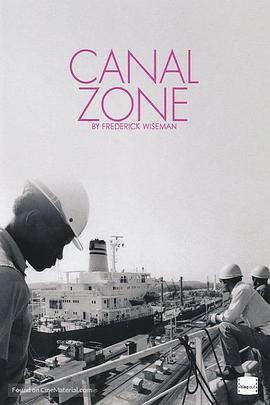
CANAL ZONE is about the people who live and work in the Panama Canal Zone and shows both the operation of the Canal and the various governmental agencies — business, military, and civilian — related to the functioning of the Canal and the lives of the Americans in the zone. The film includes sequences of ships in transit, the work of special canal pilots, aspects of the civil government, work of the military, and the social, religious and recreational life of the Zonians.

Law and Order (1970) [Movie] IMDb Douban WikiData TMDB
Law and Order
director:
弗雷德里克·怀斯曼
other title:
法律与秩序
/
法律與秩序(紀錄片)
…
A cinema verité view of the day-to-day activities of policemen on the Kansas City, Missouri police force. The police are followed through a series of routine actions: locating a stolen purse, caring for a lost child, arresting a prostitute, and settling family problems.
Essene (1972) [Movie] Douban IMDb TMDB
Essene
director:
弗雷德里克·怀斯曼
other title:
艾塞尼
/
에세네파
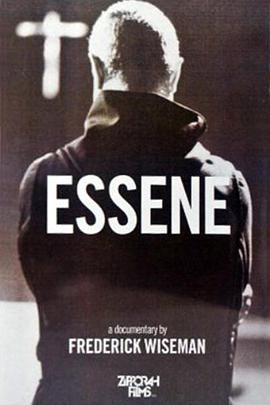
ESSENE is about daily life in a Benedictine monastery and the resolution of conflict between personal needs
and the institutional and organizational priorities of the community. In the Order, where the focus of life is
the relationship of individual work and worship to the community as a whole, the brethren must cope with
the same issues that arise in any community: rules, work, worship, values, love, and play.
and the institutional and organizational priorities of the community. In the Order, where the focus of life is
the relationship of individual work and worship to the community as a whole, the brethren must cope with
the same issues that arise in any community: rules, work, worship, values, love, and play.
Near Death (1989) [Movie] Douban TMDB IMDb WikiData
Near Death
director:
弗雷德里克·怀斯曼
other title:
临终
/
임사
…
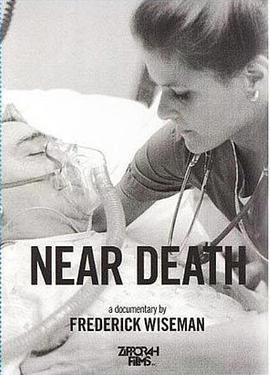
''Your lungs are about as bad as they can get,'' the nurse explains to the 83-year-old man. ''Your lungs aren't going to get better, and so the act of putting you on the machine is almost a futile effort.'' In a long conversation, the nurse lets this patient know what his options are and tries to determine his wishes, as kindly as possible but with the suggestion that she has done this many times before. ''I want to help you, but I only want to help you in the manner in which you want to be helped,'' she says. ''I don't want to keep you alive unless you like living.''
A half-dozen young medical professionals gather around the bed of an old woman, a stroke victim who cannot speak and can communicate only by means of the faintest movements. They want to discuss the possibility of removing her breathing tube and the machine to which it is connected. Does she understand what the consequences of this may be? Is she prepared for the worst? Is she worried about the way her death may affect her devoted husband? The woman attempts to answer this barrage of difficult questions by weakly signaling yes or no, but she is soon exhausted. She indicates that she would like the conversation to stop.
A semiconscious man who will die within a matter of days is being groomed by a slightly impatient young nurse. He looks momentarily startled as she adjusts his head so that he can be shaved. It looks as if moving the tubes attached to his face is slightly painful. It's hard to tell. The man gives the nurse one more startled look as she perfunctorily runs a comb through his hair.
In a room filled with medical machinery, the line on a monitor goes flat. A nurse stands by, still holding the patient's hand. A doctor touches the patient efficiently, then checks for breath from her open mouth. ''Okay, she's dead,'' he says. ''7:53.''
These are the unforgettably sobering sights and sounds of ''Near Death,'' Frederick Wiseman's great, fearless and monumental six-hour documentary chronicling the workings of the medical intensive care unit at Boston's Beth Israel Hospital. They are the sorts of images that become grimly commonplace during the course of a film that is less a viewing experience than a total immersion. It isn't the running time that makes ''Near Death'' so overwhelming; it's the subject itself. But at this length, the film has time to carry its audience from an initially raw emotional response to a calmer consideration of the difficult issues raised here, and finally on to some sort of resolution.
It is Mr. Wiseman's method to make himself an extremely attentive fly on the wall, observing long exchanges between doctors and patients, doctors and family members, and among the various members of the unit's medical staff. This particular intensive care unit is not a place for emergency surgery or for treating sudden illnesses; it's a place offering medically sophisticated treatment to people whose final days mark the last stage of slow, agonizing decline. Everyone the camera observes has spent time watching life erode and has had extensive experience with debilitating pain.
One of the doctors has a sister who practices medicine at another hospital. ''She doesn't say 'What do you think?' - she says 'You're father's dying,' '' he tells a colleague. But at this particular ward, great care is taken to talk more humanely and less abrubtly about what the terminally ill patient's prospects really are, and to try to involve patients and family members in making life-or-death decisions. This is even harder than it sounds. Patients who thought they would never want heroic measures can sometimes feel differently when their worst fears become reality; relatives who want everything possible done for their loved ones reach a point where they may feel the dying patient has been through enough.
The doctors have their own perspective. Experience has inevitably touched some of them with cynicism, however hard they fight against their own pessimism. ''I really believe that from the moment that diagnosis was made - like in 'Treasure Island,' when that old captain got handed a black spot? She got handed a black spot,'' a doctor tells a colleague about one patient. ''It's not clear we have anything to offer,'' this same doctor subsequently acknowledges. ''But in this day and age, we're extremely reluctant to say 'We can't do anything for that.' '' The doctors are always first to recognize hopeless situations, and they find themselves gently trying to steer patients toward the recognition that high-tech life-prolonging efforts may be futile and self-defeating. Phrases like ''We never know the future for sure, but. . . .'' and ''a borderline situation between surviving and not surviving'' have become delicate staples of their conversation.
Among themselves, the doctors talk differently; they may use less gentle euphemisms, like ''just call it a day.'' ('' 'Quality of life' is for furniture salesmen,'' one says.) For the most part, the doctors in the film are as young and energetic as their patients are weak and old, and at times it is difficult not to regard as cavalier the very hardiness that allows them to do this work at all. One of the things that emerges over six hours is an enormous appreciation of the doctors' stamina and tact.
As ''Near Death'' focuses attention on questions of just where life ends and how its ending can best be handled, it flinches at nothing. It's not for the timid. Though there is no full autopsy sequence depicted here, doctors are seen studying diseased organs in a post-autopsy evaluation session; another section of the film shows exactly how nurses remove the dead from their rooms and transport them inconspicuously to the morgue. The nurses' casualness about this is at least as chilling as the process itself.
And if squeamishness is not spared, neither is pure emotion. There are scenes of heartbreaking tenderness in which longtime spouses, soon to be left alone, try to comfort the people they love. The families who allowed Mr. Wiseman to film long, uninterrupted takes chronicling such private and painful moments have made an invaluable contribution.
''Near Death'' will be shown today at 11:30 as part of the New York Film Festival. Those who see it will find themselves irrevocably altered by the experience.
'We Never Know'
NEAR DEATH, directed, produced and edited by Frederick Wiseman; photography by John Davey; production company, Exit Films; a Zipporah Films Release. At Alice Tully Hall, as part of the 27th New York Film Festival. Running time: 350 minutes. This film has no rating.
A half-dozen young medical professionals gather around the bed of an old woman, a stroke victim who cannot speak and can communicate only by means of the faintest movements. They want to discuss the possibility of removing her breathing tube and the machine to which it is connected. Does she understand what the consequences of this may be? Is she prepared for the worst? Is she worried about the way her death may affect her devoted husband? The woman attempts to answer this barrage of difficult questions by weakly signaling yes or no, but she is soon exhausted. She indicates that she would like the conversation to stop.
A semiconscious man who will die within a matter of days is being groomed by a slightly impatient young nurse. He looks momentarily startled as she adjusts his head so that he can be shaved. It looks as if moving the tubes attached to his face is slightly painful. It's hard to tell. The man gives the nurse one more startled look as she perfunctorily runs a comb through his hair.
In a room filled with medical machinery, the line on a monitor goes flat. A nurse stands by, still holding the patient's hand. A doctor touches the patient efficiently, then checks for breath from her open mouth. ''Okay, she's dead,'' he says. ''7:53.''
These are the unforgettably sobering sights and sounds of ''Near Death,'' Frederick Wiseman's great, fearless and monumental six-hour documentary chronicling the workings of the medical intensive care unit at Boston's Beth Israel Hospital. They are the sorts of images that become grimly commonplace during the course of a film that is less a viewing experience than a total immersion. It isn't the running time that makes ''Near Death'' so overwhelming; it's the subject itself. But at this length, the film has time to carry its audience from an initially raw emotional response to a calmer consideration of the difficult issues raised here, and finally on to some sort of resolution.
It is Mr. Wiseman's method to make himself an extremely attentive fly on the wall, observing long exchanges between doctors and patients, doctors and family members, and among the various members of the unit's medical staff. This particular intensive care unit is not a place for emergency surgery or for treating sudden illnesses; it's a place offering medically sophisticated treatment to people whose final days mark the last stage of slow, agonizing decline. Everyone the camera observes has spent time watching life erode and has had extensive experience with debilitating pain.
One of the doctors has a sister who practices medicine at another hospital. ''She doesn't say 'What do you think?' - she says 'You're father's dying,' '' he tells a colleague. But at this particular ward, great care is taken to talk more humanely and less abrubtly about what the terminally ill patient's prospects really are, and to try to involve patients and family members in making life-or-death decisions. This is even harder than it sounds. Patients who thought they would never want heroic measures can sometimes feel differently when their worst fears become reality; relatives who want everything possible done for their loved ones reach a point where they may feel the dying patient has been through enough.
The doctors have their own perspective. Experience has inevitably touched some of them with cynicism, however hard they fight against their own pessimism. ''I really believe that from the moment that diagnosis was made - like in 'Treasure Island,' when that old captain got handed a black spot? She got handed a black spot,'' a doctor tells a colleague about one patient. ''It's not clear we have anything to offer,'' this same doctor subsequently acknowledges. ''But in this day and age, we're extremely reluctant to say 'We can't do anything for that.' '' The doctors are always first to recognize hopeless situations, and they find themselves gently trying to steer patients toward the recognition that high-tech life-prolonging efforts may be futile and self-defeating. Phrases like ''We never know the future for sure, but. . . .'' and ''a borderline situation between surviving and not surviving'' have become delicate staples of their conversation.
Among themselves, the doctors talk differently; they may use less gentle euphemisms, like ''just call it a day.'' ('' 'Quality of life' is for furniture salesmen,'' one says.) For the most part, the doctors in the film are as young and energetic as their patients are weak and old, and at times it is difficult not to regard as cavalier the very hardiness that allows them to do this work at all. One of the things that emerges over six hours is an enormous appreciation of the doctors' stamina and tact.
As ''Near Death'' focuses attention on questions of just where life ends and how its ending can best be handled, it flinches at nothing. It's not for the timid. Though there is no full autopsy sequence depicted here, doctors are seen studying diseased organs in a post-autopsy evaluation session; another section of the film shows exactly how nurses remove the dead from their rooms and transport them inconspicuously to the morgue. The nurses' casualness about this is at least as chilling as the process itself.
And if squeamishness is not spared, neither is pure emotion. There are scenes of heartbreaking tenderness in which longtime spouses, soon to be left alone, try to comfort the people they love. The families who allowed Mr. Wiseman to film long, uninterrupted takes chronicling such private and painful moments have made an invaluable contribution.
''Near Death'' will be shown today at 11:30 as part of the New York Film Festival. Those who see it will find themselves irrevocably altered by the experience.
'We Never Know'
NEAR DEATH, directed, produced and edited by Frederick Wiseman; photography by John Davey; production company, Exit Films; a Zipporah Films Release. At Alice Tully Hall, as part of the 27th New York Film Festival. Running time: 350 minutes. This film has no rating.

Hospital (1970) [Movie] Douban WikiData IMDb TMDB
Hospital
director:
弗雷德里克·怀斯曼
actor:
Eugene Friedman
/
Stanley Friedman
…
other title:
医院
/
병원
…
HOSPITAL shows the daily activities of a large urban hospital with the emphasis on the emergency ward and
outpatient clinics. The cases depicted illustrate how medical expertise, availability of resources,
organizational considerations, and the nature of communication among the staff and patients affect the
delivery of appropriate health care.
outpatient clinics. The cases depicted illustrate how medical expertise, availability of resources,
organizational considerations, and the nature of communication among the staff and patients affect the
delivery of appropriate health care.

Central Park (1989) [Movie] Douban IMDb TMDB
Central Park
other title:
中央公园
/
센트럴 파크
…
CENTRAL PARK is a film about the famous New York City landmark and the variety of ways in which people make use of it: running, boating, walking, skating, music, theatre, sports, picnics, parades and concerts. The film also illustrates the complex problems the New York City Parks Department deals with in order to maintain and preserve the park and keep it open and accessible to the public.

High School (1968) [Movie] Douban WikiData IMDb TMDB
High School
8.4 (9 ratings)
director:
Frederick Wiseman
other title:
高中
/
고등학교
…
Producer and director Frederick Wiseman takes his camera into a high school in 1968 and records events as they occur. Told without narration, the film essentially listens in on students, teachers and parents as they deal with issues of everyday life. Students are clearly meant to do as they are told without question - many of the teachers are autocratic in this respect - and the developing clash of cultures is evident in almost every scene. The role these young women are expected to play after high school is particularly archaic by today's standards.
怀斯曼第二部纪录片《高中》(1968)记录了费城东北高中的师生互动,通过将家长座谈、性教育演讲、课堂讨论和教务惩戒等独立场景反映现代教育机构的权力运作模式。以直接电影手法、尤其是大量的局部特写作为社会学检验方式,貌似无序的剪辑实则通过独立场景的并置达到叙事的递进,从而不断深入教育权力手段的弊端在空间和时间维度的影响。(小易甫字幕组)
怀斯曼第二部纪录片《高中》(1968)记录了费城东北高中的师生互动,通过将家长座谈、性教育演讲、课堂讨论和教务惩戒等独立场景反映现代教育机构的权力运作模式。以直接电影手法、尤其是大量的局部特写作为社会学检验方式,貌似无序的剪辑实则通过独立场景的并置达到叙事的递进,从而不断深入教育权力手段的弊端在空间和时间维度的影响。(小易甫字幕组)
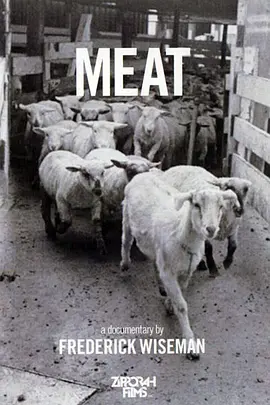
Meat (1976) [Movie] Douban TMDB IMDb
Meat
7.7 (6 ratings)
director:
弗雷德里克·怀斯曼
other title:
肉
/
고기
…
MEAT traces the process through which cattle and sheep become consumer products.
It depicts the processing and transportation of meat products by a highly automated
packing plant, illustrating important points and problems in the area of production,
transportation, logistics, equipment design, time-motion study, & labor management.
It depicts the processing and transportation of meat products by a highly automated
packing plant, illustrating important points and problems in the area of production,
transportation, logistics, equipment design, time-motion study, & labor management.

Model (1980) [Movie] Douban TMDB IMDb WikiData
Model
director:
Frederick Wiseman
actor:
Andy Warhol
/
Apollonia van Ravenstein
other title:
模特
/
모델
The film shows men and women models at work on TV commercials, fashion shows, print advertising,
posing for magazine covers and ads for a variety of products: designer's collections, fur coats, sports clothes
and automobiles. The models are seen at work with photographers whose techniques illustrate different
styles of fashion and product photography. Also, the business aspect of running an agency is shown:
interviewing prospective models, career counseling, arranging portfolios, talking with clients and planning
trips. The film presents a view of the intersections of fashion, business, advertising, photography, television
and fantasy.
posing for magazine covers and ads for a variety of products: designer's collections, fur coats, sports clothes
and automobiles. The models are seen at work with photographers whose techniques illustrate different
styles of fashion and product photography. Also, the business aspect of running an agency is shown:
interviewing prospective models, career counseling, arranging portfolios, talking with clients and planning
trips. The film presents a view of the intersections of fashion, business, advertising, photography, television
and fantasy.

Domestic Violence (2001) [Movie] Douban IMDb WikiData TMDB
Domestic Violence
director:
弗雷德里克·怀斯曼
other title:
家庭暴力
/
家庭暴力启示录(港)
…
DOMESTIC VIOLENCE was filmed in Tampa, Florida. The film shows the police responding to domestic
violence calls and the work of The Spring, the principal shelter in Tampa for women and children. Sequences
with the police include police response, intervention, and attempted resolution of domestic violence calls.
Sequences at the shelter include intake interviews, individual counseling sessions, anger management
training, group therapy, staff meetings, and conversations among clients and between clients and staff.
Since two thirds of the residents at the shelter are children, the film also has sequences of school activities,
therapy sessions for children where domestic violence is discussed, and counseling for parents and children
organized around children's issues and experiences with domestic violence.
violence calls and the work of The Spring, the principal shelter in Tampa for women and children. Sequences
with the police include police response, intervention, and attempted resolution of domestic violence calls.
Sequences at the shelter include intake interviews, individual counseling sessions, anger management
training, group therapy, staff meetings, and conversations among clients and between clients and staff.
Since two thirds of the residents at the shelter are children, the film also has sequences of school activities,
therapy sessions for children where domestic violence is discussed, and counseling for parents and children
organized around children's issues and experiences with domestic violence.

Titicut Follies (1967) [Movie] WikiData IMDb Douban TMDB
Titicut Follies
8.3 (51 ratings)
director:
弗雷德里克·怀斯曼
other title:
티티컷 풍자극
/
提提卡失序记事
…
A stark and graphic portrayal of the conditions that existed at the State Prison for the Criminally Insane at Bridgewater, Massachusetts, and documents the various ways the inmates are treated by the guards, social workers, and psychiatrists.