other title:
灼人的秘密
/
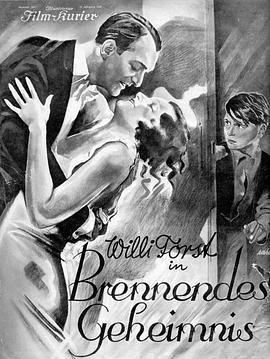
Brennendes Geheimnis
…
Brennendes Geheimnis is the last film that Robert Siodmak made in Germany before the Nazis came to power, forcing him to leave the country and pursue his filmmaking career elsewhere (first France, then America). Siodmak is best known for his atmospheric film noir thrillers and dramas, whereas this is quite a different kind of film – a poignant coming-of-age drama, with a striking realism and intimacy, lightened by a few musical interludes and some deliciously tongue-in-cheek comedy.
Adapted from a story by Stefan Zweig, the film recounts a teenage boy’s painful first steps towards adulthood. The certainties of childhood, the boy’s absolute confidence in grown-ups, his firm belief in the goodness of the world, are brutally shaken when he realises he is complicit in his mother’s adultery. Siodmak captures brilliantly not just the humour of the situation (as seen by an adults), but also the tragic dimension (as experienced by the boy). There’s also a stunning, and actually rather sinister, dream sequence mid-way through the film in which the director pays homage to German expressionism of the 1920s.
Brennendes Geheimnis is one of the Siodmak’s most poetic and engaging films, exploring the frailties of human nature with genuine compassion, insight and more than a touch of irony. The psychology is very sophisticated for a film of this era, with a daringly subversive subtext that suggests Edgar’s future emotional life could be very traumatic indeed. It’s revealing that Edgar is less hurt by his mother’s betrayal than by the fact that the stranger he has come to idolise should prefer his mother’s company to his. It’s not too hard to see why the Nazis decided to ban the film.
The part of Edgar was played (with great charm and conviction) by 14 year old Hans Joachim Schaufuss, a talented young actor who would doubtless have had a glittering career – had he not been killed in action on the Eastern Front during the Second World War, aged 22.