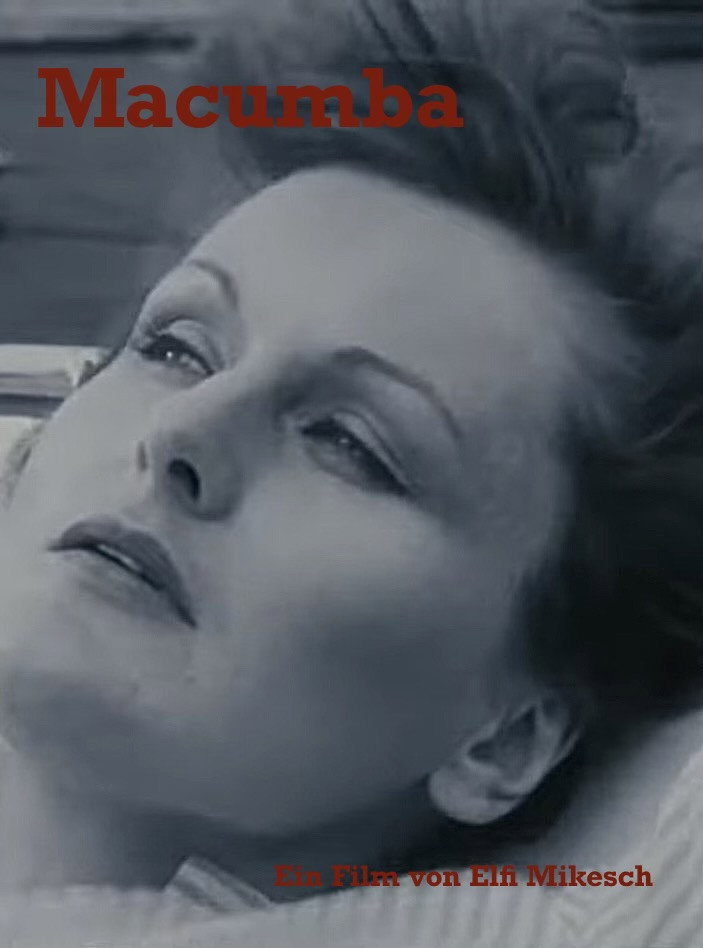
Magdalena Montezuma — Actor (9)
世界旦夕之间 (1973) [TV] TMDB IMDb
Welt am Draht
8.4 (135 ratings) director: Rainer Werner Fassbinder actor: Klaus Löwitsch / Mascha Rabben
other title: Welt am Draht
  某控制论与未来科技研究所的跨时代项目斯莫莱克戎1号,是一种应用高端技术架设微缩世界的电子怪物。它可以针对社会,经济以及政治事件做出精确的预测。由于这个研究项目的创办人兼总监沃尔摩尔教授神秘死亡,所长任命斯蒂勒博士作为这个项目的继任负责人。不久斯蒂勒的同事们发现新总监也开始状若疯狂。然而,随着老友--研究所安全主管劳兹神秘消失事件的不断深入,斯蒂勒渐渐分不清究竟是自己病了,还是身边的世界病了....

  《世界旦夕之间》是1973年法斯宾德为电视台制作的两部式科幻电影,改编自伽洛耶出版于1964年的长篇小说《三重模拟》(Simulacron-3),本片后来被好莱坞翻拍成《异次元骇客》(The Thirteenth Floor),并深刻启发了后来的同题材系列电影《黑客帝国》。
Willow Springs (1973) [Movie] Douban TMDB IMDb WikiData
Willow Springs
director: 沃纳·施罗德 actor: Magdalena Montezuma / Christine Kaufmann
other title: 加州柳泉 / 윌로우 스프링스
A feminist cult survives by robbing and killing passersby, at their remote desert ranch. The North Star Dhruva cult leader Magdalena refuses to work for the Yankee dollar. Consequently she subjugates her two followers, who are forced to listen to the music of German opera all the time, while Magdalena drinks rum and Coca Cola in the ranch's ornate bar. But the lesbian masochist's iron rule over the rundown California ranch is questioned when a mother-loving young male wanderer, Lord Invader, stops in and romances the cult's meek slave Ila, after his mother is turned away by Magdalena.
轰炸机飞行员 (1970) [Movie] Douban TMDB IMDb
Der Bomberpilot
director: 沃纳·施罗德 Werner Schroeter actor: Carla Egerer / Mascha Rabben
other title: Der Bomberpilot
Carla (Carla Aulaulu), Mascha (Mascha Elm-Rabben), and Magdalena Munn (Magdalena Montezuma).[40] They perform as second-rate cabaret singers during the Nazi era, forced to disband when Carla takes a job with a Viennese theatre and Mascha has a nervous breakdown. Pilot haphazardly (and without much clarity) follows their individual activities; instead of depicting Carla's "show," for instance, we see her singing its main song while apparently working in a Viennese pastry shop. Magdalena attempts to find work for Mascha by posing as her aunt and appealing to a Nazi official; later Mascha rescues Magdalena from drowning herself. The two eventually find jobs as secretaries, after brief stints as "creative artists." Magdalena's voice-over then informs us that all three women meet again after the war at a Bruckner concert. They begin discussions about regrouping to go to the United States, this time as reformers rather than performers, to preach integration (apparently we are now in the late 1960s, the time of the film's production). Carla, nostalgic for their earlier Nazi stage career, is hard to persuade, but eventually they leave for the United States. Their rapid downfall as teachers there results from the publication of a Nazi-era photo of them; added to this is the controversy of Mascha's undepicted liaison with an American bomber pilot. We are told there is a trial (also undepicted), and the three go back to Germany where they perform for American troops. Carla has a miscarriage from the bomber pilot and suffers badly. The final image shows Magdalena supporting Carla as she walks around weakly in front of the same building we saw in the film's opening shot.
Portrait of a Female Drunkard (1979) [Movie] Douban IMDb TMDB WikiData
Bildnis einer Trinkerin. Aller jamais retour
7.8 (8 ratings) director: 乌尔莱克·奥汀格 actor: 塔贝亚·布卢门谢因 / Magdalena Montezuma
other title: 一个女酒鬼的肖像 / Bildnis einer Trinkerin. Aller jamais retour
A sartorially resplendent woman of few words arrives in Berlin with plans to live out the rest of her days as a drunkard.
The Death of Maria Malibran (1972) [Movie] Douban IMDb WikiData TMDB
Der Tod der Maria Malibran
director: 沃纳·施罗德 actor: Magdalena Montezuma / 克里斯汀·考夫曼
other title: 玛利亚·玛丽布罕之死 / Der Tod der Maria Malibran
This bizarre film by one of the most original directors now working in Germany is hermetic, expressionist, oblique, and of a creative perversity that bespeaks the presence of a genius. Purporting to deal with a real-life 19th century diva 'whose popularity was such that over-exertion led to her death while singing,' the film is actually a grisly series of frozen or tortured tableaux (predominantly lesbian in implication) of heavily rouged, frequently ugly women who, pretending to sing heavy opera, go through contorted, icy attempts at communication that lead nowhere. The lip-sync is off; the singing is off-pitch; mouths are frequently open while no sound issues forth, or closed, with mellifluous arias or cheap popular songs heard on scratchy renditions of old records. Neither burlesque nor slapstick, the film's intent, at least in the beginning, is nevertheless ironical and subversive, though mysteriously so. However, it grows increasingly dark and more threatening, with screams, faces bathed in Vaseline, red, wet mouths, smeared eye shadows, and dehumanized figures. One cannot 'explain' Schroeter's work, other than recognize his debunking of opera as a metaphorical rejection of bourgeois society; but one trembles in recognition of a prospective major talent."
Amos Vogel, Film as a Subversive Art