
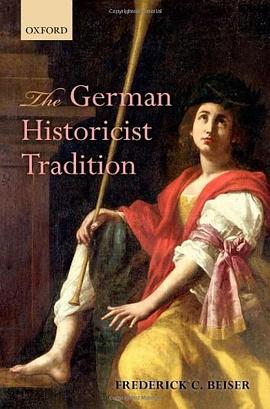
The German Historicist Tradition [图书] 豆瓣
作者:
Frederick C. Beiser
/
弗雷德里克·拜泽尔
OUP Oxford
2011
- 11
The German Historicist Tradition is a study of the rise of the German historicism from Chladenius to Weber. The work is an historical survey and philosophical examination of the main thinkers in this tradition. It covers thirteen thinkers: Chladenius, Möser, Herder, Wilhelm von Humboldt, Savigny, Ranke, Droysen, Windelband, Rickert, Lask, Dilthey, Simmel and Weber. Most of these thinkers have been little studied in the Anglophone world, and in some cases this book provides the first general account in English of their historical thought. The book intends to provide an introduction for first‐time readers but also a scholarly interpretation for a more professional audience. I explain the historical context and significance of each thinker, analyze his main arguments, and indicate the chief problems in the interpretation of his thought. My method is both historical and systematic: historical, insofar as I place each thinker in context and trace the evolution of his thought; and systematic, insofar as I examine the validity of his arguments and the logical structure of his philosophy. This book is conceived as a continuation and completion of the grand project begun by Friedrich Meinecke in his Entstehung des Historismus (1936). It was Meinecke's ambition to trace the genesis of German historicism from its beginnings in the late seventeenth century until its culmination in Ranke. Such was Meinecke's thoroughness, however, that after 500 pages he never got beyond Goethe. Although Meinecke's work has great merits his analyses of texts are unfailingly perceptive, and his historical perspective is deep and broad it still has serious flaws that make it an inadequate introduction today. Meinecke ignores crucial figures, his interpretations are often anachronistic, and his conceptual scheme is misleading and simplistic. The present work attempts to retell Meinecke's story in the light of later research.