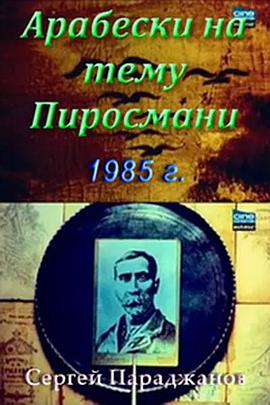
Арабески на тему Пиросмани
Overview
Arabeskebi Pirosmanis temaze (Arabesques on the Pirosmani Theme)
(1985), 25mins
A short mediation on the work of Georgian painter Niko Pirosmaniszvili (1862-1918).
Sergei Paradjanov was born in Tblisi, Georgia (former Soviet Union) in 1924. In 1964 he was able to direct 'Shadows of our Forgotten Ancestors'; a boldly conceived and astonishingly photographed blend of enchanting mythology, hypnotic religious iconography, and pagan magic introducing the world to a new idiosyncratic cinema talent.
In 1968 he created one of many masterpieces; "Sayat Nova" which was promptly banned by Soviet authorities. It was renamed (and re-edited without his approval) and entitled "The Color of Pomegranates". For religious sympathies and lack of conformity to the strict socialist realism of the former Soviet union Paradjanov was arrested in December of 1973 and sentenced to five years imprisonment - residing in various hard-labor camps.
An important group of world-famous filmmakers, artists and activists (including notables such as Federico Fellini, Tonino Guerra, Francesco Rosi, Poet Louis Aragon, Mikhail Vartanov, Giulietta Masina, Marcello Mastroianni and Bernardo Bertolucci) persistently protested Paradjanov was eventually released after 4 years. His activity remained monitored and he was limited by the Soviet authorities but 15 years after "Sayat Nova" he created "The Legend of the Suram Fortress"; a folk tale and adapted from the novella by Daniel Chongadze. Once again the cinema world was peering inside viewing vividly poetic and poignant imagery.
In 1986 Parajanov made yet another multi-award winning film, Ashug-Karibi (1988), based on a tale by Mikhail Lermontov, and he dedicated the film to his friend Andrei Tarkovsky. His stay in prison had crushed his health, and he passed away in July of 1990 of cancer, leaving the world a rich and unforgettable blend of unique and meaningful cinema but his legendary films live on and his picture adorns a postage stamp in Armenia.