约尔根·莱思 — 导演 (5)
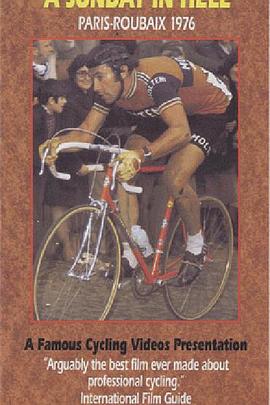
地狱星期天 (1976) [电影] 豆瓣
En forårsdag i Helvede
导演: Jørgen Leth
其它标题: A Sunday in Hell / En forårsdag i Helvede
"The sunday is April 11th, 1976, when the classic and gruelling annual Paris-Roubaix bicycle race was held, and the Hell is the cobblestone field roads of northern France, where the champions of bicycle racing battle for victory. With an army of photographers, Jorgen Leth followed the race in all of its detail, and he has edited this 24 hours of footage into a mythic and documentary spectacular.
Jorgen Leth has made cycling films before, but A Sunday in Hell is his piece de resistance, over a hundred minutes of finely-calculated suspense that leaves the viewer limp from vicarious pain and excitement. It is a compassionate film, realistic, yet free of the excesses of poetic realism'". (Peter Cowie, 1978 International Film Guide)
正与邪 (1975) [电影] 豆瓣
Det gode og det onde
导演: Jørgen Leth
其它标题: Good and Evil / Det gode og det onde
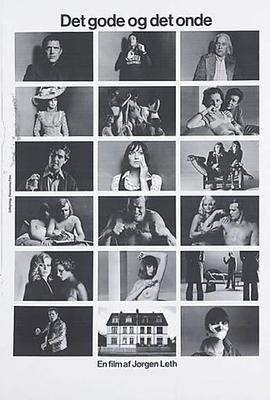
An extension of The Perfect Human, Good and Evil is a longer, more expansive pseudo-documentary portrayal of life, no less. Using capacious titles or chapter headings that Leth's narrator's voice dwells upon and impresses upon us as he toys with the cliché "Faces", "Bodies", "Things", "Necessary actions", "Unnecessary actions", Good thoughts", "Bad thoughts", "Pleasant feelings", "Unpleasant feelings", and "Words" - the film consist of aesthetically titillating and contentually almost schematic scenes shot in the void of the film studio: faces, bodies and things. A man with a shoe. Another man with a hardboiled egg which he talks about and eats. A woman gives her husband a shirt. A couple who argue. A desperate woman. And so forth. There is no psychological shading of the characters, merely a series of sketches or examples that are as if plucked out of different everyday contexts. The thread leading back to Life in Denmark is thus also clear. The dialogue is sparse and phrases or fragments of phrases recur, spoken by different actors and in different roles, which may be viewed as an accentuation of the ordinariness of these little utterances and as an awareness of language as such. Besides the professional cast work the film uses several photographic models, the circus artiste Diana Benneweis, and the cyclist ole Ritter, who all pose in front of the camera in small tableaux. In addition to the craziness of the project the film also contains a series of zany comic acts with Claus Nissen to carry them. He bursts into song while washing his hands, dances in an empty room, plays rhythmic games with the statement "Bossa nova rhythms I have nothing against" and repeats his mysterious closing line from The Perfect Human: "Today, too, I had an experience ..." The framework for the scenes is made up of a couple of visual leitmotifs by way of house fronts and landscapes. In addition a beautiful travelling shot from an avenue at dramatically appropriate moments is accompanied by one of the two tunes by Gunner Møller Pedersen from the film, sung in a girlish voice by Sanne Salomonsen. In 1999 Lars von Trier chose the film to represent Danish cinema at a number of European film festivals over a period of three years .
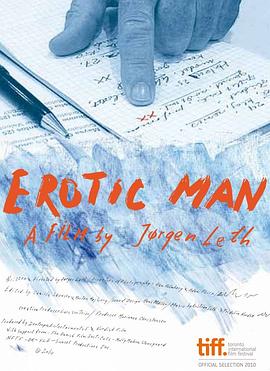
The Erotic Man (2010) [电影] 豆瓣
导演: Jørgen Leth
A collections of scenes based on documents, letters, pictures and poems that depict a man's erotic nature.
One of modern Danish cinema’s pioneers, Jorgen Leth has been making films since the late 1950s. The breadth of his work has been staggering, ranging from portrait films (usually focusing on artists like dancer Peter Martens or jazz great Bud Powell) to impressionistic, poetic notebooks on China, Haiti and the USA to suspenseful accounts of sporting events (including the Tour de France). But he’s best known for absurdist glimpses of contemporary life in Denmark, most notably The Perfect Human, which served as the spark for his collaboration with Lars von Trier, the widely celebrated The Five Obstructions. (Needless to say, he has had an enormous influence on the current crop of Danish filmmakers.)
Still nothing he’s done in the past to quite prepare anyone for the idiosyncratic and unique pleasures of The Erotic Human, in some ways his most radical and personal work, a powerful and sometimes shockingly honest essay about eros, aging and loss. The premise is deceptively simple. Leth travels to several countries (the locations include Haiti, the Philippines, Senegal, Brazil, Argentina, Panama) to cast one particular scene: a woman, usually naked, is sitting in a hotel room, lamenting the loss of her lover who has returned to Europe. But, with each new reenactment of the scene, one begins to questions its veracity. It’s a forlorn fantasy – a man’s need to re-experience a scene he could only ever have imagined, at best. (There are echoes of Alain Resnais’s early 1960s classics, Hiroshima mon amour and Last Year at Marienbad.)
These scenes are set against footage of Leth alone in hotel rooms, ruminating on the pitfalls and nature of his project; hilarious discussions of the casting sessions with his colleagues (he refuses to turn anyone down); highly aestheticized nude studies of female bodies; and, in one memorable moment, a boat trip up the Amazon.
The juxtaposition of age with youth and beauty creates an overly fecund atmosphere where fertility connotes decay ala Keats’ “To Autumn”. (The film’s palpable sense of resignation is heightened and made more painful by Leth’s own complicated outsider status in most of the areas he visits, a situation the film is aware of but never directly addresses.)
What emerges is an elegy for lost possibilities and a paean to sensuality and the female form – and possibly the most upfront and searing look at sexuality you will see in a long while. –TIFF.net