Sonia Wieder-Atherton — 演员 (4)
萨克三小节 (1989) [电影] 豆瓣 维基数据 IMDb TMDB
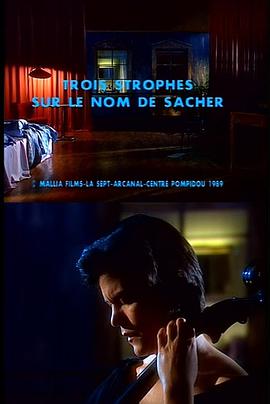
Trois strophes sur le nom de Sacher
7.0 (6 个评分) 导演: 香特尔·阿克曼 演员: Sonia Wieder-Atherton / Jean-Christophe Bleton
其它标题: Trois strophes sur le nom de Sacher / Three Stanzas on the Name Sacher
The first of Chantal Akerman's on screen collaborations with cellist Sonia Wieder- Atherton. This short film of Wieder-Atherton playing the title piece by Henri Dutilleux is simple but very well shot. Akerman does a great job of capturing Wieder-Atherton's expressive playing, not just in close-ups, but in wider shots that let us watch the musician's body language as she interacts with the music and her instrument. While not flamboyant, the passion that Wieder-Atherton brings to her playing is exciting to watch, and brings a deeper level of connection to the music.
与索妮亚同行 (2003) [电影] 豆瓣
Avec Sonia Wieder-Atherton
导演: 香特尔·阿克曼 演员: Sonia Wieder-Atherton / 伊莫金·库珀
其它标题: Avec Sonia Wieder-Atherton
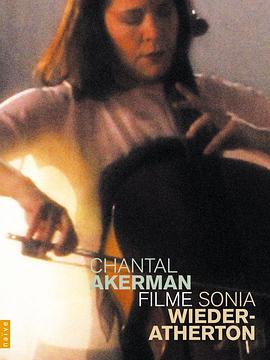
Since the 1980s, famed cellist Sonia Wieder-Atherton has been present in much of Chantal Akerman’s work, whether through her numerous collaborations soundtracks, or as a protagonist (as in Rue Mallet-Stevens, 1986), or in this case, as the subject of an extended documentary portrait. The film begins with a voiceover from Akerman, describing and situating her subject, after which Wieder-Atherton takes over the narrative, sitting before the camera for an extended presentation of her life and art. Wieder-Atherton then performs some short pieces by Claudio Monteverdi, Luciano Berio, Leos Janacek, Johannes Brahms and Franz Schubert, either solo or accompanied by a small ensemble. As well as insights into an artist, this film offers a precious cinematic moment of listening.
弗朗茨·舒伯特的最后三首奏鸣曲 (1989) [电影] 豆瓣
Les trois dernières sonates de Franz Schubert
其它标题: Franz Schubert's Last Three Sonatas / Les trois dernières sonates de Franz Schubert
Alfred Brendel, one of the greatest of all pianists, plays and reflects on Franz Schubert’s last three piano sonatas. As he points out, Schubert can’t have known that he was soon to die, so they probably do not embody the air of resignation and finality future generations have sentimentally insisted they bear. They were however long neglected, all but forgotten, and only in more recent times have they come to be treasured and performed. The repose and wisdom of the maestro, together with the patient observation of one who is no stranger to the idea of the irrevocably lost, of the erasures of history, and of the value of fragile objects passed carefully from generation to generation, is a joy.