John Matthews — 作者 (4)
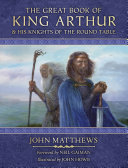
The Great Book of King Arthur and His Knights of the Round Table: A New Morte D’Arthur [图书] 谷歌图书
The most famous and influential work of English fantasy ever published, reimagined for a new generation of readers by John Matthews, one of the world’s leading Arthurian experts, and illustrated by internationally acclaimed Tolkien artist, John Howe. The tales of how the boy Arthur drew the Sword from the Stone, or the love of Lancelot and Guinevere, or how the knights of the Round Table rode out in search of the Holy Grail are known and loved the world over. It all began when an obscure Celtic hero named Arthur stepped on to the stage of history, sometime in the sixth century, and oral tales led to a vast body of stories from which, 900 years later, Thomas Malory wrote the famous Morte D’Arthur. THE GREAT BOOK OF KING ARTHUR presents these well-loved stories for a modern reader, for the first time collecting many tales of Arthur and his knights either unknown to Malory or written in other languages. Here, you will read of Avenable, the girl brought up as a boy who becomes a famous knight. You will learn of Gawain's strange birth, his upbringing amongst poor folk and his final rise to the highest possible rank – Emperor of Rome. There is also the story of Morien whose adventures are as fantastic and exciting as any to be found in the pages of Malory. In addition, there are some of the earliest tales of Arthur, deriving from the tradition of Celtic storytelling. Here is the original Arthur, represented in such powerful stories as ‘The Adventures of Eagle-Boy’, and 'The Coming of Merlin', based on the early medieval text Vita Merlini, which gives a completely new version of the great Enchanter's story. These age-old stories, still as popular today as they were from the Middle Ages onwards, are dramatically brought to life by the luminous paintings and drawings of John Howe, whose work on the Lord of the Rings and Hobbit film trilogies has brought him a world-wide following.
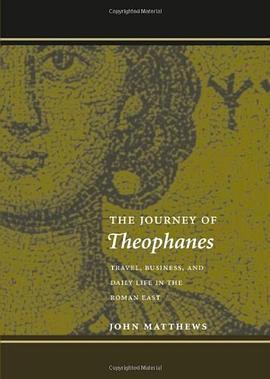
The Journey of Theophanes [图书] 豆瓣
In the early fourth century, a lawyer and public figure from the Nile valley city of Hermopolis made a six-month business related journey to Antioch. The day to day details are preserved on papyrus documents and offer a remarkable record of this journey, covering everything from distances traveled to daily food purchases, from medicinal supplies to fees paid for services. In this book, the classicist and historian John Matthews translates these important documents and places them in the wider context of the social history of the Graeco-Roman world. The memoranda relating to Theophanes' journey are presented within a historical narrative that offers an array of revelations on diet, travel, social relations, and other fascinating topics. This book creates an unprecedented account of daily life in the years preceding Emperor Constantine's rise to power in the eastern provinces of the Roman empire.
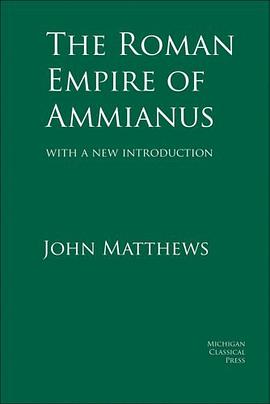
The Roman Empire of Ammianus [图书] 豆瓣
John Matthews' brilliant analysis of Ammianus and his world is the foundation for the study of the Roman Empire in the fourth century CE. Matthews' Ammianus is a man very much in touch with his times, engaged in many of the exciting events that he describes, and a commentator motivated by a passionate devotion to justice. The empire that he depicts in "The Roman Empire of Ammianus" is undergoing a profoundly important intellectual transition as Christians and non-Christians dealt with each other in new ways, and a profoundly important political transition as Rome's ability to control its frontiers was severely challenged.This new edition of the volume offers a new Introduction by the author, and corrections to the original text. In Matthews' brilliantly researched and compellingly written pages we encounter brigands, philosophers, bishops, barbarians and one of the most extraordinary figures in all of Roman history: the Emperor Julian, who occupies for Matthews - as he did for Ammianus - a central place in the history of these times. Ammianus has been recognized for centuries as the last great historian of the Classical Latin tradition. It is thanks to Matthews that we can at last begin to appreciate the brilliance and complexity of the tapestry he wove with his words.