Yan Yan — 译者 (3)
Golden Age: A Novel [图书] Goodreads
黄金时代
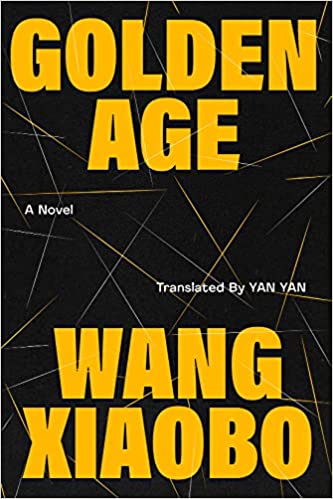
“Apparently, there was a rumour that Chen Qingyang and I were having an affair. She wanted me to prove our innocence. I said, to prove our innocence, we must prove one of the following:
1. Chen Qingyang is a virgin;
2. I was born without a penis.
Both of these propositions were hard to prove, therefore, we couldn’t prove our innocence. Infact, I was leaning more toward proving that we weren’t innocent.”
And so begins Wang Er’s story of his long affair with Chen Qinyang. Wang Er, a 21-year-old ox herder, is shamed by the local authorities and forced to write a confession for his crimes but instead, takes it upon himself to write a modernist literary tract. Later, as a lecturer at a chaotic, newly built university, Wang Er navigates the bureaucratic maze of 1980’s China, boldly writing about the Cultural Revolution’s impact on his life and those around him. Finally, alone and humbled, Wang Er must come to terms with the banality of his own existence.
But what makes this novel both hilarious and important is Xiaobo’s use of the awkwardness of sex as a metaphor for all that occured during the Cultural Revolution. This achievement was revolutionary in China and places Golden Age in the great pantheon of novels that argue against governmental control.
A leading icon of his generation, Wang Xiaobo’s cerebral and sarcastic narrative is a reflection on the failures of individuals and the enormous political, social, and personal changes in 20thcentury China.
1. Chen Qingyang is a virgin;
2. I was born without a penis.
Both of these propositions were hard to prove, therefore, we couldn’t prove our innocence. Infact, I was leaning more toward proving that we weren’t innocent.”
And so begins Wang Er’s story of his long affair with Chen Qinyang. Wang Er, a 21-year-old ox herder, is shamed by the local authorities and forced to write a confession for his crimes but instead, takes it upon himself to write a modernist literary tract. Later, as a lecturer at a chaotic, newly built university, Wang Er navigates the bureaucratic maze of 1980’s China, boldly writing about the Cultural Revolution’s impact on his life and those around him. Finally, alone and humbled, Wang Er must come to terms with the banality of his own existence.
But what makes this novel both hilarious and important is Xiaobo’s use of the awkwardness of sex as a metaphor for all that occured during the Cultural Revolution. This achievement was revolutionary in China and places Golden Age in the great pantheon of novels that argue against governmental control.
A leading icon of his generation, Wang Xiaobo’s cerebral and sarcastic narrative is a reflection on the failures of individuals and the enormous political, social, and personal changes in 20thcentury China.
Seeing [图书] 豆瓣
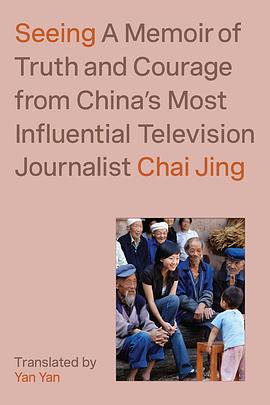
In the tradition of Katy Tur, Jane Pauley, and Peter Jennings, Chai Jing shows us the power of television news and the complex challenges of reporting in China.
After becoming a radio DJ in college and a TV interviewer at 23, Chai Jing is thrust into the spotlight when she takes on a position as a news anchor at CCTV, China’s official state news channel. Chai struggles to find her role in a male-dominated news organization, discovering corruption, courage, and hope within the people she meets while honing her talent for getting people to reveal themselves to her.
In eleven propulsive and deeply felt chapters, Chai recounts her investigations into SARS quarantine wards, a childhood suicide epidemic, the human cost of industrial pollution, and organized crime, while looking back at her growth as a journalist. Chai Jing shares the philosophical and emotional complexity of the ethical challenges that are always present in such revealing reporting, while she also finds hope and purpose, time and again, in the vital and intimate stories of her interviewees.
This candid memoir from one of China’s best-known journalists provides a rare window into the issues which concern us most, and which face contemporary China and the whole world.
After becoming a radio DJ in college and a TV interviewer at 23, Chai Jing is thrust into the spotlight when she takes on a position as a news anchor at CCTV, China’s official state news channel. Chai struggles to find her role in a male-dominated news organization, discovering corruption, courage, and hope within the people she meets while honing her talent for getting people to reveal themselves to her.
In eleven propulsive and deeply felt chapters, Chai recounts her investigations into SARS quarantine wards, a childhood suicide epidemic, the human cost of industrial pollution, and organized crime, while looking back at her growth as a journalist. Chai Jing shares the philosophical and emotional complexity of the ethical challenges that are always present in such revealing reporting, while she also finds hope and purpose, time and again, in the vital and intimate stories of her interviewees.
This candid memoir from one of China’s best-known journalists provides a rare window into the issues which concern us most, and which face contemporary China and the whole world.