George Johnson — 作者 (4)
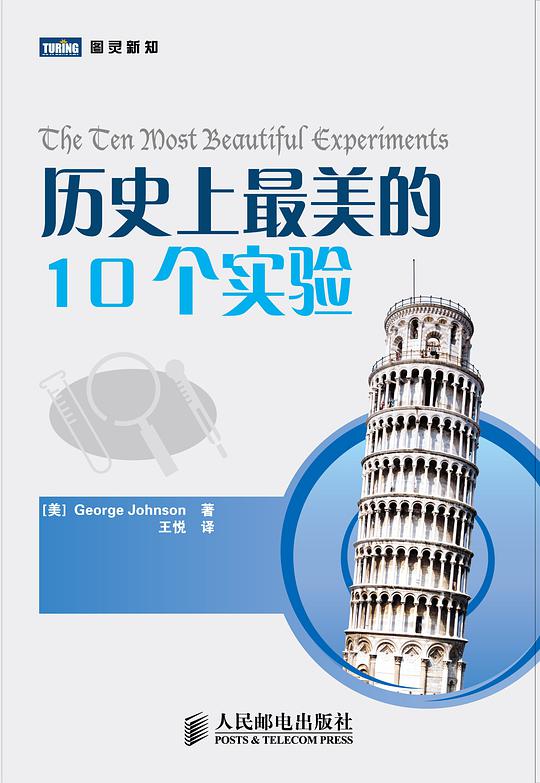
历史上最美的10个实验 [图书] 豆瓣
The Ten Most Beautiful Experiments,1E
作者: George Johnson 译者: 王悦 出版社: 人民邮电出版社
这本令人无法抗拒的书,出自《纽约时报》著名专栏作家George Johnson之笔。书中描绘了人类科学史上10个最精彩的实验——那些好奇求知的灵魂,孜孜不倦地向着大自然发问,直到获得干脆明确的答复。
我们可以看到伽利略在测量地心引力时,用歌声的旋律标记时间;牛顿小心翼翼地将针插到自己的眼睛和眉骨之间,以了解光如何在视网膜上产生感应;威廉•哈维在胳膊上系上绷带,通过观察绷带上方动脉的搏动和绷带下方静脉的肿胀从而证明血液在循环;路易基•加尔瓦尼给切开的蛙腿施加电流,想要知道肌纤维抽搐反应的生理机制;而巴甫洛夫完成了他那些著名的实验,使狗在音阶上升的旋律中分泌唾液。对于他们来说,勤奋获得了奖赏。在真理闪耀的刹那间,困惑一扫而空,而对自然的全新认识跃入眼帘。
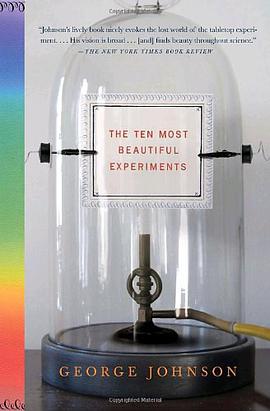
The Ten Most Beautiful Experiments [图书] 豆瓣
作者: George Johnson 出版社: Vintage Books USA 2009 - 3
A dazzling, irresistible collection of the ten most ground-breaking and beautiful experiments in scientific history.
With the attention to detail of a historian and the story-telling ability of a novelist, New York Times science writer George Johnson celebrates these groundbreaking experiments and re-creates a time when the world seemed filled with mysterious forces and scientists were in awe of light, electricity, and the human body. Here, we see Galileo staring down gravity, Newton breaking apart light, and Pavlov studying his now famous dogs. This is science in its most creative, hands-on form, when ingenuity of the mind is the most useful tool in the lab and the rewards of a well-considered experiment are on elegant display.
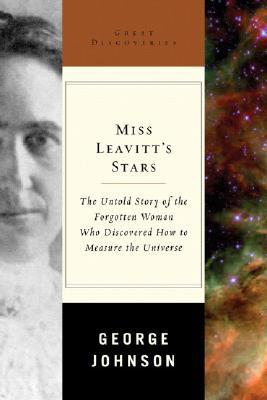
Miss Leavitt's Stars: The Untold Story of the Woman Who Discovered How to Measure the Universe [图书] Goodreads
作者: George Johnson 出版社: W. W. Norton & Company 2005 - 6
How big is the universe? In the early twentieth century, scientists took sides. One held that the entire universe was contained in the Milky Way galaxy. Their champion was the strong-willed astronomer Harlow Shapley. Another camp believed that the universe was so vast that the Milky Way was just one galaxy among billions—the view that would prevail, proven by the equally headstrong Edwin Hubble.


Almost forgotten is the Harvard Observatory "computer"—a human number cruncher hired to calculate the positions and luminosities of stars in astronomical photographs—who found the key to the mystery. Radcliffe-educated Henrietta Swan Leavitt, fighting ill health and progressive deafness, stumbled upon a new law that allowed astronomers to use variable stars—those whose brightness rhythmically changes—as a cosmic yardstick. Miss Leavitt's Stars is both a masterly account of how we measure the universe and the moving story of a neglected genius