米洛·奥谢 — 演员 (8)
尤利西斯 (1967) [电影] 豆瓣 IMDb 维基数据 TMDB
Ulysses
导演: Jack Couffer (Joseph Strick) 演员: Maurice Roëves / Barbara Jefford
其它标题: Ulysses / Ulises
诗人斯蒂芬·代达罗斯生于1904年6月16日,他整日穿梭于大都市中,结识了中年犹太人利奥波德,这人待他如慈父一般。同时,在他最辉煌的时代,一场突如其来的葬礼以及当晚的酗酒和狂欢激起了斯蒂芬对父亲的思念,让他明白他最终的感情归属,他也最终原谅了不忠贞的妻子并与之同归于好。
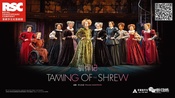
驯悍记 [演出] 豆瓣
The Taming of the Shrew
8.4 (5 个评分) 类型: theater 编剧: 莎士比亚 William Shakespeare / William Shakespeare
其它标题: The Taming of the Shrew 导演: J.R. Planché / Samuel Phelps 演员: Louisa Cranstoun Nisbett / Ada Rehan / Milo O'Shea / Anna Manahan / Peter O'Toole
Prior to the first act, an induction frames the play as a "kind of history" played in front of a befuddled drunkard named Christopher Sly who is tricked into believing that he is a lord.
In the play performed for Sly, the "Shrew" is Katherina Minola, the eldest daughter of Baptista Minola, a lord in Padua. Katherina's temper is notorious and it is thought no man would ever wish to marry her. On the other hand, two men – Hortensio and Gremio – are eager to marry her younger sister Bianca. However, Baptista has sworn not to allow his younger daughter to marry before Katherina is wed, much to the despair of her suitors, who agree that they will work together to marry off Katherina so that they will be free to compete for Bianca.
The plot becomes more complex when Lucentio, who has recently come to Padua to attend university, sees Bianca and instantly falls in love with her. Lucentio overhears Baptista announce that he is on the lookout for tutors for his daughters, so he has his servant Tranio pretend to be him while he disguises himself as a Latin tutor named Cambio, so that he can woo Bianca behind Baptista's back.
In the meantime, Petruchio arrives in Padua, accompanied by his servant, Grumio. Petruchio tells his old friend Hortensio that he has set out to enjoy life after the death of his father and that his main goal is to wed. Hearing this, Hortensio seizes the opportunity to recruit Petruchio as a suitor for Katherina. He also has Petruchio present to Baptista a music tutor named Litio (Hortensio himself in disguise). Thus, Lucentio and Hortensio, pretending to be the teachers Cambio and Litio, attempt to woo Bianca unbeknownst to her father, and to one another.
Petruchio, to counter Katherina's shrewish nature, woos her with reverse psychology, pretending that every harsh thing she says or does is kind and gentle. Katherina allows herself to become engaged to Petruchio, and they are married in a farcical ceremony during which (amongst other things) he strikes the priest and drinks the communion wine, and then takes her home against her will. Once they are gone, Gremio and Tranio (disguised as Lucentio) formally bid for Bianca, with Tranio easily outbidding Gremio. However, in his zeal to win, he promises much more than the real Lucentio actually possesses, and Baptista determines that once Lucentio's father confirms the dowry, Bianca and Tranio can marry. Tranio thus decides that they will need someone to pretend to be Vincentio, Lucentio's father, at some point in the near future. Elsewhere, as part of their scheme, Tranio persuades Hortensio that Bianca is not worthy of his attentions, thus removing any problems he may cause.
Meanwhile, in Petruchio's house, he begins the "taming" of his new wife. She is refused food and clothing because nothing – according to Petruchio – is good enough for her; he claims perfectly cooked meat is overcooked, a beautiful dress doesn't fit right, and a stylish hat is not fashionable. He also sets about disagreeing with everything she says, and forcing her to agree with everything he says, no matter how absurd; on their way back to Padua to attend Bianca's wedding, she agrees with Petruchio that the sun is the moon, and proclaims that "if you please to call it a rush-candle,/Henceforth I vow it shall be so for me" (4.5.14–15). Along the way, they meet Vincentio who is also on his way to Padua, and Katherina agrees with Petruchio when he declares that Vincentio is a woman and then apologises to Vincentio when Petruchio tells her he is a man.
Meanwhile, back in Padua, Lucentio and Tranio convince a passing pedant to pretend to be Vincentio and confirm the dowry for Bianca. The man does so, and Baptista is happy for Bianca to wed Lucentio (actually Tranio in disguise). Bianca then secretly elopes with the real Lucentio. However, Vincentio arrives in Padua, and encounters the Pedant, who claims to be Lucentio's father. Tranio (still disguised as Lucentio) appears, and the Pedant acknowledges him to be his son Lucentio. There is much confusion about identities, and the real Vincentio is set to be arrested when the real Lucentio appears with his newly betrothed Bianca, and reveals all to a bewildered Baptista and Vincentio. Lucentio explains everything that has happened and all is forgiven by the two fathers.
Meanwhile, Hortensio has married a rich widow, and so in the final scene of the play there are three newly married couples at Baptista's banquet; Bianca and Lucentio, the widow and Hortensio, and Katherina and Petruchio. Because of the general opinion that Petruchio is married to a shrew, a quarrel breaks out about whose wife is the most obedient. Petruchio proposes a wager whereby each will send a servant to call for their wives, and whichever comes most obediently will have won the wager for her husband. Katherina is the only one of the three who comes, winning the wager for Petruchio. At the end of the play, after the other two wives have been hauled into the room by Katherina, she gives a speech on the subject of why wives should always obey their husbands and the play ends with Baptista, Hortensio and Lucentio marvelling at how successfully Petruchio has tamed the shrew.

驯悍记 1959年版 [演出] 豆瓣
所属 演出: 驯悍记
剧院: Gate Theatre 导演: Hilton Edwards
其它标题: 1959年版 编剧: 莎士比亚 William Shakespeare 演员: Milo O'Shea / Anna Manahan
Prior to the first act, an induction frames the play as a "kind of history" played in front of a befuddled drunkard named Christopher Sly who is tricked into believing that he is a lord.
In the play performed for Sly, the "Shrew" is Katherina Minola, the eldest daughter of Baptista Minola, a lord in Padua. Katherina's temper is notorious and it is thought no man would ever wish to marry her. On the other hand, two men – Hortensio and Gremio – are eager to marry her younger sister Bianca. However, Baptista has sworn not to allow his younger daughter to marry before Katherina is wed, much to the despair of her suitors, who agree that they will work together to marry off Katherina so that they will be free to compete for Bianca.
The plot becomes more complex when Lucentio, who has recently come to Padua to attend university, sees Bianca and instantly falls in love with her. Lucentio overhears Baptista announce that he is on the lookout for tutors for his daughters, so he has his servant Tranio pretend to be him while he disguises himself as a Latin tutor named Cambio, so that he can woo Bianca behind Baptista's back.
In the meantime, Petruchio arrives in Padua, accompanied by his servant, Grumio. Petruchio tells his old friend Hortensio that he has set out to enjoy life after the death of his father and that his main goal is to wed. Hearing this, Hortensio seizes the opportunity to recruit Petruchio as a suitor for Katherina. He also has Petruchio present to Baptista a music tutor named Litio (Hortensio himself in disguise). Thus, Lucentio and Hortensio, pretending to be the teachers Cambio and Litio, attempt to woo Bianca unbeknownst to her father, and to one another.
Petruchio, to counter Katherina's shrewish nature, woos her with reverse psychology, pretending that every harsh thing she says or does is kind and gentle. Katherina allows herself to become engaged to Petruchio, and they are married in a farcical ceremony during which (amongst other things) he strikes the priest and drinks the communion wine, and then takes her home against her will. Once they are gone, Gremio and Tranio (disguised as Lucentio) formally bid for Bianca, with Tranio easily outbidding Gremio. However, in his zeal to win, he promises much more than the real Lucentio actually possesses, and Baptista determines that once Lucentio's father confirms the dowry, Bianca and Tranio can marry. Tranio thus decides that they will need someone to pretend to be Vincentio, Lucentio's father, at some point in the near future. Elsewhere, as part of their scheme, Tranio persuades Hortensio that Bianca is not worthy of his attentions, thus removing any problems he may cause.
Meanwhile, in Petruchio's house, he begins the "taming" of his new wife. She is refused food and clothing because nothing – according to Petruchio – is good enough for her; he claims perfectly cooked meat is overcooked, a beautiful dress doesn't fit right, and a stylish hat is not fashionable. He also sets about disagreeing with everything she says, and forcing her to agree with everything he says, no matter how absurd; on their way back to Padua to attend Bianca's wedding, she agrees with Petruchio that the sun is the moon, and proclaims that "if you please to call it a rush-candle,/Henceforth I vow it shall be so for me" (4.5.14–15). Along the way, they meet Vincentio who is also on his way to Padua, and Katherina agrees with Petruchio when he declares that Vincentio is a woman and then apologises to Vincentio when Petruchio tells her he is a man.
Meanwhile, back in Padua, Lucentio and Tranio convince a passing pedant to pretend to be Vincentio and confirm the dowry for Bianca. The man does so, and Baptista is happy for Bianca to wed Lucentio (actually Tranio in disguise). Bianca then secretly elopes with the real Lucentio. However, Vincentio arrives in Padua, and encounters the Pedant, who claims to be Lucentio's father. Tranio (still disguised as Lucentio) appears, and the Pedant acknowledges him to be his son Lucentio. There is much confusion about identities, and the real Vincentio is set to be arrested when the real Lucentio appears with his newly betrothed Bianca, and reveals all to a bewildered Baptista and Vincentio. Lucentio explains everything that has happened and all is forgiven by the two fathers.
Meanwhile, Hortensio has married a rich widow, and so in the final scene of the play there are three newly married couples at Baptista's banquet; Bianca and Lucentio, the widow and Hortensio, and Katherina and Petruchio. Because of the general opinion that Petruchio is married to a shrew, a quarrel breaks out about whose wife is the most obedient. Petruchio proposes a wager whereby each will send a servant to call for their wives, and whichever comes most obediently will have won the wager for her husband. Katherina is the only one of the three who comes, winning the wager for Petruchio. At the end of the play, after the other two wives have been hauled into the room by Katherina, she gives a speech on the subject of why wives should always obey their husbands and the play ends with Baptista, Hortensio and Lucentio marvelling at how successfully Petruchio has tamed the shrew.

等待戈多 1978年版 [演出] 豆瓣
所属 演出: 等待戈多
导演: 未知
其它标题: 1978年版 编剧: Samuel Beckett 演员: Austin Pendleton / Sam Waterston
On a bare country road Vladimir and his friend Estragon wait in hope of salvation from a man called Godot. Their hope of salvation lies in Godot's arrival. While waiting they play games, entertain one another with vaudevillian tricks, question whether Godot will arrive and how they will benefit when he does. They are interrupted by the arrival of Pozzo (a land owner) and Lucky (Pozzo's slave). Pozzo questions their reasoning for waiting. Lucky performs a staggering burst of a monologue. Pozzo and Lucky exit, night falls and a young boy arrives and tells Vladimir and Estragon that "Mr Godot won’t come here today but he'll surely arrive tomorrow.” In Act two Pozzo returns but he is blind and Lucky is mute. Vladimir and Estragon continue waiting. Still determining to go, the tramps do not move.

“I cannot express how much this show means to me,” writes artistic director, Peter Reid. “It is undoubtedly the greatest show of the 20th Century and has revolutionised the fabric of theatre.”
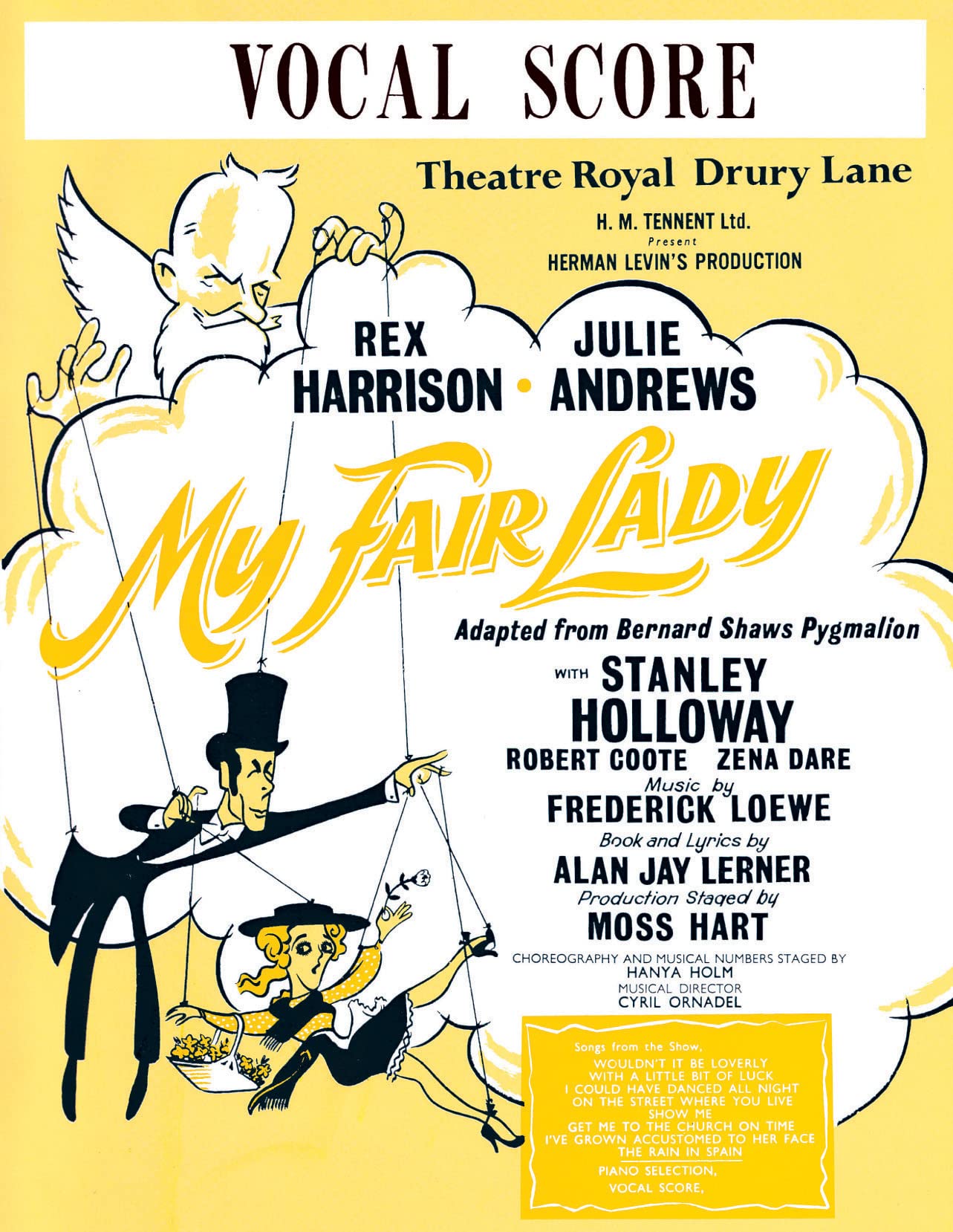
窈窕淑女 1981 Broadway Revival版 [演出] 豆瓣
所属 演出: 窈窕淑女
语言: english 英语 剧院: Uris Theatre 导演: Patrick Garland
其它标题: 1981 Broadway Revival版 编剧: Alan Jay Lerner 作曲: Fredrick Loewe 演员: Nancy Ringham / Rex Harrison
Act I
In Edwardian London, Eliza Doolittle is a flower girl with a thick Cockney accent. The noted phonetician Professor Henry Higgins encounters Eliza at Covent Garden and laments the vulgarity of her dialect ("Why Can't the English?"). Higgins also meets Colonel Pickering, another linguist, and invites him to stay as his houseguest. Eliza and her friends wonder what it would be like to live a comfortable life ("Wouldn't It Be Loverly?").
Eliza's father, Alfred P. Doolittle, stops by the next morning searching for money for a drink ("With a Little Bit of Luck"). Soon after, Eliza comes to Higgins's house, seeking elocution lessons so that she can get a job as an assistant in a florist's shop. Higgins wagers Pickering that, within six months, by teaching Eliza to speak properly, he will enable her to pass for a proper lady.
Eliza becomes part of Higgins's household. Though Higgins sees himself as a kindhearted man who merely cannot get along with women ("I'm an Ordinary Man"), to others he appears self-absorbed and misogynistic. Eliza endures Higgins's tyrannical speech tutoring. Frustrated, she dreams of different ways to kill him ("Just You Wait"). Higgins's servants lament the stressful atmosphere ("The Servants' Chorus").
Just as Higgins is about to give up on her, Eliza suddenly recites one of her diction exercises in perfect upper-class style ("The Rain in Spain"). Though Mrs Pearce, the housekeeper, insists that Eliza go to bed, she declares she is too excited to sleep ("I Could Have Danced All Night").
For her first public tryout, Higgins takes Eliza to his mother's box at Ascot Racecourse ("Ascot Gavotte"). Though Eliza shocks everyone when she forgets herself while watching a race and reverts to foul language, she does capture the heart of Freddy Eynsford-Hill. Freddy calls on Eliza that evening, and he declares that he will wait for her in the street outside Higgins' house ("On the Street Where You Live").
Eliza's final test requires her to pass as a lady at the Embassy Ball. After more weeks of preparation, she is ready. All the ladies and gentlemen at the ball admire her, and the Queen of Transylvania invites her to dance with the prince ("Embassy Waltz"). A Hungarian phonetician, Zoltan Karpathy, attempts to discover Eliza's origins. Higgins allows Karpathy to dance with Eliza.
Act II
The ball is a success; Karpathy has declared Eliza to be a Hungarian princess. Pickering and Higgins revel in their triumph ("You Did It"), failing to pay attention to Eliza. Eliza is insulted at receiving no credit for her success, packing up and leaving the Higgins house. As she leaves she finds Freddy, who begins to tell her how much he loves her, but she tells him that she has heard enough words; if he really loves her, he should show it ("Show Me").
Eliza and Freddy return to Covent Garden but she finds she no longer feels at home there. Her father is there as well, and he tells her that he has received a surprise bequest from an American millionaire, which has raised him to middle-class respectability, and now must marry his lover. Doolittle and his friends have one last spree before the wedding ("Get Me to the Church on Time").
Higgins awakens the next morning. He finds himself out of sorts without Eliza. He wonders why she left after the triumph at the ball and concludes that men (especially himself) are far superior to women ("A Hymn to Him"). Pickering notices the Professor's lack of consideration, and also leaves the Higgins house.
Higgins despondently visits his mother's house, where he finds Eliza. Eliza declares she no longer needs Higgins ("Without You"). As Higgins walks home, he realizes he's grown attached to Eliza ("I've Grown Accustomed to Her Face"). At home, he sentimentally reviews the recording he made the day Eliza first came to him for lessons, hearing his own harsh words. Eliza suddenly appears in his home. In suppressed joy at their reunion, Professor Higgins scoffs and asks, "Eliza, where the devil are my slippers?"
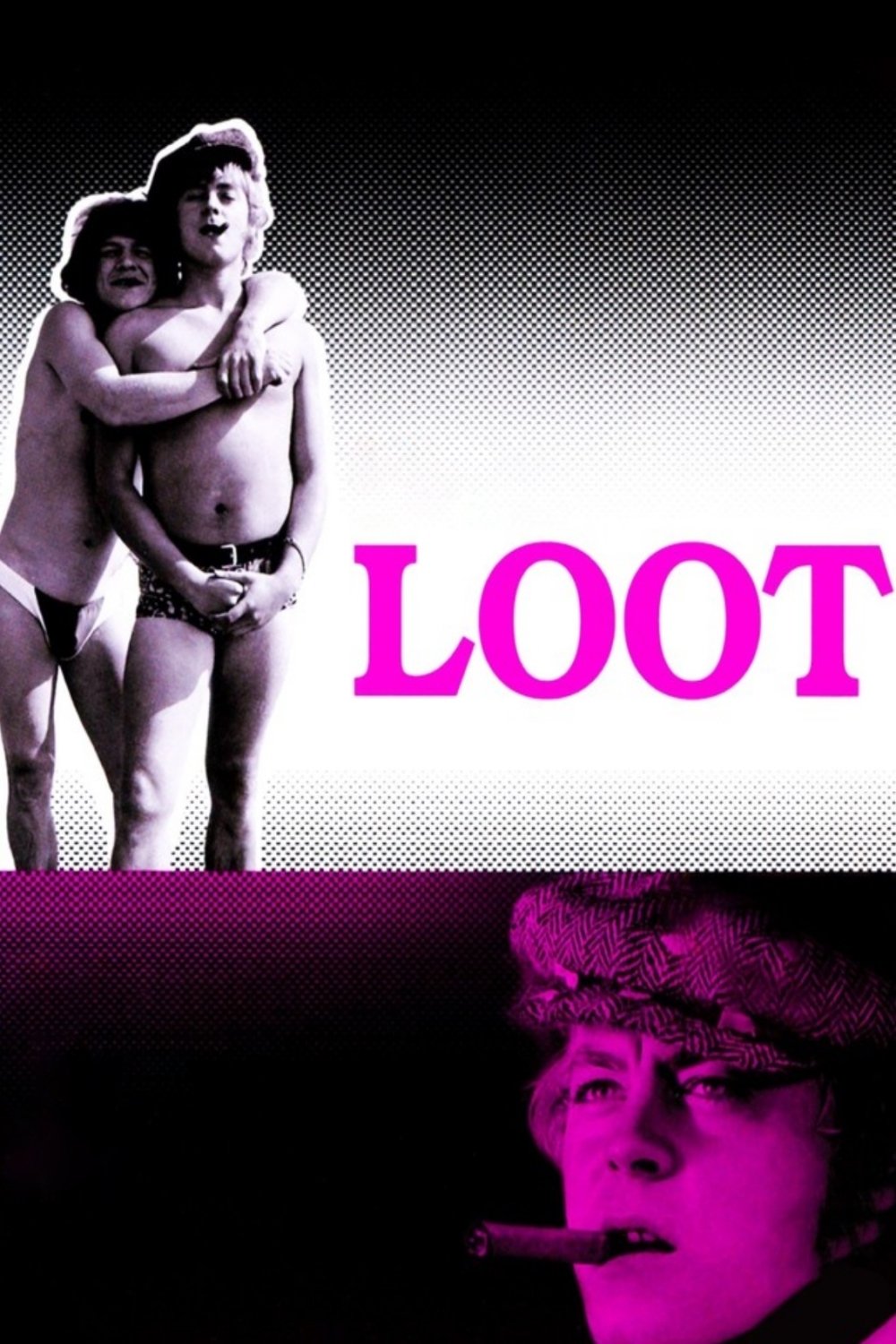
抢劫 (1970) [电影] IMDb 维基数据 TMDB
Loot
其它标题: 루트 / Die größten Gauner weit und breit
Two bank robbers, Dennis and Hal, are on the run from the police after a successful heist. Needing somewhere to hide the loot, they turn to a funeral parlour where they stash the cash in Hal's recently-deceased mother's coffin. Taking the coffin, they turn to Hal's father and hide it in the bathroom of his hotel. Before long the hotel is host to the eccentric Inspector Truscott.
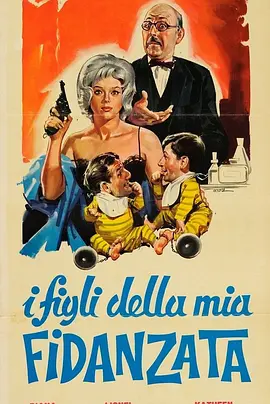
我的女友的孩子 (1962) [电影] 豆瓣 IMDb
Mrs. Gibbons' Boys
导演: Max Varnel 演员: Kathleen Harrison / Lionel Jeffries
其它标题: 吉本斯太太的孩子们 / I figli della mia fidanzata
Two convicts escape from prison, complicating life for their widowed mother when they return home to hide out.
违禁品 (1940) [电影] Eggplant.place IMDb 维基数据 TMDB
Contraband
其它标题: Contrabbando / Espionne à bord
二战初期,丹麦商船 “海尔维格号” 船长安徒生(康拉德・韦特饰)因英国港口管制滞留伦敦。他在码头邂逅自称索伦森夫人(瓦莱丽・霍布森饰)的神秘女子,对方以寻找失踪丈夫为由,请求安徒生协助。
两人卷入一场德国间谍阴谋:间谍头目范戴恩(雷蒙德・洛威尔饰)企图窃取英国海军机密,索伦森夫人实为英国情报人员,正卧底调查。安徒生凭借机智与勇气,与船员、英国特工联手,在伦敦的夜总会、码头与间谍展开周旋,最终挫败间谍计划,救出索伦森夫人。
故事融合悬疑、动作与浪漫,以轻松幽默的笔触展现战时伦敦的紧张氛围,安徒生从普通船长转变为反间谍英雄,成为影片亮点。