Man Ray — Author (4)
Facile [Book] Douban
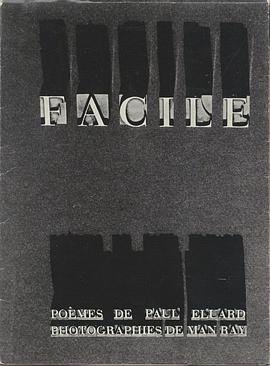
P., G.L.M., 1935, in-8, en ff. sous couv. ill. à rabats, 28 pp. (ff. bl. compris). Couverture légèrement plissée sur les bords, gardes très légèrement insolées, très bel exemplaire., 1935. 13 photographies en noir et blanc (y compris la couverture) de Man Ray, reproduites en héliogravure. Poèmes de Paul Eluard. Tiré à 1225 ex., 1 des 1200 sur vélin (N°920). " Le poète Paul Eluard, sa femme Nusch et le photographe Man Ray forment ici un parfait trio : les mots, les photographies et un corps exquis. Ce petit ouvrage, présenté dans de nombreuses exposition consacrées au surréalisme, est considéré comme l'un des livres de photographies français les plus emblématiques des années 30 (.) C'est en raison de l'intégration [des photographies] à la conception et au texte que cet ouvrage a été fondamental pour le modernisme et une source d'inspiration pour des générations de graphistes". (Parr & Badger). Réf. biblio. : Parr & Badger Le livre de photographie I, 104-105 ; Bouqueret, Paris, les livres de photographie, 152 ; Bertolotti, Nudo, I libri fotografici, 68.
Man Ray Photographs [Book] Douban
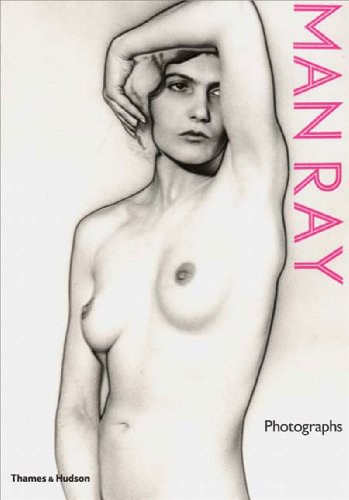
"I paint what cannot be photographed, I photograph the things I don't want to paint....I would photograph an idea rather than an object, and a dream rather than an idea." Man Ray's own words suggest the essence of his brilliant, original, and deeply influential photographic oeuvre. Taking up photography in 1915 for the purpose of reproducing his paintings, he earned money doing the same thing for others when he went to live and work in Paris in 1921. This led to one of the most versatile careers in the history of photography, ranging from portraits of celebrated artists, musicians, and writers such as André Breton, Marcel Duchamp, Erik Satie, Arnold Schönberg, T. S. Eliot, and Gertrude Stein, to the pictures using light effects outside the camera for which he is famous (cliché-verres, rayographs, and solarizations). These photographs are among the most exciting and revealing manifestations of the profusely fertile artistic impulse that made Man Ray equally celebrated as a painter, sculptor, writer, and filmmaker. Besides many classic images, the book includes a number of photographs that had never been seen before, including portraits of Virginia Woolf and of Antonin Artaud and a large selection of erotic pictures. They add up to a truly revealing look at Man Ray, Jean Cocteau's "great poet of the darkroom." 347 duotone photographs.