Peter Weiss — Author (6)
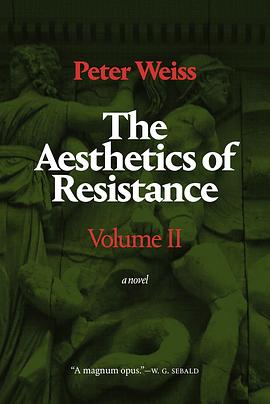
The Aesthetics of Resistance, Volume II [Book] Douban
author: Peter Weiss translator: Joel Scott publishing house: Duke University Press 2020 - 2
A major literary event, the publication of the second volume of Peter Weiss's three-volume novel The Aesthetics of Resistance makes one of the towering works of twentieth-century German literature available to English-speaking readers for the first time. The crowning achievement of Peter Weiss, the internationally renowned writer best known for his play Marat/Sade, The Aesthetics of Resistance spans the period from the late 1930s to World War II, dramatizing antifascist resistance and the rise and fall of proletarian political parties in Europe.
Volume II, initially published in 1978, opens with the unnamed narrator in Paris after having retreated from the front lines of the Spanish Civil War. From there, he moves on to Stockholm, where he works in a factory, becomes involved with the Communist Party, and meets Bertolt Brecht. Featuring the narrator's extended meditations on paintings, sculpture, and literature, the novel teems with characters, almost all of whom are based on historical figures. Throughout, the narrator explores the affinity between political resistance and art—the connection at the heart of Weiss's novel. Weiss suggests that meaning lies in embracing resistance, no matter how intense the oppression, and that we must look to art for new models of political action and social understanding. The Aesthetics of Resistance is one of the truly great works of postwar German literature and an essential resource for understanding twentieth-century German history.
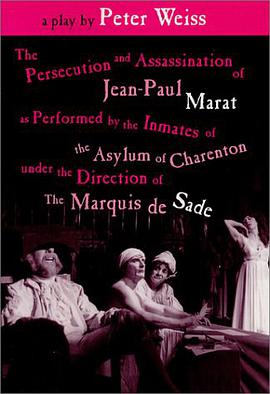
The Persecution and Assassination of Jean-Paul Marat As Performed by the Inmates of the Asylum of Charenton Under the Direction of The Marquis de Sade (or Marat Sade) [Book] Douban
author: Peter Weiss publishing house: Waveland Pr Inc 2001
This extraordinary play, which swept Europe before coming to America, is based on two historical truths: the infamous Marquis de Sade was confined in the lunatic asylum of Charenton, where he staged plays; and the revolutionary Jean-Paul Marat was stabbed in a bathtub by Charlotte Corday at the height of the Terror during the French Revolution. But this play-within-a-play is not historical drama. Its thought is as modern as today's police states and The Bomb; its theatrical impact has everywhere been called a major innovation. It is total theatre: philosophically problematic, visually terrifying. It engages the eye, the ear, and the mind with every imaginable dramatic device, technique, and stage picture, even including song and dance. All the forces and elements possible to the stage are fused in one overwhelming experience. This is theatre such as has rarely been seen before. The play is basically concerned with the problem of revolution. Are the same things true for the masses and for their leaders? And where, in modern times, lie the borderlines of sanity?
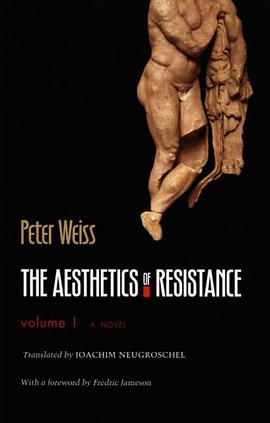
The Aesthetics of Resistance, Volume 1 [Book] Douban
author: Peter Weiss translator: Joachim Neugroschel publishing house: Duke University Press (2005) 2005 - 6
Book Description
A major literary event, the publication of this masterful translation makes one of the towering works of twentieth-century German literature available to English-speaking readers for the first time. The three-volume novel The Aesthetics of Resistance is the magnum opus of Peter Weiss, the internationally renowned dramatist best known for his play Marat/Sade. The first volume, presented here, was initially published in Germany in 1975; the third and final volume in 1981, just six months before Weiss’s death.

Spanning from the late 1930s into World War II, this historical novel dramatizes anti-fascist resistance and the rise and fall of proletarian political parties in Europe. Living in Berlin in 1937, the unnamed narrator and his peers—sixteen and seventeen-year-old working-class students—seek ways to express their hatred for the Nazi regime. They meet in museums and galleries, and in their discussions they explore the affinity between political resistance and art, the connection at the heart of Weiss’s novel. Weiss suggests that meaning lies in the refusal of humans to renounce resistance, no matter how intense the oppression, and that it is in art that new models of political action and social understanding are to be found. The novel includes extended meditations on paintings, sculpture, and literature. Moving from the Berlin underground to the front lines of the Spanish Civil War and on to other parts of Europe, the story teems with characters, almost all of whom based on historical figures. The Aesthetics of Resistance is one of the truly great works of postwar German literature and an essential resource for understanding twentieth-century German history.

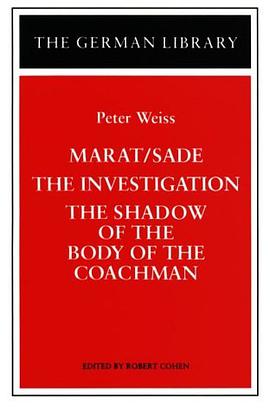
From the Back Cover

“[The Aesthetics of Resistance] . . . which [Peter Weiss] began when he was well over fifty, making a pilgrimage over the arid slopes of cutlural and contemporary history in the company of pavor nocturnus, the terror of the night, and laden with a monstrous weight of ideological ballast, is a magnum opus which sees itself . . . not only as the expression of an ephemeral wish for redemption, but as an expression of the will to be on the side of the victims at the end of time.”—W. G. Sebald, On the Natural History of Destruction

“The Aesthetics of Resistance is centrally important to any kind of assessment of twentieth-century German history.”—James Rolleston, editor of A Companion to the Works of Franz Kafka