James Miller — 作者 (9)
The Passion of Michel Foucault [图书] 豆瓣
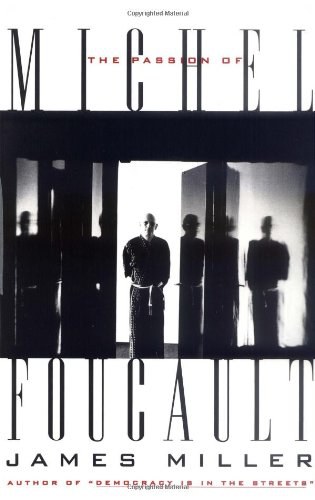
This is a study of Michel Foucault's life in philosophy. Foucault was probably the most influential Western philosopher since Sartre. Hailed as an original thinker, he has also been criticized as a dangerous and irresponsible nihilist. Drawing on extensive research, this book focuses on the philosopher's obsession with death and his taste for sado-masochistic sex. By the author of "Democracy in the Streets".
.
Based on extensive new research and a bold interpretation of the man and his texts, The Passion of Michel Foucault is a startling look at one of this century's most influential philosophers. It chronicles every stage of Foucault's personal and professional odyssey, from his early interest in dreams to his final preoccupation with sexuality and the nature of personal identity.
.
Based on extensive new research and a bold interpretation of the man and his texts, The Passion of Michel Foucault is a startling look at one of this century's most influential philosophers. It chronicles every stage of Foucault's personal and professional odyssey, from his early interest in dreams to his final preoccupation with sexuality and the nature of personal identity.
An Outline History of Western Music [图书] 豆瓣
作者:
Milo Wold
/
Gary Martin
…
出版社:
McGraw-Hill
1997
- 8
This succinct overview of the development of Western music can help students of all levels understand the evolution of musical styles. Although the text is only half the size of most music histories, it is enhanced by the many cross-references to the best anthologies and recordings for furter information and examples.
Can Democracy Work? [图书] 豆瓣
Examined Lives [图书] 豆瓣
A New York Times Notable Book for 2011
We all want to know how to live. But before the good life was reduced to ten easy steps or a prescription from the doctor, philosophers offered arresting answers to the most fundamental questions about who we are and what makes for a life worth living.
In Examined Lives, James Miller returns to this vibrant tradition with short, lively biographies of twelve famous philosophers. Socrates spent his life examining himself and the assumptions of others. His most famous student, Plato, risked his reputation to tutor a tyrant. Diogenes carried a bright lamp in broad daylight and announced he was “looking for a man.” Aristotle’s alliance with Alexander the Great presaged Seneca’s complex role in the court of the Roman Emperor Nero. Augustine discovered God within himself. Montaigne and Descartes struggled to explore their deepest convictions in eras of murderous religious warfare. Rousseau aspired to a life of perfect virtue. Kant elaborated a new ideal of autonomy. Emerson successfully preached a gospel of self-reliance for the new American nation. And Nietzsche tried “to compose into one and bring together what is fragment and riddle and dreadful chance in man,” before he lapsed into catatonic madness.
With a flair for paradox and rich anecdote, Examined Lives is a book that confirms the continuing relevance of philosophy today—and explores the most urgent questions about what it means to live a good life.
We all want to know how to live. But before the good life was reduced to ten easy steps or a prescription from the doctor, philosophers offered arresting answers to the most fundamental questions about who we are and what makes for a life worth living.
In Examined Lives, James Miller returns to this vibrant tradition with short, lively biographies of twelve famous philosophers. Socrates spent his life examining himself and the assumptions of others. His most famous student, Plato, risked his reputation to tutor a tyrant. Diogenes carried a bright lamp in broad daylight and announced he was “looking for a man.” Aristotle’s alliance with Alexander the Great presaged Seneca’s complex role in the court of the Roman Emperor Nero. Augustine discovered God within himself. Montaigne and Descartes struggled to explore their deepest convictions in eras of murderous religious warfare. Rousseau aspired to a life of perfect virtue. Kant elaborated a new ideal of autonomy. Emerson successfully preached a gospel of self-reliance for the new American nation. And Nietzsche tried “to compose into one and bring together what is fragment and riddle and dreadful chance in man,” before he lapsed into catatonic madness.
With a flair for paradox and rich anecdote, Examined Lives is a book that confirms the continuing relevance of philosophy today—and explores the most urgent questions about what it means to live a good life.
China's Green Religion [图书] 豆瓣
Flowers in the Dustbin [图书] 豆瓣
A prizewinning historian and journalist who has covered the pop music scene for more than three decades, James Miller brings a powerful and challenging intellectual perspective to his recounting of some key turning points in the history of rock. Arguing that the music underwent its full creative evolution in little more than twenty-five years, he traces its roots from the jump blues of the forties to the disc jockeys who broadcast the music in the early fifties. He shows how impresarios such as Alan Freed and movie directors such as Richard Brooks (of Blackboard Jungle) joined black music to white fantasies of romance and rebellion, and then mass-marketed the product to teenagers. He describes how rock matured as a form of music, from Chuck Berry and Elvis Presley to the Beatles, Bob Dylan, and Marvin Gaye, defining a decade of rebellious ferment. At the same time, he candidly recounts how trendsetting rock acts from Jim Morrison and the Doors in the late sixties to the Sex Pistols in the late seventies became ever more crude, outrageous, and ugly -- "as if to mark," writes Miller, "the triumph of the psychopathic adolescent." Richly anecdotal and always provocative, Flowers in the Dustbin tells the story of rock and roll as it has never been told before.
The Passion of Pedro Almodóvar [图书] 谷歌图书
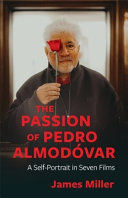
"James Miller became interested in Almodâovar when he realized that, like the author, he was a man of the Sixties, forged in that decade's global counterculture, and seriously pursuing his own quest for personal liberation; both author and filmmaker are fascinated with philosophy as a way of life and investigating key questions about the human condition. The Passion of Pedro Almâodovar argues that the director's vision of freedom is rooted in surrealism, the philosophy of Sartre, and in a desire-oriented theory of wellbeing based on Jean Cocteau's theory of the ""surreal sex of beauty,"" which posited a third gender between the binary forms. Almodâovar is arguably the most important artist with a self-conscious interest in moral philosophy to have emerged from the global counterculture of the 1960s. His films, if taken in sequence, amount to a sustained struggle to understand, in his terms, the limits of moral autonomy and of nihilism and egotism. Like no other filmmaker before him, a generous interpretation of his oeuvre becomes increasingly difficult if one simply takes each movie as a freestanding entertainment rather than another chapter in the director's episodic and often revealing self-portrait. Collectively they provide an ongoing series of fictional alter egos, telling and retelling essential episodes in the story of his life, thinking about the past in the spirit of Proust but exploring the alternative lives he might have lived in the style of Pessoa, in this way learning more about who he is and what he might yet become. Espousing Whitman's "I contain multitudes," what may present superficially as sensationally beautiful storytelling turns out to communicate something simpler and more profound: one man's philosophy of life and the anguish behind his ongoing search for meaning."--