James Benning — Director (51)

Movie

Faces (2011)
Faces Douban
other title: 面孔 / Two Faces
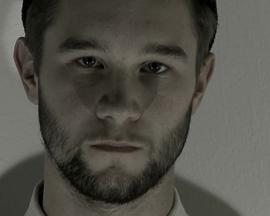
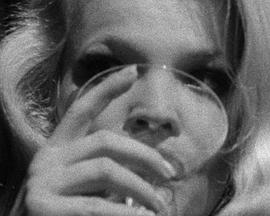
A Cassavetes remake that pushes the original title to its ultimate consequence: strictly faces, each shot lasting as long as in the 1968 film. What's more, Benning concentrates entirely on static close-ups of the actors, caught in uncomfortable silences. Experimental filmmaker James Benning created a radical, dialogue-free remake of John Cassavetes' marriage crisis film Faces (1968). He based his eponymous 'reconstruction' on three rules: 1) Only close-ups of the faces of the actors in Faces, who included Gena Rowlands, Seymour Cassel and John Marley. 2) Every actor should be on screen the same length of time that they were in the original. 3) Every scene should last as long as it did in Cassavetes' film. So if the original features Gena Rowlands for 15 minutes in a 30-minute scene, then Benning will have her on screen for 15 minutes in his version. To this end, Benning sometimes had to really slow down shots, giving free reign to the human fascination with faces. Unhampered by story or dialogue, viewers can concentrate fully on the faces and study and clarify the various expressions at their leisure.

Movie

two moons (2019)
two moons Douban
other title: 两个月亮
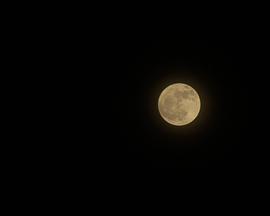
Filmed on November 21 and 22, 2018 in Valencia, California, Two Moons portrays a gibbous and full moon rising.

Movie

YouTube Trilogy: 4 Songs, History, Asian Girls (2011)
YouTube Trilogy: 4 Songs, History, Asian Girls IMDb TMDB Douban
"As audiences could see for themselves in a special screening series organised by the Austrian Film Museum in November 2011, Benning’s more recent films move in several directions simultaneously. He picks up on older projects, reworks them, yet at times leaves these behind and makes an utterly fresh start – striking a strange equilibrium between continuity and a new slant on particular models of film aesthetics. Benning has been viewed over the past decade as the USA’s landscape filmmaker par excellence, and at first it seems bewildering to find he has now turned his attention to phenomena of the digital world such as Web 2.0. In »YouTube Trilogy« (2011), Benning organised found material around three thematic clusters which apparently have little in common. The first section focuses on children of various religious affiliations singing: »Agnus Dei« in the crystal-clear voice of a boy from the Vienna Boys’ Choir, two girls singing a »Shalom« song, a teenager belting out into Leonard Cohen’s »Hallelujah« and a solo of an Arabic song by a young girl. These young people making music in a range of formats produce different types of intimacy. Whilst the Vienna Boys Choir piece is clearly taken from a television recording and exudes a sense of the official nature of the event, most of the other videos bear the hallmarks of youthful (YouTube-style) self-staging. These tensions function in a sense as a prelude to Benning’s attempt to give shape to a kind of concealed artistic autobiography by compiling and processing found video clips. He describes this part of the film as »my own sketchy tongue-in-cheek history«2 and thus establishes an arc of narrative tension underpinning what at first sight seem to be unconnected snippets – a man describes how a pistol works, President Eisenhower gives a speech, someone tries on a blue dress in a yellow window frame. Nonetheless the clips, filmed directly from the computer screen, function not so much in terms of what nonetheless remains an arbitrary combination but rather through the prism of the unique character of each scene. That makes the autonomy asserted by Benning even more questionable; while he claims authorial sovereignty over the digital found pieces, this ultimately gives rise to an idiosyncratic cryptograph. In the third section – with the deliberately attention-grabbing title »Asian Girls« – Benning picks up on the issue of the Internet’s typical categorisations, yet struggles to shift these categories away from the terrain of stereotype. "

Movie

Nightfall (2012)
Nightfall IMDb TMDB Douban
other title: 夜幕降临
Now is here, here is now, Irish folk rockers Clannad sang years ago in their theme song to the television series Robin of Sherwood. In the spirit of those lyrics, James Benning’s filmis an attempt to join time and space into an indivisible whole, both on the screen and in the viewer’s mind. The real-time visual record of a day turning into night is disarmingly unambiguous and charmingly poetic, yetmaintains a mathematical precision. Unobtrusively filmed deep within a forest, where the silence is broken only by birdcalls, Nightfall is reminiscent of H.D. Thoreau’s celebrated chronicle of lifenear Walden Pond, away from the trappings of civilization. In an age of over-stimulated perceptions, Benning’s one-take film aims only at purity.

Movie

perimeter (2015)
perimeter IMDb TMDB Douban
other title: 边缘系统 / Perimeter
52部电影计划中的一部,班宁在2015年每周做一部作品,一共完成了52部。所有的作品都是基于拾得影像完成的。 One of the movies Benning created as a part of the 52 Films project. In 2015 Benning made one movie every week, 52 in total, completely based on found foutage (YouTube).

Movie

Twenty Cigarettes (2011)
Twenty Cigarettes IMDb TMDB Douban
other title: 二十支烟
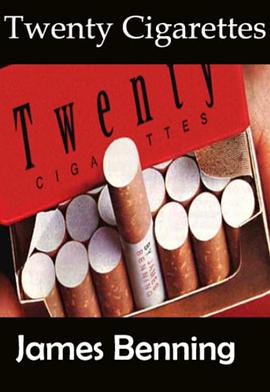
Celebrated for his minimal, monumental landscape studies, James Benning turns to the intimacy of the portrait in his latest film, TWENTY CIGARETTES. Referencing Warhol’s screen tests, 1930s Hollywood glamour, and the disappearing cigarette break, the film captures 20 of Benning’s friends (including filmmaker Sharon Lockhart, cultural theorist Dick Hebdige, and book editor Janet Jenkins) satiating their smoke cravings. Each shot’s length is determined by the time it takes each subject to smoke a cigarette, and over the course of the film a dynamic range of personalities emerges out of an array of physical characteristics, distinctive settings, and personal relationships to the camera. (Amy Beste and Jessica Bardsley)

Movie

On Paradise Road (2020)
On Paradise Road Douban
other title: 在天堂路
Filmed at Benning's home in Val Verde during the first month of the pandemic, the film is a portrait of that time.

Movie

Easy Rider (2012)
Easy Rider Douban
other title: 逍遥骑士
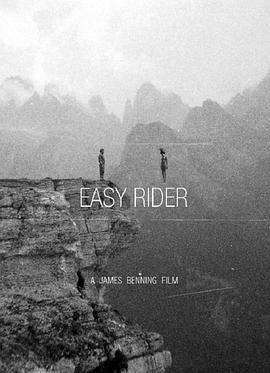
After doing a re-make of John cassevetes’ FACES (1968), I decided to re-make another American classic, Dennis Hopper’s EASY RIDER (1969). EASY RIDER interests me in two ways: its portrayal of 60’s counterculture – unlike FACES which for me is more about the 50’s – and its search for place. I divided the original film into scenes (like I did with FACES) and then replaced each scene with one shot filmed at the original location (unlike FACES where shots were gleaned from the original film itself.) my EASY RIDER tries to find today’s counter-culture (if one exists) by replacing the 60’s music with music that I listen to today. (James Benning)

Movie

BNSF (2013)
BNSF IMDb TMDB Douban
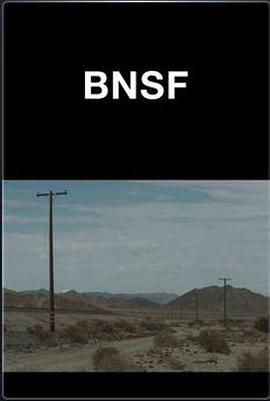
James Benning's latest is a three hour+ shot featuring light, clouds and the much anticipated return of a BNSF train. Only info about this on the net is that a recent intended screening was cancelled.

Movie

L. Cohen (2018)
L. Cohen Douban
other title: L.科恩
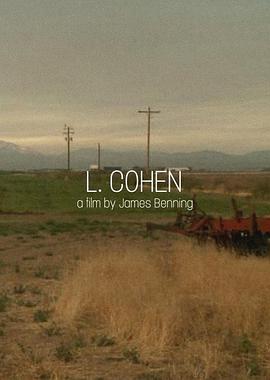
一个特殊日子下,俄勒冈州的一片农地。 Described by filmmaker and artist James Benning as "a farm field in Oregon on a very special day," L. COHEN is the latest masterwork by this grand figure of the American avant-garde.

Movie

The United States of America (2022)
The United States of America WikiData IMDb TMDB Douban
★ 8.0 5 ratings
other title: 美利坚合众国 / 미국
James Benning’s first film called The United States of America was a 1975 trip across the country, capturing its scenery through a car windshield. This second one also crisscrosses the nation, but without a car, carving it up instead into a series of static shots of just under two minutes, one for each state, presented alphabetically, from Heron Bay, Alabama to Kelly, Wyoming. The names of the places are nondescript, but the images attached to them are anything but, immaculately composed shots of landscape, cityscape and the spaces in between. As we move from A to Z, the images coalesce into a portrait of today’s USA, tracing out its fault lines almost in passing: fenced-off facilities, a river bed running dry, factories and refineries, run-down streets and gas stations, a camp under a bridge. The past is there too, seeping up through the songs and speeches that sporadically pierce the background noise or the motifs that evoke a whole career; the clouds, trains and cabins are stand-ins for films, not just states. As always, there’s time for more abstract thoughts too: each image may stand for a state, but representativity is slippery. Which state is more cinematic than the rest?

Movie

El Valley Centro (2000)
El Valley Centro IMDb TMDB Douban
other title: 中央谷地 / 엘 밸리 센트로
I began El Valley Centro in November of 1998; I was driving through the Great Central Valley looking for places to film. I wasn’t going to start shooting for at least six months; I wanted to just look and listen – to get to know the Valley well before I would make images. But almost immediately I came across an oil well fire with flames high into the sky. I returned home for my Bolex and Nagra. Determined that landscape is a function of time, I let a full roll of 16mm film (100 feet) run through the camera. At that moment I knew I would make a portrait of The Great Central Valley using 35 two and a half minute shots. As its name suggests, the Great Central Valley – El Valley Centro in Spanish – runs long and wide down the middle of California, encompassing much of that vast state’s cultivated farmland. Benning’s film explores this vast area, his camera pausing for the allotted two and a half minutes before he cuts to another location, another vista presented for our absorption. There are no ‘actors’ as such, no ‘characters’, no ‘dialogue’ as we know it, no ‘narration’ as we know it, hardly any sounds, hardly any ‘real’ action. But the audience soon realises that each of these apparent ‘absences’ is, in Benning’s hands, a plus. He forces us to concentrate our eyes and ears on what he shows us, and the attentive viewer will find their efforts more than amply rewarded. As well as slowly compiling a remarkable portrait of a remarkable place, Benning thrillingly redefines the basic syntax of film-making and film-watching. The effect is staggering – as one of Caspar David Friedrich’s contemporaries commented when seeing his painting ‘Monk by the Sea’ for the first time: “it is as if one’s eyelids had been cut off.” The film begins with a shot of a lake, apparently draining away into what looks like a huge plughole. It’s an ideal starting point – we’re being drawn into Benning’s world as surely as the water is being drawn into that hole, and we’re aware that our eye is specifically being directed to a certain point on the screen. But the two and a half minutes for which this shot is projected gives us ample time to explore the peripheries, and this is also part of Benning’s grand design. This is equally true of the remaining 34 shots in the sequence – he shows us places where ‘nothing’ is apparently happening, but which he reveals as stages on which a drama unfolds: the ‘subject’ of the shot may be a series of tiny orange blobs in the distance (as in the sequence showing a penitentiary), but they’re enough. We can work out the rest for ourselves. Benning works at the interface of mathematics and geography: the exact position of the camera is absolutely crucial – he’s faced with an infinite number of possibilities, and the essence of El Valley Centro lies in his process of selection. Timing is equally important – there’s no environment in the world where this kind of film can’t be made, provided the right two and a half minutes are chosen. Benning’s judgement is exceptional, and he’s also aided by some providential turns of fate, trains and cars coming into our out of shot at just the right time. The most spectacular moment of serendipity comes during a shot of a large ship making its progress along a river – the river is invisible, all we can see is fields. Then, coming the other way, a smaller boat appears and passes in front of the ship. For a moment we’re disoriented – how can the water run both ways at once? Then we realise it’s more a matter of how the craft are being propelled. But while this activity is taking place on the water, a car appears – the road is as invisible as the channels – and zips along and out of sight. It’s a delightful moment of accidental choreography (just like a later shot of tumbleweeds skidding across a dusty scrubland, almost alive, like the corps in a Martian ballet.) Benning himself calls the ship/boat/car scene ‘such a crowd-pleaser,’ ahere’s an unexpected strain of humour in the film – most overtly in the sequence showing a champion goat-tier, repeatedly catching, tying then letting go an increasingly befuddled-looking goat with her back squarely to camera. Once he’s established certain ‘rules’, Benning is able to have fun with his choice of images – on more than one occasion he has characters going about their work in the fields, slowly advancing towards the camera, closer and closer until they seem sure to collide. At the last minute, however, they turn back, never even acknowledging Benning’s presence. This is just as well – after just a few minutes inside the Benning world-view, the viewer’s eyes effectively become Benning’s camera: and if any of the figures in the landscape did look up and catch us staring, it would be impossible not to flinch and look guiltily away. But the workers-in-the-field shots connect to Benning’s serious theme: he shows the Valley as a place of toil, of man’s incursion into the natural environment and, most of all, of ownership. After the final two-and-a-half-minute ‘action’ shot there’s a final section of equal length telling us where each sequence was filmed and, in most cases, which farming conglomerate owns the land. But Benning’s careful, patient approach invests so much in each scrap of landscape that he, too, becomes a kind of ‘owner’ – as do we, watching in the cinema as the indelible images burn into our minds. As Chinatown famously shows us, water and power go hand in hand in California: one of the most fascinating of El Valley Centro’s shots shows the welcoming ‘gate’ above the road entering the city of Modesto, a neon slogan-board reading ‘Water wealth contentment health.’ The phrase takes on a savage irony in this kind of exhaustive geographical-political-social context: the film starts and ends with water, water flows through so many of the frames, its moneyed manipulators sequestered in offices far away from Benning’s prying lens. Modesto also happens to be George Lucas’s home town, the place he set his masterpiece American Graffiti – perhaps in homage, Benning’s Modesto shot also includes cars at night, the retro glow of neon, the excited voices of teenagers as they drive in and out of the frame. You have to strain to hear them, of course – but this is a film in which the buzzing of a fly becomes a major movie event. This is a film whose every single shot deserves a full-length essay of its own.
Movie

Natural History (2014)
Natural History WikiData IMDb TMDB Douban
other title: 自然史 / natural history
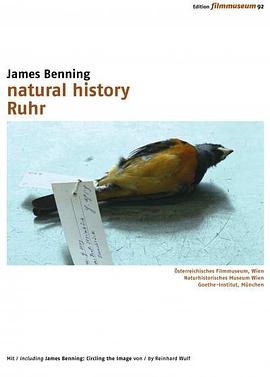
In 54 static shots, Benning provides a picture of the Natural History Museum in Vienna. With the exception of the first three shots, he chooses areas that are normally closed to the public: offices, store rooms and empty corridors. A characteristically meditative Benning, even though this time he chooses to stay indoors.

Movie

Deseret (1995)
Deseret WikiData IMDb TMDB Douban
other title: 犹他州
James Benning took the founding of the New York Times in 1851 as a departure point for his latest film, Deseret. In the best Benning tradition, Deseret unfolds magnificent landscapes captured with a stationary camera during a dozen-odd trips throughout the calendar year - deserts, plains of snow, lonely trails, trees in bloom, cemeteries, ruins, unfriendly rocks, empty settlers' houses, roads that seem to be leading nowhere, a few isolated human figures. Deseret's starkly composed images suggest a space haunted by the official history written back East in the Times. Benning collected 93 stories about Utah, boiled them down to a few lines and used a different shot to 'illustrate' each sentence. As we reach 1900, his black and white footage spectacularly turns to color. The stories told recount the loss of American innocence: from the woes and persecution of the Mormons, the fights with the Indians... Written by Anonymous

Movie

13 Lakes (2006)
13 Lakes WikiData IMDb TMDB Douban
★ 7.6 5 ratings
other title: 十三湖 / 十三座湖
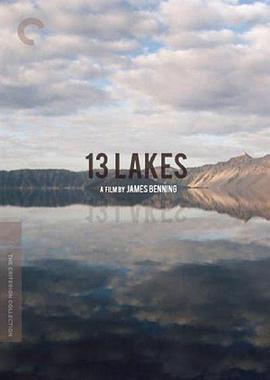
"'13 Lakes' is a formal film of astonishing beauty. It is a structural film that tells a story. But its story is ephemeral, and the attempt to grasp it immediately multiplies its transience. This is how '13 Lakes' tells a story about landscape, its virginity, and its culturalization. It reports that landscape is a function of time. It tells Benning's travels across the United States, from west to east, from south to north, and back. Journeys create difference and are an instrument for placing a gaze into a social perspective. Thus, a story slowly unfolds of seeing and the gaze, that of Benning as well as of the audience. Beyond that, '13 Lakes' narrates that a camera was placed and set in operation at a particular time and place. It is a film of witnessing, not a film of observation, not a documentation. A documentary film explores a theme, argues, tries to persuade. In contrast, '13 Lakes' is a reflective film that is its own theme. If it adduces arguments, they consist of a strictly followed set of arithmetic rules. '13 Lakes' is the story of a method brought to its logical conclusion. With optimal efficiency and maximum effect, this method produces a new cinematic form in which structure and narrative do not exclude each other, but mutually overlap and even determine each other. Benning thus succeeds in articulating the necessary relationship between a method, a medium, an idea of nature, and his own person. The result is a cinematic aesthetic that, in this radicalized form, activates a political aspect based in method. '13 Lakes' is thus a political film whose politics consist in method." Martin Beck

Movie

One Way Boogie Woogie (2006)
One Way Boogie Woogie IMDb TMDB Douban
other title: 布吉伍吉单程路
Sixty one-minute shots with no camera movement. This tension between painterly and cinematic space is not only experienced as an intellectual contrast but is also felt as a dialectic between permanence and impermanence.

Movie

Readers (2017)
Readers IMDb TMDB Douban
詹姆斯·班宁 actor: Clara McHale-Ribot / Rachel Kushner …
other title: 读者
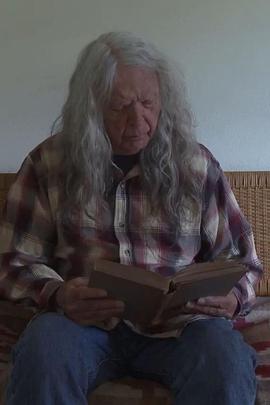
Readers observes four people, three women of different ages and a man, while they are reading. Every take lasts 27 minutes, filmed as a medium shot and in central perspective. Even in the 21st century, when – or so we are told – attention spans among the younger generations are getting ever shorter, it cannot be denied that patience and concentration are necessary in order to obtain insight. The latest film from James Benning, for decades now one of the major avant-garde documentary makers, can therefore also be described from beginning to end without reducing its creative effect, which after all lies in the time invested. The film shows, in medium close-up and in four uninterrupted shots lasting just under half an hour each, three women and one man reading a book of their choice, followed by a brief quotation from the book being read. The readers appearing in the film are drawn from Benning’s own circle: they are the daughter of a famous guitarist, two writers and a performance artist. But you could equally argue that, in this case, the reader is in the cinema. Et cetera.