
James Benning — Playwright (10)
Movie
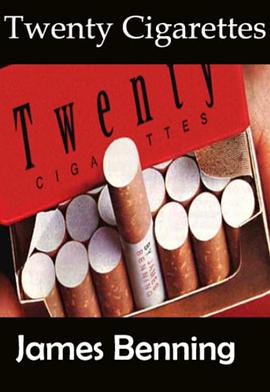
Twenty Cigarettes (2011)
Twenty Cigarettes IMDb TMDB Douban
詹姆斯·班宁
actor:
Sompot Chidgasornpongse
/
Francesca Sloane
…
other title:
二十支烟
Celebrated for his minimal, monumental landscape studies, James Benning turns to the intimacy of the portrait in his latest film, TWENTY CIGARETTES. Referencing Warhol’s screen tests, 1930s Hollywood glamour, and the disappearing cigarette break, the film captures 20 of Benning’s friends (including filmmaker Sharon Lockhart, cultural theorist Dick Hebdige, and book editor Janet Jenkins) satiating their smoke cravings. Each shot’s length is determined by the time it takes each subject to smoke a cigarette, and over the course of the film a dynamic range of personalities emerges out of an array of physical characteristics, distinctive settings, and personal relationships to the camera. (Amy Beste and Jessica Bardsley)
Movie
On Paradise Road (2020)
On Paradise Road Douban
other title:
在天堂路
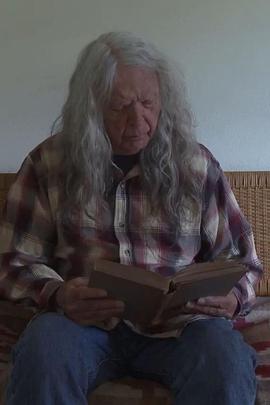
Filmed at Benning's home in Val Verde during the first month of the pandemic, the film is a portrait of that time.
Movie
Easy Rider (2012)
Easy Rider Douban
other title:
逍遥骑士
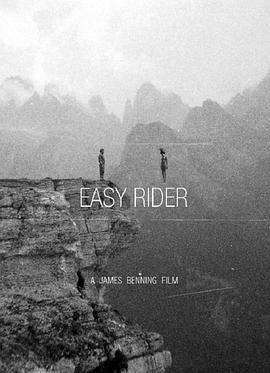
After doing a re-make of John cassevetes’ FACES (1968), I decided to re-make another American classic, Dennis Hopper’s EASY RIDER (1969). EASY RIDER interests me in two ways: its portrayal of 60’s counterculture – unlike FACES which for me is more about the 50’s – and its search for place. I divided the original film into scenes (like I did with FACES) and then replaced each scene with one shot filmed at the original location (unlike FACES where shots were gleaned from the original film itself.) my EASY RIDER tries to find today’s counter-culture (if one exists) by replacing the 60’s music with music that I listen to today. (James Benning)

Movie
The United States of America (2022)
The United States of America WikiData IMDb TMDB Douban
other title:
美利坚合众国
/
미국
James Benning’s first film called The United States of America was a 1975 trip across the country, capturing its scenery through a car windshield. This second one also crisscrosses the nation, but without a car, carving it up instead into a series of static shots of just under two minutes, one for each state, presented alphabetically, from Heron Bay, Alabama to Kelly, Wyoming. The names of the places are nondescript, but the images attached to them are anything but, immaculately composed shots of landscape, cityscape and the spaces in between. As we move from A to Z, the images coalesce into a portrait of today’s USA, tracing out its fault lines almost in passing: fenced-off facilities, a river bed running dry, factories and refineries, run-down streets and gas stations, a camp under a bridge. The past is there too, seeping up through the songs and speeches that sporadically pierce the background noise or the motifs that evoke a whole career; the clouds, trains and cabins are stand-ins for films, not just states. As always, there’s time for more abstract thoughts too: each image may stand for a state, but representativity is slippery. Which state is more cinematic than the rest?
Movie
Natural History (2014)
Natural History WikiData IMDb TMDB Douban
other title:
自然史
/
natural history
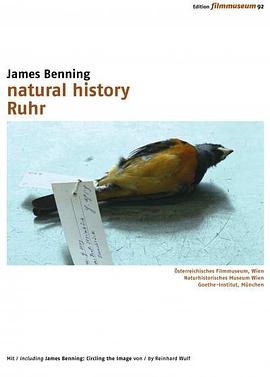
In 54 static shots, Benning provides a picture of the Natural History Museum in Vienna. With the exception of the first three shots, he chooses areas that are normally closed to the public: offices, store rooms and empty corridors. A characteristically meditative Benning, even though this time he chooses to stay indoors.
Movie
2012年的布吉伍吉单程路 (2012)
One Way Boogie Woogie 2012 Douban
other title:
One Way Boogie Woogie 2012
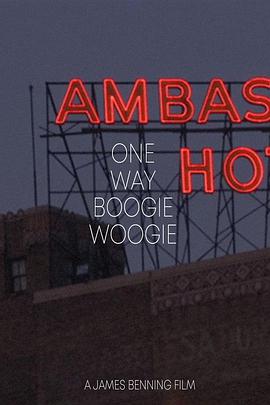
In late May of 2011 I returned to Milwaukee to make a third version. This one was shot with a Sony HD camera. For this second re-make I decided to go back to the original idea, that is, to simply document the architecture in Milwaukee’s industrial valley. I searched for buildings that looked like the ones from 1977. I found 18 of them. A few of them are also in the original 1977 film, and the others look as if they could have been. I then decided to shoot each of these building for five minutes. I felt a longer duration was necessary to study their true presence. During filming a few fortuitous events occurred that reminded me of the constructed minimal narratives of the original film, so I decided to add one constructed narrative (myself as the actor) to this latest film, ONE WAY BOOGIE WOOGIE 2012. (James Benning)

Movie
Landscape Suicide (1987)
Landscape Suicide WikiData IMDb TMDB Douban
詹姆斯·班宁
actor:
Rhonda Bell
/
Elion Sucher
other title:
静态自杀
/
랜드스케이프 수어사이드
…
Benning continues his examination of Americana in this film through the stories of two murderers. Ed Gein was a Wisconsin farmer and multiple murderer who taxidermied his victims in the 1950s. Bernadette Protti was a California teenager who stabbed a friend to death over an insult in 1984.
Movie
麦吉的农场 (2020)
Maggie’s Farm Douban
other title:
Maggie’s Farm
A portrait of an art institution as a cinematic landscape: in a succession of static shots, James Benning explores the buildings and terrain of the California Institute of the Arts, where he teaches. A series of views of nature filmed in the surrounding park and woods transitions into images of floors, seating areas and other details of a public building not meant for show. In both parts, an uncanny feeling dominates: the geometries of nature, the dark green and brown tones, the rushing of the highway in the background on the one hand and the humming of halogen lamps, the sound of steps in an otherwise seemingly empty school on the other – it all seems to be hiding a secret. The camera’s gaze is almost always restricted; it rarely penetrates very far into the image. It discovers shabby corners, observing scenarios more reminiscent of a mystery novel than the campus of an art institution. More so than in the majority of James Benning’s longer works of recent years, a narrative lies concealed within the images; every shot creates an urge to move forward, a tension, almost as if the landscapes and interiors were the scenes of a crime.