Christof Koch — 作者 (5)
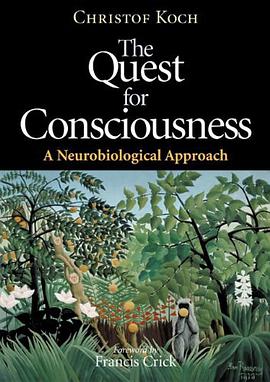
The Quest for Consciousness [图书] 豆瓣 Goodreads 谷歌图书
作者: Christof Koch 出版社: Roberts & Company Publishers 2004 - 1
<b>About the Author</b><p>Born in 1956 in the American Midwest, Christof Koch grew up in Holland, Germany, Canada, and Morocco, where he graduated from the Lycée Descartes in 1974. He studied physics and philosophy at the University of Tübingen in Germany and was awarded his Ph.D. in biophysics in 1982. He is now the Lois and Victor Troendle Professor of Cognitive and Behavioral Biology at the California Institute of Technology. The author of several books, Dr. Koch studies the biophysics of computation, and the neuronal basis of visual perception, attention, and consciousness. Together with Francis Crick, his long-time collaborator, he has pioneered the scientific study of consciousness.</p>
The Quest for Consciousness [图书] 豆瓣
作者: Christof Koch 出版社: Roberts and Company Publishers 2010 - 1
Consciousness is one of science's last great unsolved mysteries. How can the salty taste and crunchy texture of potato chips, the unmistakable smell of dogs after they have been in the rain, or the exhilarating feeling of hanging on tiny fingerholds many feet above the last secure foothold on a cliff, emerge from networks of neurons and their associated synaptic and molecular processes? In The Quest for Consciousness, Caltech neuroscientist Christof Koch explores the biological basis of the subjective mind in animals and people. He outlines a framework that he and Francis Crick (of the 'double helix') have constructed to come to grips with the ancient mind-body problem. At the heart of their framework is a sustained, empirical approach to discovering and characterising the neuronal correlates of consciousness - the NCC - the subtle, flickering patterns of brain activity that underlie each and every conscious experience.
Foreword by Francis Crick
Introduction to the study of consciousness
Neurons, the atoms of perception
The first steps in seeing
The primary visual cortex as a prototypical neocortical area
What are the neuronal correlates of consciousness?
The neuronal correlates of consciousness are not in the primary visual cortex
The architecture of the cerebral cortex
Going beyond the primary visual cortex
Attention and consciousness
The neuronal underpinnings of attention
Memories and consciousness
What you can do without being conscious: The zombie within
Agnosia, blindsight, epilepsy, and sleep-walking: clinical evidence for zombie agents
Some speculations on the functions of consciousness
On time and consciousness
When the mind flips: following the footprints of consciousness
Splitting the brain splits consciousness
Further speculations on thoughts and the unconscious homunculus
A framework for consciousness
An interview
Glossary
Bibliography
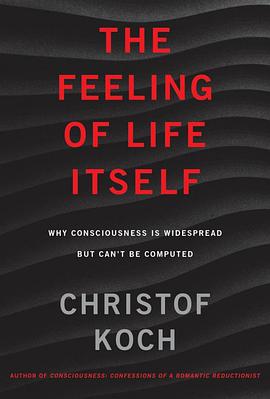
The Feeling of Life Itself [图书] 豆瓣
作者: Christof Koch 出版社: The MIT Press 2019 - 9
"If you wonder where the sounds and sights in the skull-sized infinite kingdom that is your mind come from, who else has these feelings and whether computers can ever be conscious, this is the book for you." - Christof Koch
Summary
An argument that consciousness, more widespread than previously assumed, is the feeling of being alive, not a type of computation or a clever hack.
In The Feeling of Life Itself, Christof Koch offers a straightforward definition of consciousness as any subjective experience, from the most mundane to the most exalted—the feeling of being alive.
Psychologists study which cognitive operations underpin a given conscious perception. Neuroscientists track the neural correlates of consciousness in the brain, the organ of the mind. But why the brain and not, say, the liver? How can the brain, three pounds of highly excitable matter, a piece of furniture in the universe, subject to the same laws of physics as any other piece, give rise to subjective experience? Koch argues that what is needed to answer these questions is a quantitative theory that starts with experience and proceeds to the brain. In The Feeling of Life Itself, Koch outlines such a theory, based on integrated information.
Koch describes how the theory explains many facts about the neurology of consciousness and how it has been used to build a clinically useful consciousness meter. The theory predicts that many, and perhaps all, animals experience the sights and sounds of life; consciousness is much more widespread than conventionally assumed. Contrary to received wisdom, however, Koch argues that programmable computers will not have consciousness. Even a perfect software model of the brain is not conscious. Its simulation is fake consciousness. Consciousness is not a special type of computation—it is not a clever hack. Consciousness is about being.
Endorsements
Christof Koch has been leading the charge in consciousness science since there was a charge to lead. His latest book showcases his writerly instincts as well as his scientific acumen, drawing on his deep involvement in the field to paint a compelling picture of the science of experience itself.
Anil K. SethProfessor of Cognitive and Computational Neuroscience, University of Sussex; editor of 30 Second Brain
Koch's controversial and witty book provides a broad view of consciousness, together with a thorough review of his scientific research, inspired by Francis Crick. It discusses issues such as the existence of consciousness in other species and attempts at developing tools and techniques to measure it.
Ada YonathDirector of the Helen and Milton A. Kimmelman Center for Biomolecular Structure and Assembly of the Weizmann Institute of Science; winner of the Nobel Prize in Chemistry, 2009
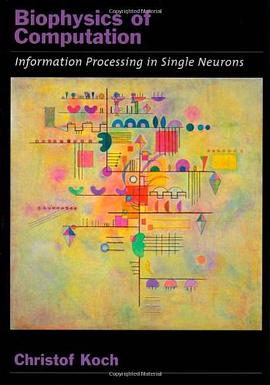
Biophysics of Computation [图书] 豆瓣
作者: Christof Koch 出版社: Oxford University Press, USA 2004 - 10
Neural network research often builds on the fiction that neurons are simple linear threshold units, completely neglecting the highly dynamic and complex nature of synapses, dendrites, and voltage-dependent ionic currents. Biophysics of Computation: Information Processing in Single Neurons challenges this notion, using richly detailed experimental and theoretical findings from cellular biophysics to explain the repertoire of computational functions available to single neurons. The author shows how individual nerve cells can multiply, integrate, or delay synaptic inputs and how information can be encoded in the voltage across the membrane, in the intracellular calcium concentration, or in the timing of individual spikes.
Key topics covered include the linear cable equation; cable theory as applied to passive dendritic trees and dendritic spines; chemical and electrical synapses and how to treat them from a computational point of view; nonlinear interactions of synaptic input in passive and active dendritic trees; the Hodgkin-Huxley model of action potential generation and propagation; phase space analysis; linking stochastic ionic channels to membrane-dependent currents; calcium and potassium currents and their role in information processing; the role of diffusion, buffering and binding of calcium, and other messenger systems in information processing and storage; short- and long-term models of synaptic plasticity; simplified models of single cells; stochastic aspects of neuronal firing; the nature of the neuronal code; and unconventional models of sub-cellular computation.
Biophysics of Computation: Information Processing in Single Neurons serves as an ideal text for advanced undergraduate and graduate courses in cellular biophysics, computational neuroscience, and neural networks, and will appeal to students and professionals in neuroscience, electrical and computer engineering, and physics.