Bruce Conner — Director (15)

Movie

Marilyn Times Five (1973)
Marilyn Times Five WikiData IMDb TMDB
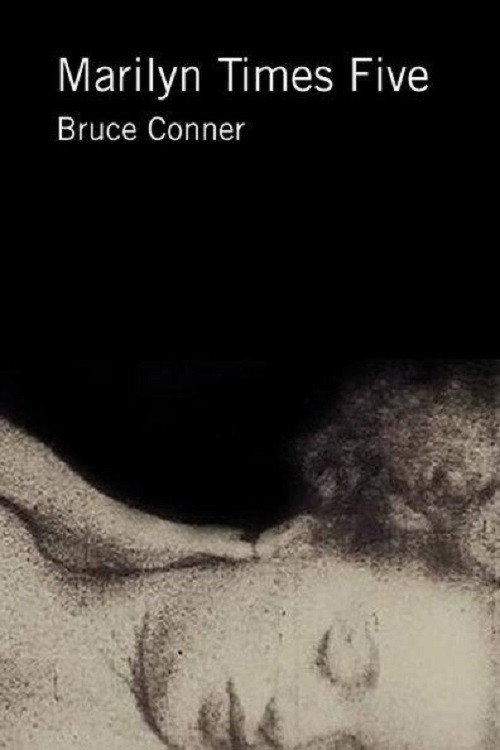
A commentary on the destructive expectations of females in a male dominated society, Marilyn Times Five was made from an old stag film called "The Apple-Knockers, and the Coke"(1948) these sections of the film were set to Marilyn Monroe's song "I'm Through With Love". The film depicts a Marilyn Monroe look-a-like slowly taking her clothes off for the camera (the viewer). The woman's actions are looped several times which gives the audience a sensation of exhaustion. That exhaustion keeps building until the very end where the woman is shown crumpled on the floor in an awkward position, which makes it appear as if she is lifeless.

Movie

Mea Culpa (1981)
Mea Culpa IMDb TMDB
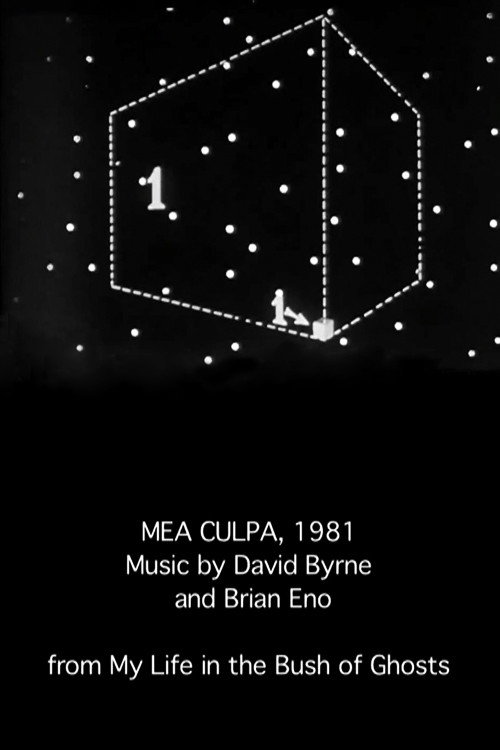
In his first collaboration with David Byrne and Brian Eno, Conner used footage from educational films to create a rhythmically austere image-track for music from their pioneering “sampling” album “My Life in the Bush of Ghosts” (1981).

Movie

Vivian (1965)
Vivian IMDb TMDB Douban
other title: 薇薇安
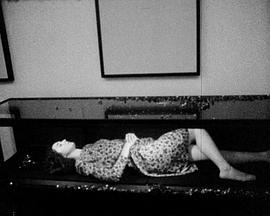
"A film portrait cut to the tune of Conway Twitty's version of 'Mona Lisa.' Filmed in part at a 1964 show of Conner's artwork in San Francisco, the film is also a witty statement about forces that take the life out of art. Vivian Kurz, the subject of the film, is entombed in a glass display case." - Judd Chesler Award: Gold Medal Award, Sesta Biennale D'Arte Republica Di San Marino. Da Vinci thought he caught her smiling.

Movie

Valse Triste (1977)
Valse Triste IMDb TMDB Douban
other title: 悲伤圆舞曲
With a similar dreamy mood like its predecessor "Take the 5:10 to Dreamland" (1976) this clip starts with a boy getting into his bed. The camera zooms in into the boy's mind and a slow, sad waltz (i.e."Valse Triste") accompanies images of a locomotive, a miner, the globe, the sky, a sheep heard, etc. Disparate elements, but if one concentrates only at the movement of the figures, one can perceive a commotion, slowly livening up: The starting wheels of the heavy locomotive, the tired miner pushing the heavy cart of coal bricks, the globe smoothly turning around and around, the clouds imperceptibly floating in the sky, the sheep idly moving in the herd, etc. We reach the first climax when a mannequin opens her coat like a flower. The second big crescendo spurts out from a "water hose", after watching schoolgirls doing gymnastics for quite a while. A sad, but nostalgic aftertaste lingers in the end when funeral cars drive away through a flooded area…

Movie

Report (1967)
Report WikiData IMDb TMDB Douban
other title: 报告
Bruce Conner’s most celebrated film for a reason: it takes historical moments that were replayed over and over on television—chilling repetition of Kennedy assassination coverage—and repurposes them into a meditation on how the media tries to exert authority and apply a sense of order to the anarchic. And though it may sound perverse to say so, the film is also—not incidentally—a thrill to watch. -- The A.V. Club

Movie

Take the 5:10 to Dreamland (1976)
Take the 5:10 to Dreamland WikiData IMDb TMDB Douban
Its slow somnambulic rhythm, its animalistic jungle sounds as well as the eerily mixed images create a dream mood that comes closest to my actual dreaming-feeling. The long black phases between the sequences are as important as the images themselves because they leave empty space where the "echo" of the last image can seep through without interfering with the following image. But our logical mind still somehow feels compelled to construe some kind of sense, parallel, or some erratic story out of it.

Movie

Looking For Mushrooms (1995)
Looking For Mushrooms IMDb TMDB Douban
other title: 找寻蘑菇 / Looking for Mushrooms
Bruce Conner described Looking for Mushrooms in the 1975 Film-Makers' Cooperative Catalogue as a “[f]amous documentary containing full information. Special effects by Isauro Nava, Rancho del Cura, Huatla de Jimenez, Mexico. Sound by John Liniment and frenz”. In 1962, Bruce Conner left San Francisco and moved to Mexico, apparently intending to “wait out the impending nuclear holocaust” (1). He spent about a year in Mexico before running out of cash and patience, and returning to the United States. During his year in Mexico, Conner hosted psychedelic guru Timothy Leary, who he had met on an earlier visit to New York. Conner and Leary occupied themselves with mushroom hunts in the Mexican countryside. It's not clear whether their hunts were successful. But Conner's staccato home-movies of their walks – combined with movies of previous mushroom hunts in San Francisco – became his film Looking for Mushrooms. The film rushes through the rustic landscape of rural Mexico, flitting past houses and through a crumbling graveyard. It's quite a contrast to Valentin de las Sierras (1967), Bruce Baillie's serene portrait of life in a Mexican village. But the quality of the image is similar, sun-blasted colours bleached to pastel. Conner cut Looking for Mushrooms down to 100 feet in 1965 in order to fit it into an endless-loop cartridge for continuous projection. In 1967 he added a soundtrack by The Beatles (“Tomorrow Never Knows”). Thirty years later, Conner revisited Looking for Mushrooms, extending it to 15 minutes by repeating each frame five times and adding a new soundtrack – “Poppy Nogood and the Phantom Band” (1968) by Terry Riley. Later, Conner exhibited Looking for Mushrooms as an interactive sculpture, threading a print on a Moviscop viewer for museum patrons to view on their own.
Movie

Breakaway (1966)
Breakaway WikiData IMDb TMDB Douban
other title: 脱离
Breakaway plays out like a visual symphony. A prototype for the best (but still, lesser) contemporary formalist music videos, like Peter Care’s “What’s the Frequency, Kenneth?” and “Drive” (both for REM), Conner’s movie is an experiment in the visual language of film. But no matter how powerful a formal analysis of his filmmaking process may be in suggesting how Conner’s rhythms affect us, there is much in Breakaway – in Basilotta’s brash and unbridled self-assertiveness, in Conner’s feverish camera style, and even in the uncomplicated honesty of Cobb’s catchy lyrics and tune – that defies verbalisation… and must simply be loved! -- Senses of Cinema

Movie

Mongoloid (1978)
Devo: Mongoloid Douban
other title: 唐氏症患者 / Devo: Mongoloid
导演把他的联想汇编技巧运用于 Devo 乐队的曲子。