Jacques Derrida — Author (123)
La vérité en peinture [Book] Douban
Donner le temps [Book] Douban
Donner le temps II [Book] Douban
Acts of Literature [Book] Douban
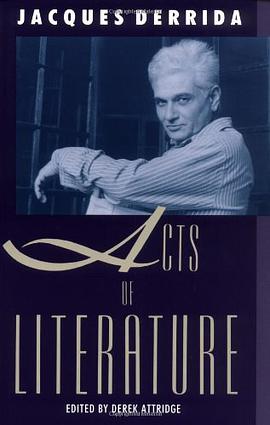
Acts of Literature, compiled in close association with Jacques Derrida, brings together for the first time a number of Derrida's writings on literary texts. The essays discuss literary figures such as Rousseau, Mallarme, Joyce, Shakespeare, and Kafka, and comprise pieces spanning Derrida's career. The collection includes a substantial new interview with him on questions of literature, deconstruction, politics, feminism and history, and Derek Attridge provides an introductory essay on deconstruction and the question of literature, with suggestions for further reading. These essays examine the place and operation of literature in Western culture, and are highly original responses to individual literary texts. They highlight Derrida's interest in literature as a significant cultural institution and as a peculiarly challenging form of writing, with inescapable consequences for our thinking about philosophy, politics and ethics.
Rogues [Book] Douban
author:
Jacques Derrida
translator:
Michael Naas
publishing house:
Stanford University Press
2005
- 1
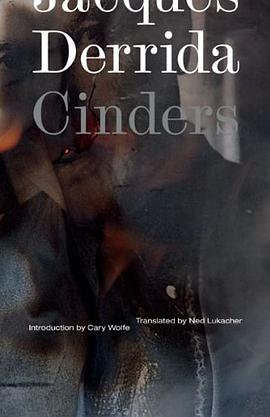
Cinders [Book] Douban
A haunting work of poetic self-analysis that finds in the fragility and resilience of ashes a paradigm for the relation of language to the living and the dead
In Cinders Jacques Derrida ranges across his work from the previous twenty years and discerns a recurrent cluster of arguments and images, all involving in one way or another ashes and cinders. Among the most accessible of this renowned philosopher’s writings, Cinders is an evocative and haunting work of poetic self-analysis that deepens our understanding of Derrida’s critical and philosophical vision.
In Cinders Jacques Derrida ranges across his work from the previous twenty years and discerns a recurrent cluster of arguments and images, all involving in one way or another ashes and cinders. Among the most accessible of this renowned philosopher’s writings, Cinders is an evocative and haunting work of poetic self-analysis that deepens our understanding of Derrida’s critical and philosophical vision.
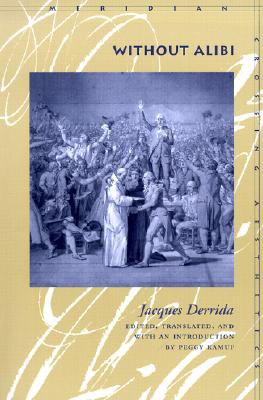
Without Alibi [Book] Douban
author:
Jacques Derrida
translator:
Peggy Kamuf
publishing house:
Stanford University Press
2002
- 3
Force de Loi [Book] Douban
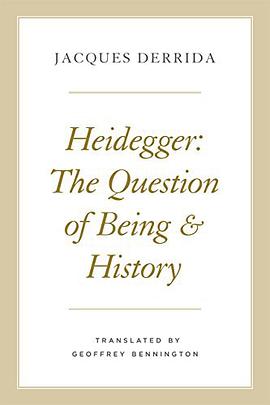
Heidegger [Book] Douban
author:
Jacques Derrida
translator:
Geoffrey Bennington
publishing house:
University Of Chicago Press
2016
- 6
Archive Fever [Book] Douban
author:
Jacques Derrida
translator:
Eric Prenowitz
publishing house:
University of Chicago Press
2017
- 9
In Archive Fever, Jacques Derrida deftly guides us through an extended meditation on remembrance, religion, time, and technology—fruitfully occasioned by a deconstructive analysis of the notion of archiving. Intrigued by the evocative relationship between technologies of inscription and psychic processes, Derrida offers for the first time a major statement on the pervasive impact of electronic media, particularly e-mail, which threaten to transform the entire public and private space of humanity. Plying this rich material with characteristic virtuosity, Derrida constructs a synergistic reading of archives and archiving, both provocative and compelling.
The Truth in Painting [Book] Douban
author:
Jacques Derrida
translator:
Ian McLeod
publishing house:
University Of Chicago Press
2017
- 9
Of Grammatology [Book] Douban
author:
Jacques Derrida
translator:
Gayatri Chakravorty Spivak
publishing house:
Johns Hopkins University Press
2016
- 1
The deconstruction bombshell that rocked the Anglophone world.
Jacques Derrida’s revolutionary approach to phenomenology, psychoanalysis, structuralism, linguistics, and indeed the entire European tradition of philosophy—called deconstruction—changed the face of criticism. It provoked a questioning of philosophy, literature, and the human sciences that these disciplines would have previously considered improper. Forty years after Of Grammatology first appeared in English, Derrida still ignites controversy, thanks in part to Gayatri Chakravorty Spivak’s careful translation, which attempted to capture the richness and complexity of the original.
This fortieth anniversary edition, where a mature Spivak retranslates with greater awareness of Derrida’s legacy, also includes a new afterword by her which supplements her influential original preface. Judith Butler has added an introduction. All references in the work have been updated. One of contemporary criticism’s most indispensable works, Of Grammatology is made even more accessible and usable by this new release.
Jacques Derrida’s revolutionary approach to phenomenology, psychoanalysis, structuralism, linguistics, and indeed the entire European tradition of philosophy—called deconstruction—changed the face of criticism. It provoked a questioning of philosophy, literature, and the human sciences that these disciplines would have previously considered improper. Forty years after Of Grammatology first appeared in English, Derrida still ignites controversy, thanks in part to Gayatri Chakravorty Spivak’s careful translation, which attempted to capture the richness and complexity of the original.
This fortieth anniversary edition, where a mature Spivak retranslates with greater awareness of Derrida’s legacy, also includes a new afterword by her which supplements her influential original preface. Judith Butler has added an introduction. All references in the work have been updated. One of contemporary criticism’s most indispensable works, Of Grammatology is made even more accessible and usable by this new release.
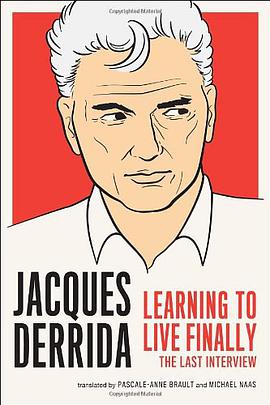
Learning to Live Finally [Book] Douban
With death looming, Jacques Derrida, the world's most famous philosopher, known as the father of "deconstruction," sat down with journalist Jean Birnbaum of the French daily Le Monde . They revisited his life's work and his impending death in a long, surprisingly accessible, and moving final interview.
Sometimes called "obscure" and branded "abstruse" by his critics, the Derrida found in this book is open and engaging, reflecting on a long career challenging important tenets of European philosophy from Plato to Marx.
The contemporary meaning of Derrida's work is also examined, including a discussion of his many political activities. But, as Derrida says, "To philosophize is to learn to die"; as such, this philosophical discussion turns to the realities of his imminent death--including life with a fatal cancer. In the end, this interview remains a touching final look at a long and distinguished career.
Sometimes called "obscure" and branded "abstruse" by his critics, the Derrida found in this book is open and engaging, reflecting on a long career challenging important tenets of European philosophy from Plato to Marx.
The contemporary meaning of Derrida's work is also examined, including a discussion of his many political activities. But, as Derrida says, "To philosophize is to learn to die"; as such, this philosophical discussion turns to the realities of his imminent death--including life with a fatal cancer. In the end, this interview remains a touching final look at a long and distinguished career.
Writing and Difference [Book] Douban
author:
Jacques Derrida
translator:
Alan Bass
publishing house:
University of Chicago Press
2017
- 8
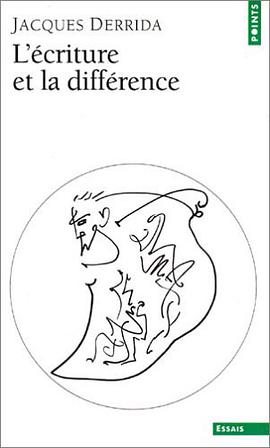
First published in 1967, Writing and Difference, a collection of Jacques Derrida’s essays written between 1959 and 1966, has become a landmark of contemporary French thought. In it we find Derrida at work on his systematic deconstruction of Western metaphysics. The book’s first half, which includes the celebrated essay on Descartes and Foucault, shows the development of Derrida’s method of deconstruction. In these essays, Derrida demonstrates the traditional nature of some purportedly nontraditional currents of modern thought—one of his main targets being the way in which “structuralism” unwittingly repeats metaphysical concepts in its use of linguistic models.
The second half of the book contains some of Derrida’s most compelling analyses of why and how metaphysical thinking must exclude writing from its conception of language, finally showing metaphysics to be constituted by this exclusion. These essays on Artaud, Freud, Bataille, Hegel, and Lévi-Strauss have served as introductions to Derrida’s notions of writing and différence—the untranslatable formulation of a nonmetaphysical “concept” that does not exclude writing—for almost a generation of students of literature, philosophy, and psychoanalysis.
Writing and Difference reveals the unacknowledged program that makes thought itself possible. In analyzing the contradictions inherent in this program, Derrida foes on to develop new ways of thinking, reading, and writing,—new ways based on the most complete and rigorous understanding of the old ways. Scholars and students from all disciplines will find Writing and Difference an excellent introduction to perhaps the most challenging of contemporary French thinkers—challenging because Derrida questions thought as we know it.
The second half of the book contains some of Derrida’s most compelling analyses of why and how metaphysical thinking must exclude writing from its conception of language, finally showing metaphysics to be constituted by this exclusion. These essays on Artaud, Freud, Bataille, Hegel, and Lévi-Strauss have served as introductions to Derrida’s notions of writing and différence—the untranslatable formulation of a nonmetaphysical “concept” that does not exclude writing—for almost a generation of students of literature, philosophy, and psychoanalysis.
Writing and Difference reveals the unacknowledged program that makes thought itself possible. In analyzing the contradictions inherent in this program, Derrida foes on to develop new ways of thinking, reading, and writing,—new ways based on the most complete and rigorous understanding of the old ways. Scholars and students from all disciplines will find Writing and Difference an excellent introduction to perhaps the most challenging of contemporary French thinkers—challenging because Derrida questions thought as we know it.
The Work of Mourning [Book] Douban
Jacques Derrida is, in the words of the New York Times, “perhaps the world’s most famous philosopher—if not the only famous philosopher.” He often provokes controversy as soon as his name is mentioned. But he also inspires the respect that comes from an illustrious career, and, among many who were his colleagues and peers, he inspired friendship. The Work of Mourning is a collection that honors those friendships in the wake of passing.
Gathered here are texts—letters of condolence, memorial essays, eulogies, funeral orations—written after the deaths of well-known figures: Roland Barthes, Paul de Man, Michel Foucault, Louis Althusser, Edmond Jabès, Louis Marin, Sarah Kofman, Gilles Deleuze, Emmanuel Levinas, Jean-François Lyotard, Max Loreau, Jean-Marie Benoist, Joseph Riddel, and Michel Servière.
With his words, Derrida bears witness to the singularity of a friendship and to the absolute uniqueness of each relationship. In each case, he is acutely aware of the questions of tact, taste, and ethical responsibility involved in speaking of the dead—the risks of using the occasion for one’s own purposes, political calculation, personal vendetta, and the expiation of guilt. More than a collection of memorial addresses, this volume sheds light not only on Derrida’s relation to some of the most prominent French thinkers of the past quarter century but also on some of the most important themes of Derrida’s entire oeuvre-mourning, the “gift of death,” time, memory, and friendship itself.
Gathered here are texts—letters of condolence, memorial essays, eulogies, funeral orations—written after the deaths of well-known figures: Roland Barthes, Paul de Man, Michel Foucault, Louis Althusser, Edmond Jabès, Louis Marin, Sarah Kofman, Gilles Deleuze, Emmanuel Levinas, Jean-François Lyotard, Max Loreau, Jean-Marie Benoist, Joseph Riddel, and Michel Servière.
With his words, Derrida bears witness to the singularity of a friendship and to the absolute uniqueness of each relationship. In each case, he is acutely aware of the questions of tact, taste, and ethical responsibility involved in speaking of the dead—the risks of using the occasion for one’s own purposes, political calculation, personal vendetta, and the expiation of guilt. More than a collection of memorial addresses, this volume sheds light not only on Derrida’s relation to some of the most prominent French thinkers of the past quarter century but also on some of the most important themes of Derrida’s entire oeuvre-mourning, the “gift of death,” time, memory, and friendship itself.
Voice and Phenomenon [Book] Douban
author:
Jacques Derrida
translator:
Leonard Lawlor
publishing house:
Northwestern University Press
2010
- 8
Published in 1967, when Derrida is 37 years old, Voice and Phenomenon appears at the same moment as Of Grammatology and Writing and Difference. All three books announce the new philosophical project called “deconstruction.” Although Derrida will later regret the fate of the term “deconstruction,” he will use it throughout his career to define his own thinking. While Writing and Difference collects essays written over a 10 year period on diverse figures and topics, and Of Grammatology aims its deconstruction at “the age of Rousseau,” Voice and Phenomenon shows deconstruction engaged with the most important philosophical movement of the last hundred years: phenomenology.
Only in relation to phenomenology is it possible to measure the importance of deconstruction. Only in relation to Husserl’s philosophy is it possible to understand the novelty of Derrida’s thinking. Voice and Phenomenon therefore may be the best introduction to Derrida’s thought in general. To adapt Derrida’s comment on Husserl’s Logical Investigations, it contains “the germinal structure” of Derrida’s entire thought. Lawlor’s fresh translation of Voice and Phenomenon brings new life to Derrida’s most seminal work.
Only in relation to phenomenology is it possible to measure the importance of deconstruction. Only in relation to Husserl’s philosophy is it possible to understand the novelty of Derrida’s thinking. Voice and Phenomenon therefore may be the best introduction to Derrida’s thought in general. To adapt Derrida’s comment on Husserl’s Logical Investigations, it contains “the germinal structure” of Derrida’s entire thought. Lawlor’s fresh translation of Voice and Phenomenon brings new life to Derrida’s most seminal work.
Margins of Philosophy [Book] Douban
author:
Jacques Derrida
translator:
Alan Bass
publishing house:
University Of Chicago Press
1985
- 1
"In this densely imbricated volume Derrida pursues his devoted, relentless dismantling of the philosophical tradition, the tradition of Plato, Kant, Hegel, Nietzsche, Husserl, Heidegger--each dealt with in one or more of the essays. There are essays too on linguistics (Saussure, Benveniste, Austin) and on the nature of metaphor ("White Mythology"), the latter with important implications for literary theory. Derrida is fully in control of a dazzling stylistic register in this book--a source of true illumination for those prepared to follow his arduous path. Bass is a superb translator and annotator. His notes on the multilingual allusions and puns are a great service."--Alexander Gelley, "Library Journal"