Iván Zulueta — Director (7)

Movie

Frank Stein (1972)
Frank Stein IMDb TMDB
Filmed before his feature-length Arrebato, Zulueta’s Frank Stein is a personal reading of horror cult classic Frankenstein (1931), filmed directly from its television broadcast and reducing Whale’s original to only three packed and dizzying minutes, during which the film's sensitive monster evolves at an unusual rate.

Movie

I See You (1973)
Te Veo TMDB
other title: Te Veo
The title of Te Veo, is a joke with T.V. (television). Consists in a collage of shots in super 8 of images of the TV. The collage is extremely quick, mixing average people with famous paintings, landscapes and churches, etc. The images become more and more abstracts, the referential pre-existing images are transformed by means of extreme close-ups of the screen, which ultimately becomes completely abstracts with texture of the TV like a television pointillism.

Movie

Kinkón (1971)
Kinkón IMDb TMDB
Kinkón (1971), a silent adaptation of Merian C. Cooper and Ernest B. Schoedsack’s 1933 classic, King Kong. Zulueta re-filmed a television broadcast of the original, and through creative subtraction and manipulation of camera speed, condensed the original’s feature length to an intensified seven minutes. The cathode-ray flicker and flattening that results from the re-filming defamiliarises the original, but its classical continuity mode of address continues to operate on the viewer, and the increase in velocity makes mesmerisingly urgent the dramatic plot of the original. —Senses of Cinema

Movie

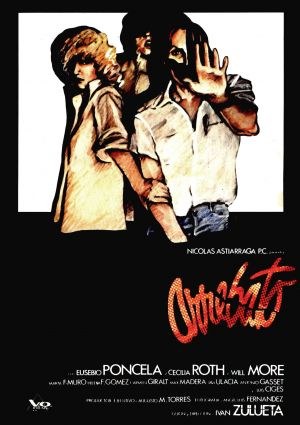
Arrebato (1980)
Arrebato WikiData IMDb TMDB Douban
★ 6.2 8 ratings
other title: 狂喜 / Rapture …
Jose is a filmmaker putting the finishing touches on his latest production, a schlocky vampire picture. Feeling supremely dissatisfied with his vocation and heroin addicted girlfriend Ana, he arrives back at his apartment to discover a package from his friend Pedro. It contains a reel of super 8mm film, an audiotape and a key to Pedro’s apartment. Flashbacks show how these two men, both of whom share an extraordinary passion for filmmaking, met at Pedro’s family home where Jose was location scouting. Pedro, who’s never without his super 8mm camera, believes life is only worth anything if it’s caught on film. Furthermore, he’s tapped a hidden power inherent in film images that causes him to experience a mystical state of “Arrebato,” or rapture. Before long Pedro becomes addicted to this sensation, eventually cutting himself off from the outside world and devoting his life to filming himself in bed. His camera in turn grows increasingly powerful as it saps more and more of Pedro’s life force, eventually developing the capacity to turn itself on and off and, more alarmingly, literally erase objects—and, inevitably, people—from existence. All this is evident on the film and tape Pedro has mailed to Jose, who in the end decides to visit his friend’s apartment. He arrives to find Pedro’s camera set up and running, but its owner nowhere to be found...