Michael Berry — Author (6)
Wuhan Diary [Book] Google Books
From one of China’s most acclaimed and decorated writers comes a powerful first-person account of life in Wuhan during the COVID-19 outbreak.On January 25, 2020, after the central government imposed a lockdown in Wuhan, acclaimed Chinese writer Fang Fang began publishing an online diary. In the days and weeks that followed, Fang Fang’s nightly postings gave voice to the fears, frustrations, anger, and hope of millions of her fellow citizens, reflecting on the psychological impact of forced isolation, the role of the internet as both community lifeline and source of misinformation, and most tragically, the lives of neighbors and friends taken by the deadly virus.
A fascinating eyewitness account of events as they unfold, Wuhan Diary captures the challenges of daily life and the changing moods and emotions of being quarantined without reliable information. Fang Fang finds solace in small domestic comforts and is inspired by the courage of friends, health professionals and volunteers, as well as the resilience and perseverance of Wuhan’s nine million residents. But, by claiming the writer ́s duty to record she also speaks out against social injustice, abuse of power, and other problems which impeded the response to the epidemic and gets herself embroiled in online controversies because of it.As Fang Fang documents the beginning of the global health crisis in real time, we are able to identify patterns and mistakes that many of the countries dealing with the novel coronavirus have later repeated. She reminds us that, in the face of the new virus, the plight of the citizens of Wuhan is also that of citizens everywhere. As Fang Fang writes: “The virus is the common enemy of humankind; that is a lesson for all humanity. The only way we can conquer this virus and free ourselves from its grip is for all members of humankind to work together.” Blending the intimate and the epic, the profound and the quotidian, Wuhan Diary is a remarkable record of an extraordinary time. Translated from the Chinese by Michael Berry
A fascinating eyewitness account of events as they unfold, Wuhan Diary captures the challenges of daily life and the changing moods and emotions of being quarantined without reliable information. Fang Fang finds solace in small domestic comforts and is inspired by the courage of friends, health professionals and volunteers, as well as the resilience and perseverance of Wuhan’s nine million residents. But, by claiming the writer ́s duty to record she also speaks out against social injustice, abuse of power, and other problems which impeded the response to the epidemic and gets herself embroiled in online controversies because of it.As Fang Fang documents the beginning of the global health crisis in real time, we are able to identify patterns and mistakes that many of the countries dealing with the novel coronavirus have later repeated. She reminds us that, in the face of the new virus, the plight of the citizens of Wuhan is also that of citizens everywhere. As Fang Fang writes: “The virus is the common enemy of humankind; that is a lesson for all humanity. The only way we can conquer this virus and free ourselves from its grip is for all members of humankind to work together.” Blending the intimate and the epic, the profound and the quotidian, Wuhan Diary is a remarkable record of an extraordinary time. Translated from the Chinese by Michael Berry
A History of Pain [Book] Douban
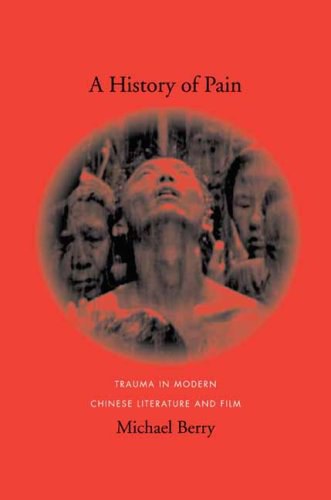
The portrayal of historical atrocity in fiction, film, and popular culture can reveal much about the function of individual memory and the shifting status of national identity. In the context of Chinese culture, films such as Hou Hsiao-hsien's City of Sadness and Lou Ye's Summer Palace and novels such as Ye Zhaoyan's Nanjing 1937: A Love Story and Wang Xiaobo's The Golden Age collectively reimagine past horrors and give rise to new historical narratives. Michael Berry takes an innovative look at the representation of six specific historical traumas in modern Chinese history: the Musha Incident (1930); the Rape of Nanjing (1937-38); the February 28 Incident (1947); the Cultural Revolution (1966-76); Tiananmen Square (1989); and the Handover of Hong Kong (1997). He identifies two primary modes of restaging historical violence: centripetal trauma, or violence inflicted from the outside that inspires a reexamination of the Chinese nation, and centrifugal trauma, which, originating from within, inspires traumatic narratives that are projected out onto a transnational vision of global dreams and, sometimes, nightmares. These modes allow Berry to connect portrayals of mass violence to ideas of modernity and the nation. He also illuminates the relationship between historical atrocity on a national scale and the pain experienced by the individual; the function of film and literature as historical testimony; the intersection between politics and art, history and memory; and the particular advantages of modern media, which have found new means of narrating the burden of historical violence. As Chinese artists began to probe previously taboo aspects of their nation's history in the final decades of the twentieth century, they created texts that prefigured, echoed, or subverted social, political, and cultural trends. A History of Pain acknowledges the far-reaching influence of this art and addresses its profound role in shaping the public imagination and conception-as well as misconception-of modern Chinese history.
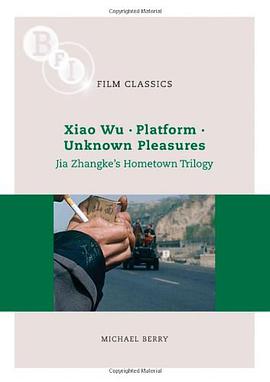
Jia Zhangke's 'Hometown Trilogy' [Book] Douban
The three films comprising director Jia Zhangke's 'Hometown Trilogy' - Xiao Wu (1997), Platform (2000) and Unknown Pleasures(2002) - represent key contributions to the cinema of contemporary China. The films, which are set in Jia's home province of Shanxi, highlight the plight of marginalised individuals -- singers, dancers, pickpockets, prostitutes and drifters -- as they struggle to navigate through the radically transforming terrain of contemporary China. Xiao Wu tells the story of a small-time pickpocket who faces the breakdown of his relationships with his friends, family and girlfriend. Platform, often considered Jia's most ambitious film, is an epic narrative that bears witness to China's roaring eighties and the radical transformation from socialism to capitalism. Jia's third feature, Unknown Pleasures continues his meditation on China in transition, tracing the story of two delinquent teenagers who live on a diet of saccharine Chinese pop music, karaoke, Pulp Fiction, and Coca-Cola while entertaining pipe dreams of joining the army and becoming small-time gangsters. Michael Berry's in-depth study of the three films considers them as an ambitious attempt to re-examine the transformation and fate of provincial China -- its places and people -- as it is caught up in a whirlwind of sweeping social, cultural and economic change. At the heart of the book lies a series of close readings of each of the three films; through which Berry teases out their central narrative themes, highlighting Jia's use of editing, cinematic language, and mise en scene. He pays special attention to the place of intertextuality in Jia's oeuvre, as well as the central themes of destruction and change, stagnation and movement, political verses popular culture, and, of course, the ceaseless search for home. Michael Berry is Associate Professor of Contemporary Chinese Cultural Studies at the University of California, Santa Barbara. He is the author of Speaking in Images: Interviews with Contemporary Chinese Filmmakers (2005), and A History of Pain: Trauma in Modern Chinese Literature and Film (2008). He is also the translator of several novels, including The Song of Everlasting Sorrow (2008), To Live (2004), Nanjing 1937: A Love Story (2002), and Wild Kids (2000).
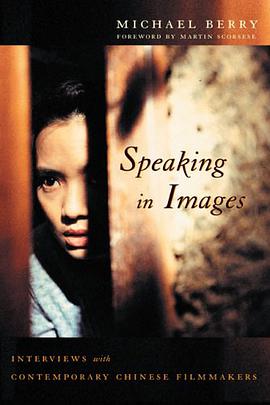
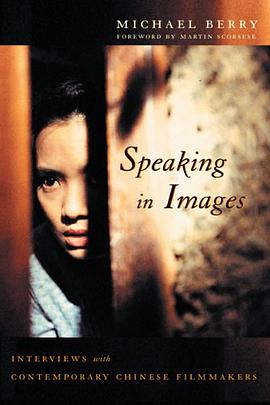
Speaking in Images [Book] Douban
"I always compare filmmaking to cooking. Shooting is like buying the groceries. You buy all kinds of ingredients and the better ingredients you get, the better chance you have of making the movie you want."--Ang Lee, from Speaking in Images Speaking in Images offers an engaging and rare collection of interviews with the directors who have changed the face of Chinese and international cinema. Michael Berry's discussions with such directors as Ang Lee ( Crouching Tiger, Hidden Dragon), Zhang Yimou ( Hero), Chen Kaige ( Farewell My Concubine), Stanley Kwan ( Lan Yu), Tsai Ming-Liang ( Vive l'Amour), Edward Yang ( Yi Yi), and Hou Hsiao-hsien ( Flowers of Shanghai) offer an eclectic and comprehensive portrait of contemporary Chinese cinema. In interviews that capture each filmmaker's unique vision, the subjects discuss their formative years, the ideas and influences that shaped their work, film aesthetics, battles with censors and studios, the mingling of commercial and art film, and the future of Chinese cinema in a transnational context. Berry's introduction to the collection provides an overview of Chinese cinema in the second half of the twentieth century, placing the directors and their work in a wider historical and cultural context.