Donald McIntyre — 演员 (11)
齐格弗里德 (1980) [电影] 豆瓣 TMDB
Siegfried
其它标题: Siegfried
齐格弗里德(Siegfried),德国音乐家瓦格纳著名的连篇乐剧《尼伯龙根的指环》中的第三联。第三联《齐格弗里德》――《尼伯龙根的指环》的第二联。由三幕构成,这部乐剧在《尼贝龙根的指环》全剧中是最具有英雄性格的,同时也最具有朴素抒情的牧歌风味,所以它的音乐洋溢着生机与活力。瓦格纳的管弦乐法在此以光辉的自然色彩描绘《指环》中比较轻松的层面,但有关米梅的场景、沃坦痛苦的心理挣扎以及布仑希尔德苏醒的描写,仍充满戏剧性的对比。
莱茵的黄金 (1980) [电影] 豆瓣 TMDB
Rheingold, Das (TV)
其它标题: Rheingold, Das (TV)
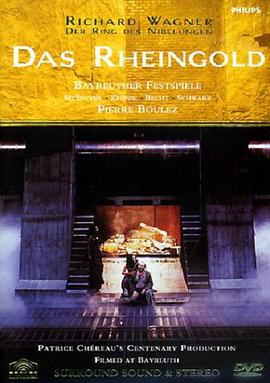
《莱茵的黄金》(Das Rheingold)是瓦格纳的四联神话歌剧《尼伯龙根的指环》的第一部。 相传,在德国莱茵河流过的尼伯龙根,在莱茵河底,住着三位莱茵的仙女,她们日夜守卫着河底的一块岩石,因为在那岩石之上镶嵌着一块具有魔力的金子。尼伯龙根族的侏儒阿尔贝里希在石丛后面向莱茵女儿们游来,他很想得到她们其中之一的人的爱情,但是,阿尔贝里希却遭到了她们的嘲笑和鄙薄。他十分恼怒,不过这时,看到了在那块在巨岩上方闪闪发光的具有魔力黄金,三位莱茵的仙女们向他透露了:“谁要是能够把这些黄金制成了指环,谁就能统治世界,但他必须放弃爱情”的秘密,于是,阿尔贝里希诅咒了爱情并且抢走了黄金。 情节概述: 拯救诸神 夺取指环
尼伯龙人的指环 1979-1980年拜罗伊特音乐节版 [演出] 豆瓣
所属 演出: 尼伯龙人的指环
语言: german 德语 剧团: Bayreuther Festspielorchester 拜罗伊特音乐节管弦乐团 ; Bayreuther Festspielchor 拜罗伊特音乐节合唱团 剧院: Bayreuther Festspielhaus 拜罗伊特音乐节剧院 导演: Patrice Chéreau
其它标题: 1979-1980年拜罗伊特音乐节版 编剧: Richard Wagner 作曲: Richard Wagner 演员: Gwyneth Jones / Manfred Jung
The plot revolves around a magic ring that grants the power to rule the world, forged by the Nibelung dwarf Alberich from gold he stole from the Rhine maidens in the river Rhine. The Ring itself as described by Wagner is a Rune-magic taufr ("tine", or "talisman") intended to rule the feminine multiplicative power by a fearful magical act termed as 'denial of love' ("Liebesverzicht"). With the assistance of the god Loge, Wotan – the chief of the gods – steals the ring from Alberich, but is forced to hand it over to the giants, Fafner and Fasolt in payment for building the home of the gods, Valhalla, or they will take Freia, who provides the gods with the golden apples that keep them young. Wotan's schemes to regain the ring, spanning generations, drive much of the action in the story. His grandson, the mortal Siegfried, wins the ring by slaying Fafner (who slew Fasolt for the ring) – as Wotan intended – but is eventually betrayed and slain as a result of the intrigues of Alberich's son Hagen, who wants the ring for himself. Finally, the Valkyrie Brünnhilde – Siegfried's lover and Wotan's daughter who lost her immortality for defying her father in an attempt to save Siegfried's father Sigmund – returns the ring to the Rhine maidens as she commits suicide on Siegfried's funeral pyre. Hagen is drowned as he attempts to recover the ring. In the process, the gods and Valhalla are destroyed.
Details of the storylines can be found in the articles on each music drama.
Wagner created the story of the Ring by fusing elements from many German and Scandinavian myths and folk tales. The Old Norse Edda supplied much of the material for Das Rheingold, while Die Walküre was largely based on the Völsunga saga. Siegfried contains elements from the Eddur, the Völsunga saga and Thidrekssaga. The final Götterdämmerung, draws from the 12th-century German poem, the Nibelungenlied, which appears to have been the original inspiration for the Ring.
The Ring has been the subject of myriad interpretations. For example, George Bernard Shaw, in The Perfect Wagnerite, argues for a view of The Ring as an essentially socialist critique of industrial society and its abuses. Robert Donington in Wagner's Ring And Its Symbols interprets it in terms of Jungian psychology, as an account of the development of unconscious archetypes in the mind, leading towards individuation.
齐格弗里德 1980年拜罗伊特音乐节版 [演出] 豆瓣
所属 演出: 齐格弗里德
语言: german 德语 剧团: Orchester der Bayreuther Festspiele 拜罗伊特音乐节管弦乐团 剧院: Bayreuther Festspielhaus 拜罗伊特音乐节剧院 导演: Patrice Chéreau
其它标题: 1980年拜罗伊特音乐节版 编剧: Richard Wagner 作曲: Richard Wagner 演员: Manfred Jung / Gwyneth Jones
Act 1
Scene 1
A cave in rocks in the forest. An orchestral introduction includes references to leitmotifs including themes relating to the original hoard plundered by the Nibelung Alberich, and one in B-flat minor associated with the Nibelungs themselves. As the curtain rises, Alberich's brother, the dwarf Mime, is forging a sword. Mime is plotting to obtain the ring of power originally created by his brother Alberich. He has raised the human boy Siegfried as a foster child, to kill Fafner, who obtained the ring and other treasures in the opera Das Rheingold and has since transformed himself from a giant to a dragon. Mime needs a sword for Siegfried to use, but the youth has contemptuously broken every sword Mime has made. Siegfried returns from his wanderings in the forest with a wild bear in tow, and immediately breaks the new sword. After a whining speech by Mime about ingratitude, and how Mime has brought him up from a mewling infant ("Als zullendes Kind"), Siegfried senses why he keeps coming back to Mime although he despises him: he wants to know his parentage. Mime is forced to explain how he took in Siegfried's mother, Sieglinde, who then died giving birth to Siegfried. He shows Siegfried the broken pieces of the sword Nothung, which Mime had obtained from her. Siegfried orders him to reforge the sword; Mime, however, is unable to accomplish this. Siegfried departs, leaving Mime in despair.
Scene 2
An old man (Wotan in disguise) arrives at the door and introduces himself as the Wanderer. In return for the hospitality due a guest, he wagers his head on answering any three questions of Mime. The dwarf asks the Wanderer to name the races that live beneath the ground, on the earth, and in the skies. These are the Nibelung, the Giants, and the Gods, as the Wanderer answers correctly. The Wanderer then induces Mime to wager his own head on three further riddles: the race most beloved of Wotan, but most harshly treated; the name of the sword that can destroy Fafner; and the person who can repair the sword. Mime answers the first two questions: the Wälsungs (Siegmund and Sieglinde whose tale is told in the opera Die Walküre) and Nothung. However, he cannot answer the last. Wotan spares Mime, telling him that only "he who does not know fear" can reforge Nothung, and leaves Mime's head forfeit to that person.
Scene 3
Mime despairs as he imagines the ferocity of the dragon Fafner, while "the orchestra paints a dazzling picture of flickering lights and roaring flames". Siegfried returns and is annoyed by Mime's lack of progress. Mime realizes that Siegfried is "the one who does not know fear" and that unless he can instill fear in him, Siegfried will kill him as the Wanderer foretold. He tells Siegfried that fear is an essential craft; Siegfried is eager to learn it, and Mime promises to teach him by taking him to Fafner. Since Mime was unable to forge Nothung, Siegfried decides to do it himself. He succeeds by shredding the metal, melting it, and casting it anew. In the meantime, Mime brews a poisoned drink to offer Siegfried after the youth has defeated the dragon. After he finishes forging the sword, Siegfried demonstrates its strength by chopping the anvil in half with it.
Act 2
Scene 1
Deep in the forest. The Wanderer arrives at the entrance to Fafner's cave, where Alberich is keeping vigil. The two enemies recognize each other. Alberich boasts of his plans to regain the ring and rule the world. Wotan states that he does not intend to interfere, only to observe. He even offers to awaken the dragon so that Alberich can bargain with him. Alberich warns the dragon that a hero is coming to kill him, and offers to prevent the fight in exchange for the ring. Fafner dismisses the threat, declines Alberich's offer, and returns to sleep. Wotan leaves and Alberich withdraws, muttering threats.
Scene 2
At daybreak, Siegfried and Mime arrive. After assuring Siegfried that the dragon will teach him what fear is, Mime withdraws. As Siegfried waits for the dragon to appear, he hears a woodbird singing. He attempts to mimic the bird's song using a reed pipe, but is unsuccessful. He then plays a tune on his horn, which brings Fafner out of his cave. After a short exchange, they fight; Siegfried stabs Fafner in the heart with Nothung. In his last moments, Fafner learns Siegfried's name, and tells him to beware of treachery. When Siegfried withdraws his sword from Fafner's body, his hands are burned by the dragon's blood and he puts his finger in his mouth. On tasting the blood, he finds that he can understand the woodbird's song. Following its instructions, he takes the ring and the magic helmet Tarnhelm from Fafner's hoard.
Scene 3
Outside the cave, Alberich and Mime quarrel over the treasure. Alberich hides as Siegfried comes out of the cave. Siegfried complains to Mime that he has still not learned the meaning of fear. Mime offers him the poisoned drink; however, the magic power of the dragon's blood allows Siegfried to read Mime's treacherous thoughts, and he stabs him to death. He throws Mime's body into the treasure cave and places Fafner's body in the cave entrance to block it. The woodbird now sings of a woman sleeping on a rock surrounded by magic fire. Siegfried, wondering if he can learn fear from this woman, follows the bird towards the rock.
Act 3
Scene 1
At the foot of Brünnhilde's rock. The Wanderer summons Erda, the earth goddess. Erda, appearing confused, is unable to offer any advice. Wotan informs her that he no longer fears the end of the gods; indeed, it is his desire. His heritage will be left to Siegfried the Wälsung, and Brünnhilde (Erda's and Wotan's child), who will "work the deed that redeems the World." Dismissed, Erda sinks back into the earth.
Scene 2
Siegfried arrives, and the Wanderer questions the youth. Siegfried, who does not recognize his grandfather, answers insolently and starts down the path toward Brünnhilde's rock. The Wanderer blocks his path, but Siegfried mocks him, laughing at his floppy hat and his missing eye, and breaks his spear (the symbol of Wotan's authority) with a blow from Nothung. Wotan calmly gathers up the pieces and vanishes.
Scene 3
Siegfried passes through the ring of fire, emerging on Brünnhilde's rock. At first, he thinks the sleeping armored figure is a man. However, when he removes the armor, he finds a woman beneath. At the sight of the first woman he has ever seen, Siegfried at last experiences fear. In desperation, he kisses Brünnhilde, waking her from her magic sleep. Hesitant at first, Brünnhilde is won over by Siegfried's love, and renounces the world of the gods. Together, they hail "light-bringing love, and laughing death."
女武神 1980年拜罗伊特音乐节版 [演出] 豆瓣
所属 演出: 女武神
语言: german 德语 剧团: Bayreuther Festspielorchester 拜罗伊特音乐节管弦乐团 剧院: Bayreuther Festspielhaus 拜罗伊特音乐节剧院 导演: Patrice Chéreau
其它标题: 1980年拜罗伊特音乐节版 编剧: Richard Wagner 作曲: Richard Wagner 演员: Gwyneth Jones / Peter Hofmann
Prior history
During the lengthy time that has passed since the gods entered Valhalla at the end of Das Rheingold, Fafner has used the Tarnhelm to assume the form of a dragon, and guards the gold and the ring in the depths of the forest. Wotan has visited Erda seeking wisdom, and by her has fathered a daughter, Brünnhilde; he has fathered eight other daughters, possibly also by Erda. These, with Brünnhilde, form the Valkyries, whose task is to recover heroes fallen in battle and bring them to Valhalla, where they will protect the fortress from Alberich's assault should the dwarf recover the ring. Wotan has also wandered the earth, and with a woman of the Völsung race has fathered the twins Siegmund and Sieglinde, who have grown up separately and unaware of each other. From the Volsungs Wotan hopes for a hero who, unencumbered by the gods' treaties, will obtain the ring from Fafner.
Act 1
As a storm rages, Siegmund finds shelter from his enemies in a large dwelling built around a massive ash-tree. Unarmed and wounded, he collapses with exhaustion. Sieglinde enters; she tells Siegmund that she is the wife of Hunding, and that he may rest here until Hunding's return. As they talk, they look at each other with growing interest and emotion. Siegmund gets ready to leave, telling Sieglinde that misfortune follows him and he does not want to bring it on her; she replies that misfortune dwells with her already.
Hunding returns, and questions Siegmund's presence. Calling himself Wehwalt ("woeful"), Siegmund explains that he grew up in the forest with his parents and twin sister. One day he found their home burned down, his mother killed and his sister gone. Recently he fought with the relatives of a girl being forced into marriage. His weapons were destroyed, the bride was killed, and he was forced to flee. Hunding reveals that he is one of Siegmund's pursuers; Siegmund may stay, he says, but they must fight in the morning. Before leaving, Sieglinde gives a meaningful glance to a particular spot on the tree in which, the firelight reveals, a sword is buried to the hilt.
Sieglinde returns, having drugged Hunding's drink. She reveals that she was forced into the marriage and that during their wedding feast, an old man appeared and plunged a sword into the trunk of the ash tree which neither Hunding nor any of his companions have been able to remove. She is longing for the hero who will draw the sword and save her. When Siegmund expresses his love for her, she reciprocates, and when he speaks the name of his father, Wälse, she recognises him as Siegmund, and realises that the sword was left for him. Siegmund then draws the sword from the tree. She reveals herself as Sieglinde, his twin sister. Siegmund names the sword "Nothung" and declares that it will be her protection. The two sing of their passionate love for each other, as the act ends.
Act 2
On a high mountain ridge, Wotan instructs Brünnhilde, his Valkyrie daughter, to protect Siegmund in his forthcoming battle with Hunding. Fricka arrives, and in her role as goddess of family values demands that Siegmund and Sieglinde be punished for their adultery and incest. She scorns Wotan's argument that he requires Siegmund as a "free hero", who can further his plans to recover the ring from Fafner, uninhibited by Wotan's contracts. She retorts that Siegmund is not free but is Wotan's pawn, whose every move the god seeks to direct. Defeated by Fricka's logic, Wotan reluctantly agrees that he will not protect Siegmund. After Fricka leaves, the troubled Wotan gives Brünnhilde the full backstory, and with great sorrow rescinds his earlier instruction; he orders her to give the victory to Hunding, and then departs.
Siegmund and Sieglinde now enter, and Sieglinde faints, consumed with guilt and exhaustion. Brünnhilde tells Siegmund of his impending death; he refuses to follow Brünnhilde to Valhalla when she tells him Sieglinde cannot accompany him. Siegmund still believes that his father's sword will assure him of victory over Hunding, but Brünnhilde tells him it has lost its power. Siegmund threatens to kill both Sieglinde and himself. Much moved, Brünnhilde decides to defy her father and grant victory to Siegmund.
Hunding's call is heard; he arrives, and attacks Siegmund. Under Brünnhilde's power Siegmund begins to overpower Hunding, but Wotan appears and shatters Siegmund's sword with his spear. Hunding then stabs him to death. Brünnhilde gathers up the fragments of the sword and flees on horseback with Sieglinde. Contemptuously, Wotan strikes Hunding dead, and swearing that Brünnhilde will be punished for her defiance, sets out in pursuit of her.
Act 3
The Valkyries congregate on the mountain-top, each carrying a dead hero and chattering excitedly. Brünnhilde arrives with Sieglinde, and begs her sisters for help, but they dare not defy Wotan. Sieglinde tells Brünnhilde that without Siegmund she no longer wishes to live. Brünnhilde informs her that she is pregnant by Siegmund, and urges her to remain alive for the child's sake, and to name the child Siegfried. Brünnhilde gives the fragments of the sword Nothung to Sieglinde, who thanks her for her loyalty and comfort, and resolves to save the child. As she departs, Wotan is heard approaching with great wrath.
When Wotan arrives, the Valkyries vainly try to hide Brünnhilde. He faces her and declares her punishment: she is to be stripped of her Valkyrie status and become a mortal woman, to be held in defenceless sleep on the mountain, prey to any man who finds her. The other Valkyries protest, but when Wotan threatens them with the same, they flee. In a long discourse with Wotan Brünnhilde explains that she decided to protect Siegmund knowing that this was Wotan's true desire. Wotan consents to her request that he surround her resting place with a circle of fire that will protect her from all but the bravest of heroes. He bids her a loving farewell and lays her sleeping form down on a rock. He then summons Loge, the demigod of fire, who creates a circle of flames around her. Before slowly departing, Wotan pronounces that anyone with fear shall never pass through the fire.
莱茵河的黄金 1980年拜罗伊特音乐节版 [演出] 豆瓣
所属 演出: 莱茵河的黄金
语言: german 德语 剧团: Bayreuther Festspielorchester 拜罗伊特音乐节管弦乐团 剧院: Bayreuther Festspielhaus 拜罗伊特音乐节剧院 导演: Patrice Chéreau
其它标题: 1980年拜罗伊特音乐节版 编剧: Richard Wagner 作曲: Richard Wagner 演员: Donald McIntyre / Hanna Schwarz
Scene 1
At the bottom of the Rhine, the three Rhinemaidens, Woglinde, Wellgunde, and Floßhilde, play together. Alberich, a Nibelung dwarf, appears from a deep chasm and tries to woo them. The maidens mock his advances and he grows angry – he chases them, but they elude, tease and humiliate him. A sudden ray of sunshine pierces the depths, to reveal the Rhine gold. The maidens sing a hymn of praise to the gold, and Alberich asks what it is. They explain that the gold, which their father has ordered them to guard, can be made into a magic ring which gives power to rule the world, if its bearer first renounces love. The maidens think they have nothing to fear from the lustful dwarf, but Alberich, embittered by their mockery, curses love, seizes the gold and returns to his chasm, leaving them screaming in dismay.
Scene 2
Wotan, ruler of the gods, is asleep on a mountaintop, with a magnificent castle behind him. His wife, Fricka, wakes Wotan, who salutes their new home. Fricka reminds him of his promise to the giants Fasolt and Fafner, who built the castle, that he would give them Fricka's sister Freia, the goddess of youth and beauty, as payment. Fricka is worried for her sister, but Wotan is confident that Loge, the demigod of fire, will find an alternative payment.
Freia enters in a panic, followed by Fasolt and Fafner. Fasolt demands that Freia be given up. He points out that Wotan's authority is sustained by the treaties carved into his spear, including his contract with the giants, which Wotan therefore cannot violate. Donner, god of thunder, and Froh, god of sunshine, arrive to defend Freia, but Wotan cannot permit the use of force to break the agreement. Hoping that Loge will arrive with the alternative payment he had promised, Wotan tries to stall.
When Loge arrives, his initial report is discouraging: nothing is more valuable to men than love, so, there is apparently no possible alternative payment besides Freia. Loge was able to find only one instance where someone willingly gave up love for something else: Alberich the Nibelung had renounced love, stolen the Rhine gold and made a powerful magic ring out of it. A discussion of the ring and its powers ensues, to which the giants listen carefully, and everyone finds good reasons for wanting to own it. Fafner makes a counter-offer: the giants will accept the Nibelung's treasure in payment, instead of Freia. When Wotan tries to haggle, the giants depart, taking Freia with them as hostage and promising to keep her forever unless the gods ransom her by obtaining, and giving them, the Nibelung's gold, by the end of the day.
Freia's golden apples had kept the gods eternally young, but in her absence they begin to age and weaken. In order to redeem Freia, Wotan resolves to travel with Loge to Alberich's subterranean kingdom to obtain the gold.
Scene 3
In Nibelheim, Alberich has enslaved the rest of the Nibelung dwarves with the power of the ring. He has forced his brother Mime, a skillful smith, to create a magic helmet, the Tarnhelm. Alberich demonstrates the Tarnhelm's power by making himself invisible, the better to torment his subjects.
Wotan and Loge arrive and happen upon Mime, who tells them of the misery under Alberich's rule. Alberich returns, driving his slaves to pile up a huge mound of gold. He boasts to the visitors about his plans to conquer the world using the power of the ring. Loge asks how he can protect himself against a thief while he sleeps. Alberich replies the Tarnhelm will hide him, by allowing him to turn invisible or change his form. Loge expresses doubt and requests a demonstration. Alberich complies by transforming himself into a giant snake; Loge acts suitably impressed, and then asks whether Alberich can also reduce his size, which would be very useful for hiding. Alberich transforms himself into a toad. Wotan and Loge seize him and drag him up to the surface.
Scene 4
Back on the mountaintop, Wotan and Loge force Alberich to exchange his wealth for his freedom. He summons the Nibelungen, who bring up the hoard of gold. He then asks for the return of the Tarnhelm, but Loge says that it is part of his ransom. Alberich still hopes he can keep the ring, but Wotan demands it, and when Alberich refuses, Wotan tears it from Alberich's hand and puts it on his own finger. Crushed by his loss, Alberich lays a curse on the ring: until it should return to him, whoever possesses it will live in anxiety, and will eventually be robbed of it and killed.
The gods reconvene. Fasolt and Fafner return with Freia. Fasolt, reluctant to release her, insists that the gold be piled high enough to hide her from view. Wotan is forced to relinquish the Tarnhelm, to help cover Freia completely. However, Fasolt spots a remaining crack in the gold, through which one of Freia's eyes can be seen. Loge says that there is no more gold, but Fafner, who has noticed the ring on Wotan's finger, demands that Wotan add it to the pile, to block the crack. Loge protests that the ring belongs to the Rheinmaidens, and Wotan angrily declares that he intends to keep it for his own. As the giants seize Freia and start to leave, Erda, the earth goddess, appears and warns Wotan of impending doom, urging him to give up the cursed ring. Troubled, Wotan calls the giants back and surrenders the ring. The giants release Freia and begin dividing the treasure, but they quarrel over the ring itself. Fafner clubs Fasolt to death. Wotan, horrified, realizes that Alberich's curse has terrible power.
Donner summons a thunderstorm to clear the air, after which Froh creates a rainbow bridge that stretches to the gate of the castle. Wotan leads the gods across the bridge to the castle, which he names Valhalla. Loge does not follow; he says in an aside that he is tempted to destroy the treacherous gods by fire – he will think it over. Far below, the Rhine maidens mourn the loss of their gold, and condemn the gods as false and cowardly.
厄勒克特拉 1994年大都会歌剧团版 [演出] 豆瓣
所属 演出: 厄勒克特拉
语言: german 德语 剧团: Metropolitan Opera Orchestra 大都会歌剧团管弦乐团 ; Metropolitan Opera Chorus 大都会歌剧团合唱团 剧院: Metropolitan Opera House 大都会歌剧院 导演: Otto Schenk / Paul Mills
其它标题: 1994年大都会歌剧团版 编剧: Hugo von Hofmannsthal 作曲: Richard Strauss 演员: Hildegard Behrens / Deborah Voigt
Before the opera begins, Agamemnon has sacrificed Iphigenia on the ruse that she is to be married, and subsequently goes off to war against Troy. Iphigenia's mother Klytaemnestra has thus come to hate her husband. After his return, with the help of her paramour Aegisthus, she murders her husband and now is afraid that her crime will be avenged by her other children, Elektra, Chrysothemis and their banished brother Orest. Elektra has managed to send her brother away while remaining behind to keep her father's memory alive, but all the while, suffering the scorn of her mother and the entire court.
The action
"Wo bleibt Elektra?" ("Where is Elektra?")
Five servants try to wash the courtyard of the palace in Mycenae. While they do their work, they ask where can Elektra be, and she emerges from the shadows with a wild look on her face. The servants continue commenting how she came to be in that state and talk about how they taunt her only to receive insults from her. Only one servant shows sympathy for her, but she is taken away by the overseer to be flogged.
"Allein! Weh, ganz allein." ("Alone! Alas, all alone.")
Elektra comes back for her daily ritual in memory of her father, who upon his return from Troy was killed while bathing by Klytaemnestra and Aegisth and dragged out into the courtyard. Elektra now starts imagining the day when her father will be avenged and then of the ensuing celebration in which she will lead the triumphal dance.
"Elektra!"
Chrysothemis leaves the palace but, unlike Elektra, she is meek and accommodating, and has remained on good terms with Klytaemnestra and Aegisth; she enjoys the privileges that come with being a princess. She warns her sister that their mother plans to lock Elektra in a tower, but she is rebuffed.
"Ich kann nicht sitzen und ins Dunkel starren." ("I can not sit and stare into the darkness.")
Chrysothemis does not wish to go on living a half-death in her own house: she wants to leave, marry and raise children.
"Es geht ein Lärm los." ("What tumult is this?")
As loud sounds are heard inside, Elektra mocks her sister that it is her wedding party.
"Was willst du? Seht doch, dort!" ("What do you want? Behold, there!")
In reality, Klytaemnestra has yet again been awakened by her own nightmares of being killed by Orest. Chrysothemis begs Elektra to leave, wishing only to speak to her mother. Followed by her retinue, Klytaemnestra comes to make another sacrifice to appease the gods, but she stops at the sight of Elektra and wishes that she were not there to disturb her. She asks the gods for the reason for her burdens, but Elektra appeases her by telling her mother that she is a goddess herself.
"Ich will nichts Hören!" ("I will not listen!")
Despite the protests of the Trainbearer and Confidante, Klytaemnestra climbs down to talk to Elektra.
"Ich habe keine guten Nächte." ("I have no good nights.")
Klytaemnestra confides to her daughter that she has been suffering nightmares every night and that she still has not found the way to appease the gods. But, she claims, once that happens, she will be able to sleep again.
"Wenn Das rechte Blutopfer unterm Beile fällt." ("When the right blood under the hatchet flows.")
Elektra teases her mother with little pieces of information about the right victim that must be slain, but she changes the conversation to her brother and why he is not allowed back. To Elektra's horror, Klytaemnestra says that he has become mad and keeps company with animals. She responds that this is not true and that all the gold that her mother has sent was not being used to support her son but to have him killed.
"Was bluten muß? Dein eigenes Genick." ("Who must bleed? Your own throat.")
Then Elektra reveals who is to be the actual victim: it is Klytaemnestra herself. She goes on to describe how the gods must be appeased once and for all. She must be awakened and chased around the house just like an animal that is being hunted. Only when she wishes that all was over and after envying prisoners in their cells, she will come to realize that her prison is her own body. At that time, the axe with which she killed her husband and which will be handed to Orest by Elektra, will fall on her. Only then the dreams will stop.
"Lichter! Mehr Lichter" ("Lights! More lights!")
The Trainbearer and Confidante enter and whisper to her. Klytaemnestra laughs hysterically and, mocking Elektra, leaves. Elektra wonders what has made her mother laugh.
"Orest! Orest ist tot!" ("Orest! Orest is dead!")
Chrysothemis comes to tell her: two messengers have arrived with the news that Orest is dead, trampled by his own horses.
"Platz da! Wer lungert so vor einer Tür?" ("Give way! Who spies thus upon the threshold?")
As a young servant comes out of the house to fetch the master, he trips over Elektra and Chrysothemis.
"Nun muß es hier von uns geschehn." ("It is for us to act now.")
Elektra does not relent and a terrified Chrysothemis listens as her sister demands that she help her to avenge their father.
"Wie stark du bist." ("How strong you are.")
Elektra goes on to praise her sister and her beauty, promising that Elektra shall be her slave at her bridal chamber in exchange for the assistance in her task. Chrysothemis fights off her sister and flees. Elektra curses her.
"Nun denn, allein!" ("Well, alone!")
Determined to do it alone, she digs for the axe that killed her father, but is interrupted by a mysterious man who comes into the courtyard.
"Was willst du, fremder Mensch?" ("What do you want, stranger?")
She hears that he is expecting to be called from within the palace because he has a message for the lady of the house. He claims to be a friend of Orest, and says that he was with him at the time of his death.
"Wer bist denn du?" ("Who are you?")
Elektra grieves. The man first guesses that she must be a blood relative of Orest and Agamemnon, then, upon asking her name, discovers she is Elektra.
"Orest!"
Then, taken aback, she recognizes him: it is Orest who has come back in disguise. Elektra is initially ecstatic, but also ashamed of what she has become and how she has sacrificed her own royal state for the cause.
"Du wirst es tun? Allein? Du armes Kind?" ("You'll do it? Alone? Poor child?")
Orest's Tutor comes and interrupts the siblings; their task is dangerous and anything can jeopardize it. The Trainbearer and Confidante come out of the palace and lead Orest in.
"Ich habe ihm das Beil nicht geben können!" ("I could not give him the axe!")
A shriek is heard from within the palace, then a grim moan. Elektra smiles brightly, knowing that Orest has killed their mother.
"He! Lichter!" ("Torches there!")
Aegisth arrives. He is ecstatic to have heard that Orest is dead and wishes to speak with the messengers. Elektra happily ushers him inside the palace.
"Helft! Mörder!" ("Help! Murder!")
As Aegisth screams and calls for help, Elektra replies: "Agamemnon can hear you."
"Elektra! Schwester!" ("Elektra! Sister!")
Chrysothemis comes out of the palace stating that Orest is inside and that he has killed Klytaemnestra and Aegisth. A massacre has begun with Orest's followers killing those who supported Aegisth and the Queen.
"Ob ich nicht höre?" ("If I do not hear?")
Elektra is ecstatic and wants to lead the crowd to dance but at first cannot.
"Hörst du denn nicht." ("You do not hear because.")
Chrysothemis and Elektra praise their brother's feat.
"Schweig, und tanze." ("Be silent and dance.")
At last Elektra begins to dance. As she reaches the climax of her dance, she falls to the ground: Elektra is dead. Chrysothemis goes into the palace to be with her brother. Banging on the palace door, she calls for her brother. There is no answer.
厄勒克特拉 1980年大都会歌剧团版 [演出] 豆瓣
所属 演出: 厄勒克特拉
语言: german 德语 剧团: Metropolitan Opera Orchestra 大都会歌剧团管弦乐团 ; Metropolitan Opera Chorus 大都会歌剧团合唱团 剧院: Metropolitan Opera House 大都会歌剧院 导演: Herbert Graf / Paul Mills
其它标题: 1980年大都会歌剧团版 编剧: Hugo von Hofmannsthal 作曲: Richard Strauss 演员: Birgit Nilsson / Leonie Rysanek
Before the opera begins, Agamemnon has sacrificed Iphigenia on the ruse that she is to be married, and subsequently goes off to war against Troy. Iphigenia's mother Klytaemnestra has thus come to hate her husband. After his return, with the help of her paramour Aegisthus, she murders her husband and now is afraid that her crime will be avenged by her other children, Elektra, Chrysothemis and their banished brother Orest. Elektra has managed to send her brother away while remaining behind to keep her father's memory alive, but all the while, suffering the scorn of her mother and the entire court.
The action
"Wo bleibt Elektra?" ("Where is Elektra?")
Five servants try to wash the courtyard of the palace in Mycenae. While they do their work, they ask where can Elektra be, and she emerges from the shadows with a wild look on her face. The servants continue commenting how she came to be in that state and talk about how they taunt her only to receive insults from her. Only one servant shows sympathy for her, but she is taken away by the overseer to be flogged.
"Allein! Weh, ganz allein." ("Alone! Alas, all alone.")
Elektra comes back for her daily ritual in memory of her father, who upon his return from Troy was killed while bathing by Klytaemnestra and Aegisth and dragged out into the courtyard. Elektra now starts imagining the day when her father will be avenged and then of the ensuing celebration in which she will lead the triumphal dance.
"Elektra!"
Chrysothemis leaves the palace but, unlike Elektra, she is meek and accommodating, and has remained on good terms with Klytaemnestra and Aegisth; she enjoys the privileges that come with being a princess. She warns her sister that their mother plans to lock Elektra in a tower, but she is rebuffed.
"Ich kann nicht sitzen und ins Dunkel starren." ("I can not sit and stare into the darkness.")
Chrysothemis does not wish to go on living a half-death in her own house: she wants to leave, marry and raise children.
"Es geht ein Lärm los." ("What tumult is this?")
As loud sounds are heard inside, Elektra mocks her sister that it is her wedding party.
"Was willst du? Seht doch, dort!" ("What do you want? Behold, there!")
In reality, Klytaemnestra has yet again been awakened by her own nightmares of being killed by Orest. Chrysothemis begs Elektra to leave, wishing only to speak to her mother. Followed by her retinue, Klytaemnestra comes to make another sacrifice to appease the gods, but she stops at the sight of Elektra and wishes that she were not there to disturb her. She asks the gods for the reason for her burdens, but Elektra appeases her by telling her mother that she is a goddess herself.
"Ich will nichts Hören!" ("I will not listen!")
Despite the protests of the Trainbearer and Confidante, Klytaemnestra climbs down to talk to Elektra.
"Ich habe keine guten Nächte." ("I have no good nights.")
Klytaemnestra confides to her daughter that she has been suffering nightmares every night and that she still has not found the way to appease the gods. But, she claims, once that happens, she will be able to sleep again.
"Wenn Das rechte Blutopfer unterm Beile fällt." ("When the right blood under the hatchet flows.")
Elektra teases her mother with little pieces of information about the right victim that must be slain, but she changes the conversation to her brother and why he is not allowed back. To Elektra's horror, Klytaemnestra says that he has become mad and keeps company with animals. She responds that this is not true and that all the gold that her mother has sent was not being used to support her son but to have him killed.
"Was bluten muß? Dein eigenes Genick." ("Who must bleed? Your own throat.")
Then Elektra reveals who is to be the actual victim: it is Klytaemnestra herself. She goes on to describe how the gods must be appeased once and for all. She must be awakened and chased around the house just like an animal that is being hunted. Only when she wishes that all was over and after envying prisoners in their cells, she will come to realize that her prison is her own body. At that time, the axe with which she killed her husband and which will be handed to Orest by Elektra, will fall on her. Only then the dreams will stop.
"Lichter! Mehr Lichter" ("Lights! More lights!")
The Trainbearer and Confidante enter and whisper to her. Klytaemnestra laughs hysterically and, mocking Elektra, leaves. Elektra wonders what has made her mother laugh.
"Orest! Orest ist tot!" ("Orest! Orest is dead!")
Chrysothemis comes to tell her: two messengers have arrived with the news that Orest is dead, trampled by his own horses.
"Platz da! Wer lungert so vor einer Tür?" ("Give way! Who spies thus upon the threshold?")
As a young servant comes out of the house to fetch the master, he trips over Elektra and Chrysothemis.
"Nun muß es hier von uns geschehn." ("It is for us to act now.")
Elektra does not relent and a terrified Chrysothemis listens as her sister demands that she help her to avenge their father.
"Wie stark du bist." ("How strong you are.")
Elektra goes on to praise her sister and her beauty, promising that Elektra shall be her slave at her bridal chamber in exchange for the assistance in her task. Chrysothemis fights off her sister and flees. Elektra curses her.
"Nun denn, allein!" ("Well, alone!")
Determined to do it alone, she digs for the axe that killed her father, but is interrupted by a mysterious man who comes into the courtyard.
"Was willst du, fremder Mensch?" ("What do you want, stranger?")
She hears that he is expecting to be called from within the palace because he has a message for the lady of the house. He claims to be a friend of Orest, and says that he was with him at the time of his death.
"Wer bist denn du?" ("Who are you?")
Elektra grieves. The man first guesses that she must be a blood relative of Orest and Agamemnon, then, upon asking her name, discovers she is Elektra.
"Orest!"
Then, taken aback, she recognizes him: it is Orest who has come back in disguise. Elektra is initially ecstatic, but also ashamed of what she has become and how she has sacrificed her own royal state for the cause.
"Du wirst es tun? Allein? Du armes Kind?" ("You'll do it? Alone? Poor child?")
Orest's Tutor comes and interrupts the siblings; their task is dangerous and anything can jeopardize it. The Trainbearer and Confidante come out of the palace and lead Orest in.
"Ich habe ihm das Beil nicht geben können!" ("I could not give him the axe!")
A shriek is heard from within the palace, then a grim moan. Elektra smiles brightly, knowing that Orest has killed their mother.
"He! Lichter!" ("Torches there!")
Aegisth arrives. He is ecstatic to have heard that Orest is dead and wishes to speak with the messengers. Elektra happily ushers him inside the palace.
"Helft! Mörder!" ("Help! Murder!")
As Aegisth screams and calls for help, Elektra replies: "Agamemnon can hear you."
"Elektra! Schwester!" ("Elektra! Sister!")
Chrysothemis comes out of the palace stating that Orest is inside and that he has killed Klytaemnestra and Aegisth. A massacre has begun with Orest's followers killing those who supported Aegisth and the Queen.
"Ob ich nicht höre?" ("If I do not hear?")
Elektra is ecstatic and wants to lead the crowd to dance but at first cannot.
"Hörst du denn nicht." ("You do not hear because.")
Chrysothemis and Elektra praise their brother's feat.
"Schweig, und tanze." ("Be silent and dance.")
At last Elektra begins to dance. As she reaches the climax of her dance, she falls to the ground: Elektra is dead. Chrysothemis goes into the palace to be with her brother. Banging on the palace door, she calls for her brother. There is no answer.
纽伦堡的名歌手 1988年澳大利亚歌剧团版 [演出] 豆瓣
所属 演出: 纽伦堡的名歌手
语言: german 德语 剧团: Elizabethan Philharmonic Orchestra 伊丽莎白爱乐乐团;The Australian Opera Chorus 澳大利亚歌剧团合唱团 剧院: Sydney Opera House 悉尼歌剧院 导演: Michael Hampe
其它标题: 1988年澳大利亚歌剧团版 编剧: Richard Wagner 作曲: Richard Wagner 演员: Donald McIntyre / Paul Frey
Nuremberg, towards the middle of the sixteenth century.
Act 1
Prelude (Vorspiel), one of Wagner’s most familiar pieces of music.
Scene 1: Interior of Katharinenkirche (St. Catherine's Church)[notes 1] in Nuremberg, St John's Eve or Midsummer's Eve, June 23
After the prelude, a church service is just ending with a singing of Da zu dir der Heiland kam (When the Saviour came to thee), an impressive pastiche of a Lutheran chorale, as Walther von Stolzing, a young knight from Franconia, addresses Eva Pogner, whom he had met earlier, and asks her if she is engaged to anyone. Eva and Walther have fallen in love at first sight, but she informs him that her father, the goldsmith and mastersinger Veit Pogner, has arranged to give her hand in marriage to the winner of the guild's song contest on St. John's Day (Midsummer's Day), tomorrow. Eva's maid, Magdalena, gets David, Hans Sachs's apprentice, to tell Walther about the mastersingers' art. The hope is for Walther to qualify as a mastersinger during the guild meeting, traditionally held in the church after Mass, and thus earn a place in the song contest despite his utter ignorance of the master-guild's rules and conventions.
Scene 2
As the other apprentices set up the church for the meeting, David warns Walther that it is not easy to become a mastersinger; it takes many years of learning and practice. David gives a confusing lecture on the mastersingers' rules for composing and singing. (Many of the tunes he describes were real master-tunes from the period.) Walther is confused by the complicated rules, but is determined to try for a place in the guild anyway.
Scene 3
The first mastersingers file into the church, including Eva's wealthy father Veit Pogner and the town clerk Beckmesser. Beckmesser, a clever technical singer who was expecting to win the contest without opposition, is distressed to see that Walther is Pogner's guest and intends to enter the contest. Meanwhile, Pogner introduces Walther to the other mastersingers as they arrive. Fritz Kothner the baker, serving as chairman of this meeting, calls the roll. Pogner, addressing the assembly, announces his offer of his daughter's hand for the winner of the song contest. When Hans Sachs argues that Eva ought to have a say in the matter, Pogner agrees that Eva may refuse the winner of the contest, but she must still marry a mastersinger. Another suggestion by Sachs, that the townspeople, rather than the masters, should be called upon to judge the winner of the contest, is rejected by the other masters. Pogner formally introduces Walther as a candidate for admission into the masterguild. Questioned by Kothner about his background, Walther states that his teacher in poetry was Walther von der Vogelweide whose works he studied in his own private library in Franconia, and his teachers in music were the birds and nature itself. Reluctantly the masters agree to admit him, provided he can perform a master-song of his own composition. Walther chooses love as the topic for his song and therefore is to be judged by Beckmesser alone, the "Marker" of the guild for worldly matters. At the signal to begin (Fanget an!), Walther launches into a novel free-form tune (So rief der Lenz in den Wald), breaking all the mastersingers' rules, and his song is constantly interrupted by the scratch of Beckmesser's chalk on his chalkboard, maliciously noting one violation after another. When Beckmesser has completely covered the slate with symbols of Walther's errors, he interrupts the song and argues that there is no point in finishing it. Sachs tries to convince the masters to let Walther continue, but Beckmesser sarcastically tells Sachs to stop trying to set policy and instead, to finish making his (Beckmesser's) new shoes, which are overdue. Raising his voice over the masters' argument, Walther finishes his song, but the masters reject him and he rushes out of the church.
Act 2
Scene 1: Evening in a Nuremberg street, at the corner between Pogner's house and Hans Sachs's house, opposite. A lime tree stands outside Pogner's house, an elder outside Sachs's. The apprentices are closing the shutters
David informs Magdalena of Walther's failure. In her disappointment, Magdalena leaves without giving David the food she had brought for him. This arouses the derision of the other apprentices, and David is about to turn on them when Sachs arrives and hustles his apprentice into the workshop.
Scene 2
Pogner arrives with Eva, engaging in a roundabout conversation: Eva is hesitant to ask about the outcome of Walther's application, and Pogner has private doubts about whether it was wise to offer his daughter's hand in marriage for the song contest. As they enter their house, Magdalena appears and tells Eva about the rumours of Walther's failure. Eva decides to ask Sachs about the matter.
Scene 3
As twilight falls, Hans Sachs takes a seat in front of his house, to work on a new pair of shoes for Beckmesser. He muses on Walther's song, which has made a deep impression on him. ("Was duftet doch der Flieder", often called "the Fliedermonolog")
Scene 4
Eva approaches Sachs, and they discuss tomorrow's song contest. Eva is unenthusiastic about Beckmesser, who appears to be the only eligible contestant. She hints that she would not mind if Sachs, a widower, were to win the contest. Though touched, Sachs protests that he would be too old a husband for her. Upon further prompting, Sachs describes Walther's failure at the guild meeting. This causes Eva to storm off angrily, confirming Sachs's suspicion that she has fallen in love with Walther. Eva is intercepted by Magdalena, who informs her that Beckmesser is coming to serenade her. Eva, determined to search for Walther, tells Magdalena to pose as her (Eva) at the bedroom window.
Scene 5
Just as Eva is about to leave, Walther appears. He tells her that he has been rejected by the mastersingers, and the two prepare to elope. However, Sachs has overheard their plans. As they are passing by, he illuminates the street with his lantern, forcing them to hide in the shadow of Pogner's house. Walther makes up his mind to confront Sachs, but is interrupted by the arrival of Beckmesser.
Scene 6
As Eva and Walther retreat further into the shadows, Beckmesser begins his serenade. Sachs interrupts him by launching into a full-bellied cobbling song, and hammering the soles of the half-made shoes. Annoyed, Beckmesser tells Sachs to stop, but the cobbler replies that he has to finish tempering the soles of the shoes, whose lateness Beckmesser had publicly complained about in Act 1. Sachs offers a compromise: he will be quiet and let Beckmesser sing, but he (Sachs) will be Beckmesser's "marker", and mark each of Beckmesser's musical/poetical errors by striking one of the soles with his hammer. Beckmesser, who has spotted someone at Eva's window (Magdalena in disguise), has no time to argue. He tries to sing his serenade, but he makes so many mistakes (his tune repeatedly places accents on the wrong syllables of the words) that from the repeated knocks Sachs finishes the shoes. David wakes up and sees Beckmesser apparently serenading Magdalena. He attacks Beckmesser in a fit of jealous rage. The entire neighborhood is awakened by the noise. The other apprentices rush into the fray, and the situation degenerates into a full-blown riot. In the confusion, Walther tries to escape with Eva, but Sachs pushes Eva into her home and drags Walther into his own workshop. Quiet is restored as abruptly as it was broken. A lone figure walks through the street – the nightwatchman, calling out the hour.
Act 3, Scenes 1–4
Prelude (Vorspiel), a meditative orchestral introduction using music from two key episodes to be heard in Act 3: Sachs's Scene 1 monologue "Wahn! Wahn!" and the "Wittenburg Nightingale" quasi-chorale sung by the townspeople to greet Sachs in Scene 5.
Scene 1: Sachs's workshop
As morning dawns, Sachs is reading a large book. Lost in thought, he does not respond as David returns from delivering Beckmesser's shoes. David finally manages to attract his master's attention, and they discuss the upcoming festivities – it is St. John's day, Hans Sachs's name day. David recites his verses for Sachs, and leaves to prepare for the festival. Alone, Sachs ponders last night's riot. "Madness! Madness! Everywhere madness!" (Wahn! Wahn! Überall Wahn!) His attempt to prevent an elopement had ended in shocking violence. Nevertheless, he is resolved to make madness work for him today.
Scene 2
Sachs gives Walther an interactive lesson on the history and philosophy of music and mastersinging, and teaches him to moderate his singing according to the spirit (if not the strict letter) of the masters' rules. Walther demonstrates his understanding by composing two sections of a new Prize Song in a more acceptable style than his previous effort from act 1. Sachs writes down the new verses as Walther sings them. A final section remains to be composed, but Walther postpones the task. The two men leave the room to dress for the festival.
Scene 3
Beckmesser, still sore from his drubbing the night before, enters the workshop. He spots the verses of the Prize Song, written in Sachs's handwriting, and infers that Sachs is secretly planning to enter the contest for Eva's hand. The cobbler re-enters the room and Beckmesser confronts him with the verses and asks if he wrote them. Sachs confirms that the handwriting is his, but does not clarify that he was not the author but merely served as scribe. However, he goes on to say that he has no intention of wooing Eva or entering the contest, and he presents the manuscript to Beckmesser as a gift. He promises never to claim the song for his own, and warns Beckmesser that it is a very difficult song to interpret and sing. Beckmesser, his confidence restored by the prospect of using verses written by the famous Hans Sachs, ignores the warning and rushes off to prepare for the song contest. Sachs smiles at Beckmesser's foolishness but expresses hope that Beckmesser will learn to be better in the future.
Scene 4
Eva arrives at the workshop. She is looking for Walther, but pretends to have complaints about a shoe that Sachs made for her. Sachs realizes that the shoe is a perfect fit, but pretends to set about altering the stitching. As he works, he tells Eva that he has just heard a beautiful song, lacking only an ending. Eva cries out as Walther enters the room, splendidly attired for the festival, and sings the third and final section of the Prize Song. The couple are overwhelmed with gratitude for Sachs, and Eva asks Sachs to forgive her for having manipulated his feelings. The cobbler brushes them off with bantering complaints about his lot as a shoemaker, poet, and widower. At last, however, he admits to Eva that, despite his feelings for her, he is resolved to avoid the fate of King Marke (a reference to the subject of another Wagner opera, Tristan und Isolde, in which an old man tries to marry a much-younger woman), thus conferring his blessing upon the lovers. David and Magdalena appear. Sachs announces to the group that a new master-song has been born, which, following the rules of the mastersingers, is to be baptized. As an apprentice cannot serve as a witness for the baptism, he promotes David to the rank of journeyman with the traditional cuff on the ear (and by this also "promoting" him as a groom and Magdalena as a bride). He then christens the Prize Song the Morning Dream Song (Selige Morgentraumdeut-Weise). After celebrating their good fortune with an extended quintet (Selig, wie die Sonne meines Glückes lacht) — musically capping the first four scenes of Act III — the group departs for the festival.
Act 3, Scene 5
Almost an act in itself, this scene occupies about 45 minutes of the two hours of Act III and is separated from the preceding four scenes by a Verwandlungsmusik, a transforming Interlude. Meadow on the Pegnitz River. It is the Feast of St. John.
Various guilds enter boasting of their contributions to Nürnberg’s success as a city. Wagner depicts three: the Cobblers, whose chorus, Sankt Krispin, lobet ihn!, uses the signature cry streck! streck! streck!; the Tailors, who sing the chorus Als Nürnberg belagert war with the goat cry meck! meck! meck!; and the Bakers, who cut the tailors off with Hungersnot! Hungersnot!, or Famine, famine!, and its beck! beck! beck!, or bake, bake, bake!
This sequence leads into the well-known Tanz der Lehrbuben, or Dance of the Apprentices. The mastersingers themselves then arrive grandly in a section usually referred to as the “Procession of the Masters.” The crowd sings the praises of Hans Sachs, the most beloved and famous of the mastersingers. Here Wagner provides a rousing chorus, Wach’ auf, es nahet gen den Tag, using words written by the historical Sachs himself and musically relates it to the “Wittenberg Nightingale.”
The prize contest begins. Beckmesser attempts to sing the verses that he had obtained from Sachs. However, he garbles the words (Morgen ich leuchte) and fails to fit them to an appropriate melody, and ends up singing so clumsily that the crowd laughs him off. Before storming off in anger, he yells that the song was not even his: Hans Sachs tricked him into singing it. The crowd is confused. How could the great Hans Sachs have written such a bad song? Sachs tells them that the song is not his own, and also that it is in fact a beautiful song which the masters will love when they hear it sung correctly. To prove this, he calls a witness: Walther. The people are so curious about the song (correctly worded as Morgenlich leuchtend im rosigen Schein) that they allow Walther to sing it, and everyone is won over in spite of its novelty.
They declare Walther the winner, and the mastersingers want to make him a member of their guild on the spot. At first Walther is tempted to reject their offer, but Sachs intervenes once more and explains that art, even ground-breaking, contrary art like Walther’s, can only exist within a cultural tradition, which tradition the art sustains and improves. Walther is convinced; he agrees to join. Pogner places the symbolic master-hood medal around his neck, Eva takes his hand, and the people sing once more the praises of Hans Sachs, the beloved mastersinger of Nuremberg.