Jan Němec — Director (7)

Movie

Seven Days to Remember (1968)
Oratorio for Prague IMDb TMDB Douban
other title: 布拉格清唱剧 / Oratorio for Prague
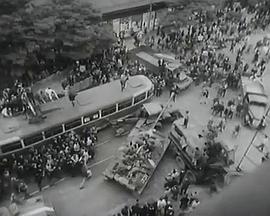
A unique document of the Soviet invasion of Czechoslovakia in 1968, the movie was begun as a documentary about the liberalization of Czechoslovakia and then became a record of the entry of Russian tanks into Prague. The only filmed footage of the Soviet invasion, it was seen by more than 600 million people when broadcast on television, and it was the first information that the Soviet Army had not been "invited" in. The film also includes never-before-seen scenes from the Prague Spring before the invasion.

Movie

Code Name Ruby (1997)
Jméno kódu: Rubín Douban
other title: 代号红宝石 / Jméno kódu: Rubín
The main characters are two young people - Michael and Ruby, whose encounters initiate us into the rules and secrets of alchemy. Just because they are chosen to find the Philosopher's Stone. During their journey they find even more. Maybe it's love, but maybe it's just a feeling that will disappear with the dawn. Who knows? "Love in this case will prevail over all," says Jan Němec, "is neither defined nor filled." The story takes place not only in today's Czech Republic, but also in the real seat of power - Washington, DC Are part of the film and documentary footage of the recent past in which the creator reveals their true historical context. The movie is a modern fairy tale and mystification at the same time. ( )

Movie

Late night talks with mother (2001)
Nocní hovory s matkou Douban
杨·涅梅茨 actor: 卡瑞尔·罗登 / 瓦茨拉夫·哈维尔 …
other title: 与母亲深夜长谈 / Nocní hovory s matkou
杨.南曼奇(Jan.Nemec)在捷克新浪潮的地位类似雷奈之于法国新浪潮。他的 电影看似写实风格,却糅合幻想基调。这部01年的新作也是如此,导演以摄影机与去世的母亲沟通对话,中间交织20世纪的历史事件。影片灵感源自卡夫卡的《致父亲》。 2001年瑞士洛迦诺电影节金豹奖

Movie

Martyrs of Love (1967)
Mucedníci lásky WikiData IMDb TMDB Douban
other title: 殉爱者 / Mucedníci lásky …
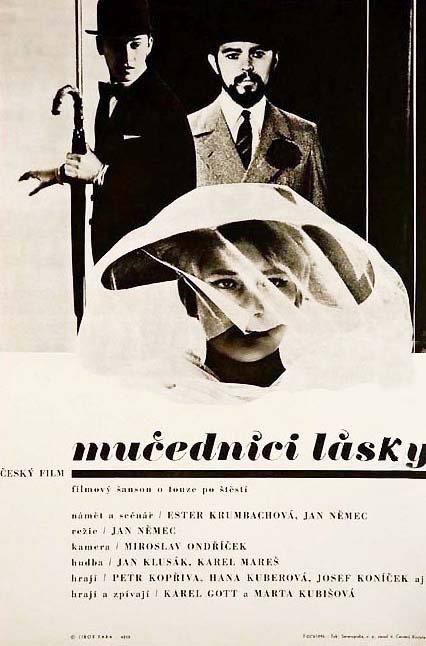
This romance is comprised of three tales representing different aspects of love: temptation, dreams, and adventure. In the first, an introverted clerk takes his savings to paint the town red and winds up with a woman in his bed. Unfortunately, she is only interested in sleeping. Still he is tempted... In the second, a waitress on a train dreams of being a maid pursuing a singer. He rejects her, and she then falls for a medical officer who proposes. She gets frightened and jumps on a train where she meets a flirtatious gypsy. In the final tale, an orphan is invited to a garden party where he is treated like an old friend by the wealthy guests. There he meets a wonderful woman. The next day he goes back to see her. Unfortunately he cannot find the garden, his friends, or the girl.

Movie

Metamorphosis (1975)
Die Verwandlung Douban
other title: 变形记 / Die Verwandlung
Jan Němec's original proposal in 1966 to adapt Kafka's Metamorphosis as a theatrical feature was rejected by the Czech state film board. In 1974, he was forced into exile -- first seeking refuge in Germany: CER: What impact did emigration from Czechoslovakia have on you personally and professionally? JN: I have never emigrated. I was an exile. There is a very big difference. An emigrant is somebody who decides to leave the country, while an exile is chased away, like J A Komenský. In 1974, they wanted to put me in prison, but they gave me a choice, as with Milan Kundera. We were told that the criminal prosecution would be canceled if we applied for a legal departure motivated not by political protest but by a working contract. I took this offer and left the country legally, so I had a Czech passport for another two years. But it was not like traveling. I couldn't come back. If I had, they would have seized my passport and began the criminal prosecution all over again, and I would be in prison. After two years they stripped me of my citizenship. So I have never emigrated and I have never applied for political asylum. I was "stateless," with no citizenship or no legal papers.