Pierre Alcover — Actor (4)
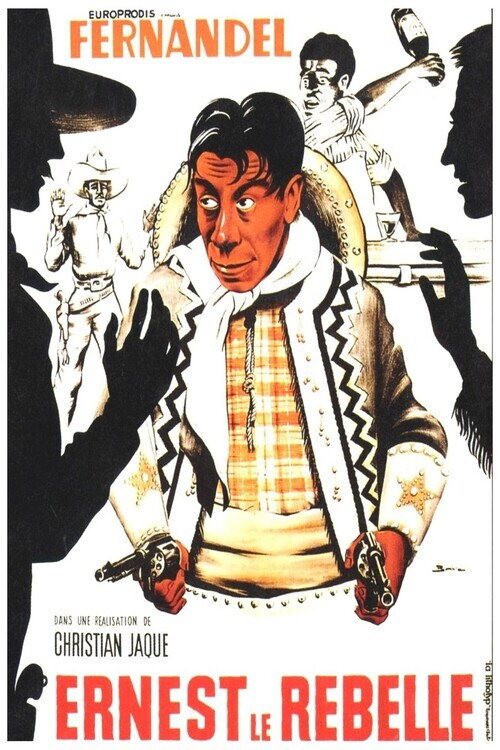
Ernest the Rebel (1938) [Movie] WikiData IMDb TMDB
Ernest le rebelle
director: Christian-Jaque actor: Fernandel / Pierre Alcover
other title: Ernest le rebelle
In South America anything can happen: the consul might give you as a snack to the sharks, you can wind up as a working man (slave) in a banana plantation or as a recruit in the governor's navy. And there's always a fire squad waiting for you so you 'd better start a revolution! It takes all Fernandel's talent to go through this eventful journey.
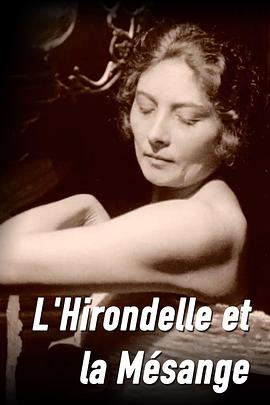
The Swallow and the Titmouse (1920) [Movie] WikiData IMDb TMDB Douban
L'Hirondelle et la mésange
director: 安德烈·安托万 actor: Maguy Deliac / Pierre Alcover
other title: L'Hirondelle et la mésange / 燕子与山雀
Herr Pierre Van Groot owns two barges. Van Groot, his wife, and his sister-in-law navigate along the north channels between Belgium and France. Herr Pierre transports construction material in his barges but he earns extra francs trafficking in diamonds, which he hides in the boat’s rudder. Pierre engages a new first mate, Michel, who gets wise to the diamond smuggling. The film was shot in 1920, but only shown once in its 80 minute entirety at a private screening in 1924.
Little Lise (1930) [Movie] WikiData IMDb TMDB Douban
La Petite Lise
director: 让·格莱米永 actor: Pierre Alcover / Joe Alex
other title: 小丽丝 / La Petite Lise
Jean Grémillon’s first talkie, the 1930 LA PETITE LISE, is anything but talky. While opening
and closing with soulful afro-Latin strains, something just above silence reigns throughout
the film. Grémillon is already orchestrating the auditory menace of nuanced sound sculpting
that would later pervade REMORQUES (1941), setting forth evolving rhythmic figures at an
atmospheric whisper. Grémillon grafts this aural frieze onto smoldering b&w photography.
Truly, the frame is often smoking for purposes of motif.
In truth, this film has the most impressive use of sound I know of, including Bresson’s
MOUCHETTE. It’s up for speculation as to how much technical issues played into his
creative use of sound and off-screen. What is of particular note is that instead of milking the
capability of sync sound dialogue, Grémillon uses it very sparingly, increasing the range of
expressiveness. An abstract score of atmospheric insinuation is always in accompaniment
with the imagery tonally, rhythmically and dynamically. Listening carefully, ambient sound isever at work in a subliminal music score.
The story of LA PETITE LISE belongs to the sandbox of melodrama, but Grémillon grinds it
into expressionistic minimalism. What is this story? Perhaps it will suffice to say that it is
the reunion of a father fresh out of prison with his daughter now grown up, all prepared
under a pressure cooker of lens and mic. Conflagrations arise periodically from the embers
of troubled quiet, with lighting flickering to and from peaks of intensity. Emblazoned
gestures extend from the sustain of affective brood, while conversations flare up before
subsiding back into the simmering cauldron.