Ljuba Tadić — Actor (32)

Movie

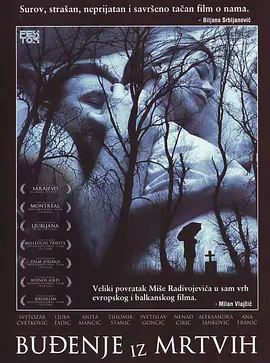
Awakening From the Dead (2005)
Buđenje iz mrtvih WikiData IMDb TMDB Douban
Milos Radivojevic actor: Svetozar Cvetkovic / Ljuba Tadic …
other title: Budjenje iz mrtvih / Буђење из мртвих …
The story takes place at the beginning of the bombing, both in Belgrade and in one small town in Serbia, at the end of March 1999. Forty-year-old Mickey, an unaccomplished writer, a disillusioned assistant professor at the Faculty of Fine Arts, a discouraged democrat and a columnist, dismissed from a famous daily newspaper, emerges from his own grave and enters into his own life. Within 48 hours, he will try to achieve all those things he couldn't while he was alive. At the same time, post-mortem, he will try to save the dignity of his own community and his tribe, not taking too much care of himself.

Movie

Special Treatment (1980)
Посебан третман WikiData IMDb TMDB
other title: Traitement Spécial / Посебан третман …
Dr. Ilic works in the hospital for compulsory treatment of alcoholics. By conducting his own "special treatment" through physical exercises, apple eating, the healing effects of listening to Wagner's music and psychodrama, a group of six patients have been taken to visit the brewery where there is a problem of alcoholism in the workplace.

Movie

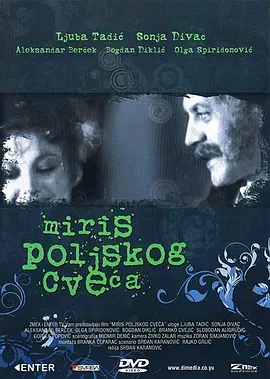
Fragrance of Wild Flowers (1977)
Miris poljskog cveca Douban
other title: 野花的芬芳 / Miris poljskog cveca
《野花的芬芳》是南斯拉夫著名导演卡拉诺维奇的首部长片,他在两年后拍摄了那部被选入南斯拉夫影史十佳的《佩特拉的花圈》(1980)。但真正让其在国际上一鸣惊人的还是这部《野花的芬芳》,故事与后来美国的《ED TV》和《楚门的世界》很相似,也是讽刺媒体对私人生活的侵入。 当年此片曾获法国嘎纳国际电影节FIPRESCI奖,而与其并列的正是波兰导演瓦依达的名作《大理石人》。 A television actor and his friend, a barge captain, abandon their everyday lives without a thought in this dark comedy. They do not mind that a television news crew is following them. It is with almost a sense of relief that they are overwhelmed by crowds of equally discontented people leaving their lives, who look to the camera crew to swell their numbers as their actions become part of news reports. ~ Clarke Fountain, All Movie Guide Srdjan Karanovic began his career as a director of short films and television programs. In cinema, Karanovic is a prominent member of the "Prague School" of Yugoslav filmmakers; he graduated from the Czech city's prestigious film school FAMU (in Karanovic's case, in the class of 1970). His best-known films include Miris Poljskog Cveca/The Scent of Wild Flowers (1977), Petrijin Venac/Petrija's Wreath (1980), and Jagode u Griu/A Throatful of Strawberries (1985). Also a screenwriter, Karanovic often collaborates with filmmaker Rajko Grlic. ~ Sandra Brennan, All Movie Guide

Movie

没问题 (1984)
Nema problema Douban
米洽·米洛舍维奇 actor: 尼古拉·西米奇 / 莱帕·柏莱娜 …
other title: Nema problema
潘蒂奇是公司的董事,他正因为发不出员工工资而犯愁。他们曾投巨资建了一个足球场,由于经营无方,亏损200多万。因为投资失败,银行也不愿意再提供贷款援助。为了补上亏空,他把著名歌星莱帕·柏莱娜骗到小镇,说是出席剪彩仪式,其实按演唱会卖票,但事情败露,他也受到了惩罚。

Movie

血色之诗 (1969)
Krvava bajka Douban
托里·扬科维奇 actor: Zorica Miladinovic / 米粒·斯托比查 …
other title: Krvava bajka / 血腥故事 …
在一个名叫克拉古耶瓦兹的小镇上,本来他们的生活过的非常快乐,但是从德国军队来了之后,男人们有的离家去参加游击队,有的因为不与德军合作而失去工作。孩子们担负起养家的重担,他们想出各种方法谋生。比利亚克的父亲留下一封信去了游击队,照顾妈妈和妹妹的重担就落在了他的肩上。开始,他和小伙伴们到火车站帮忙拎行李,可是人们都不富裕所以很难挣到钱。于是,一群小伙伴开始了爬火车偷德国人的运煤车。这个活实在太危险了,不仅要躲避德国人的岗哨,还要在飞快的火车上爬上爬下的,不久小伙伴中就有人中弹丧命了。 比利亚克和小伙伴们自己见这个办法行不通,便又制作了擦鞋箱,干起了擦皮鞋的工作,而且生意越来越好了。不久开始有德国人来他们的鞋摊上来擦鞋了,德国人一来孩子们纷纷离开,以不给他们擦鞋来表示对他们厌恶。 一日,比利亚克和小伙伴们偷了德国人的一个箱子,里面是一具德国将军的尸体,他们用他的皮靴和制服换了一头猪,他们把猪赶到镇子上让大家分了,镇上的人们唱唱跳跳的来庆祝,好久都没这样开心过了。不久,驻扎在镇上的的德国兵遇到了游击队的袭击,伤亡惨重。他们制定了死一名德国兵要100名平民偿命,伤一名德国兵要50名平民偿命的疯狂的方式,向平民们报复,屠杀了8000小镇居民,包括这些孩子。他们以换身份证的名义把平民们集中起来,然后一批一批的放出来枪杀。

Movie

San (1966)
San Douban
姆拉多米尔·普里萨·乔尔杰维奇 actor: 留比沙·萨马季奇 / 米哈罗·米萨·詹克提克 …
other title: 梦 / The Dream …
1941年,欧洲几乎所有地区都被德国占领了,正当欧洲人民都在梦想获得自由的时期,塞尔维亚西部城市查查克和乌日策,就好像是自由的孤岛一样。在这些自由的城市,一个女孩和一个男孩梦想着拥有更美好更光明的未来,梦想着在十年或是二十年后会发生的事情。可是,战争还是来临了,打断了他们的梦想。德军再次发动进攻,游击队又撤退了。死者仍在站岗。然而梦想不能被杀死。入围第17届柏林国际电影节。

Movie

The march of Drina (1964)
Marš na Drinu WikiData IMDb TMDB Douban
other title: 德里纳河进行曲 / Marš na Drinu …
The title, translated to english, is "The march of Drina". This Yugoslav film is most notable for it's topic, handling of the same and circumstances. The film was made during the communist era of Yugoslavia. Unlike 99% of war movies made during that time, this one doesn't deal with WW2 and communist revolution, but a historic and epic battle of WW1. The topic was handled excellently, it was very authentic. For that reason, the film was "shunned" by the official TVs and movie theaters for years. The topic of this film is the first battle of WW1 that was won by the allies, when small and outnumbered army of Serbian Kingdom defeated Austro-Hungarian invading forces. The plot revolves around a small artillery section, the men and their lives. The cast was excellent and they did their job superbly. Historically, battles of Drina and Cer, in Serbia, were the first two victories in WW1. Unfortunately, overwhelmed by the invaders, serbian army had to retreat all the way to Greece and wait there until the allies were ready to open the front at Solun. If you've seen Gallipoly, you should see this film as well. Mind you, this film is in serbian, so you should find a version for your country (preferably not synchronized).

Movie

Raindrops, Water, Warriors (1962)
Kapi, vode, ratnici WikiData IMDb TMDB Douban
马尔科·巴巴茨 / 日沃因·帕夫洛维奇 … actor: Janez Vrhovec / Snezana Lukic …
other title: 雨滴, 水, 士兵 / Kapi, vode, ratnici …
A three-part omnibus consisting of Kino Klub amateurs' work: Zivojin Pavlovic's dialogue-free "Live Waters" set in 1943, Marko Babac's "Warriors" about psychological look at the two patients in a hospital room, as well as Kokan Rakonjac's "Raindrops" about alcoholic's decaying relationship with his girlfriend.

Movie

Sutjeska (1973)
Sutjeska WikiData IMDb TMDB Douban
other title: 苏捷斯卡战役 / Пятое наступление …
The headquarters of the Marshal Tito's Liberation Army are surrounded by Axis forces. The Partisans have no choice but to fight their way out of the encirclement and face the enemy on the plains of Sutjeska.

Movie

Pretty Women Walking Through The City (1986)
Lijepe zene prolaze kroz grad WikiData IMDb TMDB Douban
other title: 美女游城 / Lijepe zene prolaze kroz grad …
Politics issues dominate this sci-fi story set in 2041 in the former Yugoslavia. Most of Europe is now controlled by "thought police," but a former politician and an ex-cop are running a girls' boarding school in defiance of the current regime, modeled on the more idyllic 1980s. These partners want to revamp the ruins of Belgrade so electricity and water can be restored and the buildings made habitable again. The citizens are currently scattered across the countryside, and the film follows them, as well as the boarding school directors and a female reporter, as they all work together to confront the system. Belgrade in 2041. is a deserted and ruined town full of garbage. A few old men live in it: ex-reporter and his daughter, ex-politician and his wife, and ex-policeman who guards boarding school with eight girls. Old men are raising girls in the spirit of former Yugoslav people tradition, which is a risky job, because southern Europe is haunted by a gang which does not allow any recollections of the past. The story begins in the moment when ex-reporter starts the action for revitalization of Belgrade, wanting to celebrate 100 years of the revolution. Zilnik is still employing the creative and provactive style that brought him to prominence in the late 1960s. Zilnik is the director that in 1969 beat Midnight Cowboy in Berlin with his first feature film, Rani radovi (Early Works, 1969) and won the Golden Bear. Attacked many times by the grey eminences of the establishment, he remained faithful to his own creative poetry and continued to be very productive, despite the historical changes that occured around him. He was once very popular among Yugoslav liberal audience and directed hits such as Lijepe zene prolaze kroz grad (Pretty Women Walking Through the City, 1985) or Tako se kalio celik (How Steel Was Tempered, 1988). He caught the eye of the critics with his very provocative Dupe od mramora (Marble Ass, 1995) and Kud plovi ovaj brod (Wanderlust, 1998), while films such as Bruklin-Gusinje (Brooklyn-Gusinje, 1988) were an exercise in style. He also made many excellent documentaries and short films, among which are Sedam madarskih balada (Seven Hungarian Ballads, 1978) and Tvrdava Evropa (Fortress Europe, 2000).