Carlos Diegues — Director (16)

Movie

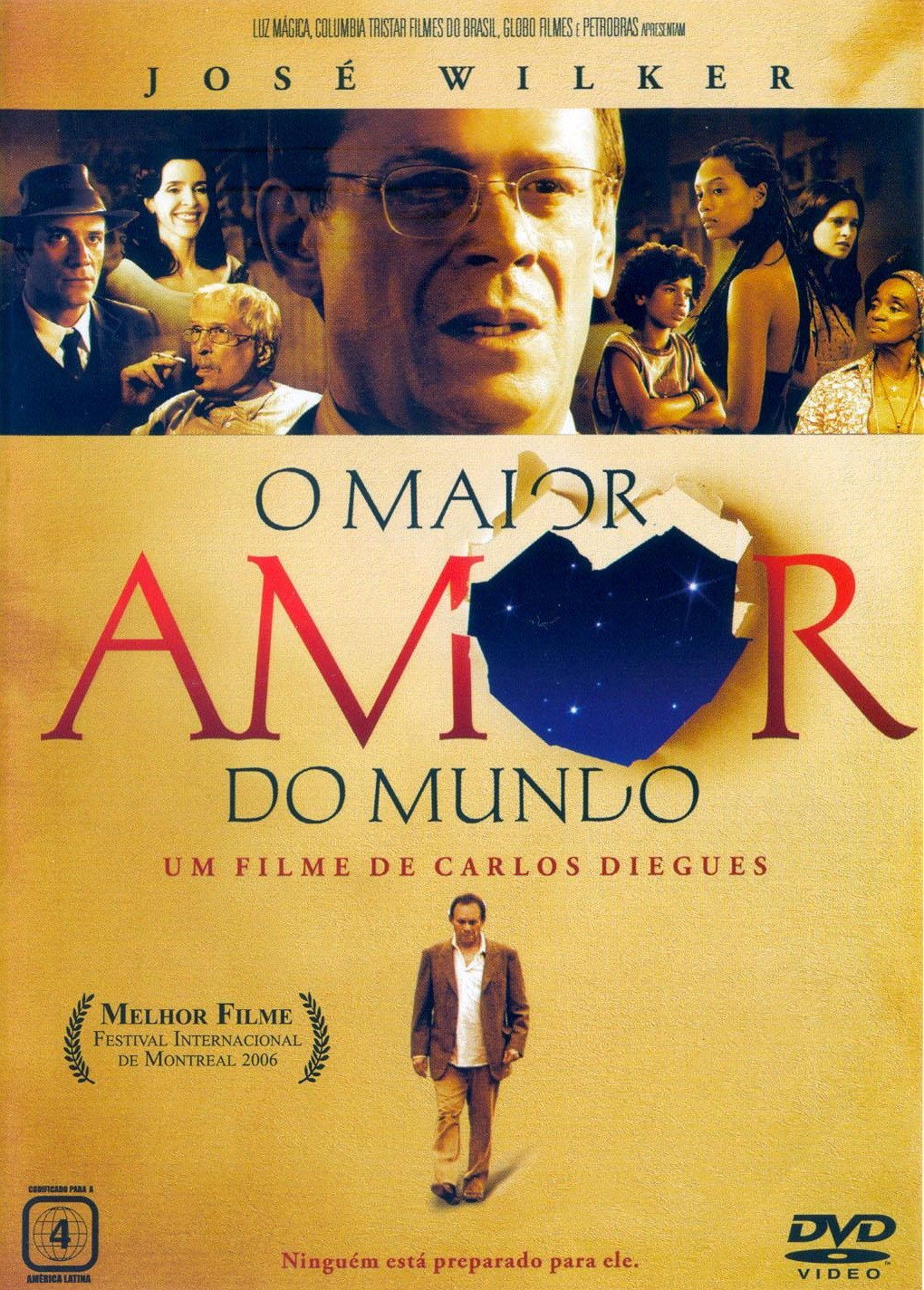
The Greatest Love of All (2006)
O Maior Amor do Mundo WikiData IMDb TMDB
other title: O Maior Amor do Mundo / El amor más grande del mundo …
Antônio is an astrophysicist who has just found out he has an inoperable brain tumor. After decades living in the United States, he returns to Brazil and tries to learn more about his biological mother. His quest sends him off into the slums of Rio de Janeiro.

Movie

Rio's Love Song (1994)
Veja Esta Canção WikiData IMDb TMDB
other title: Veja Esta Canção / Regarde cette chanson …
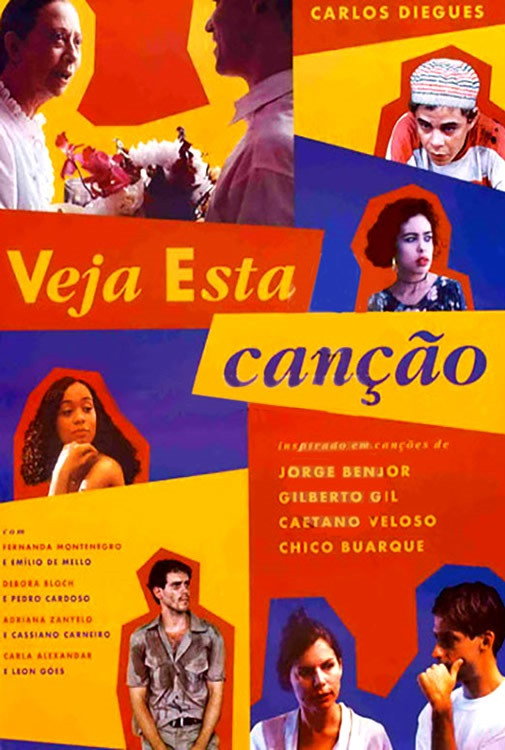
Four love stories which portray a wide gamut of emotions and desires against the backdrop of Rio de Janeiro. "Elephant's Stomp" : the story of a highway patrol officer who is infatuated with a mulatto dancer at a local nightclub. "Drao" : a publicity man and a boutique owner who face a crises in their marriage. "You Are Beautiful" : two homeless teenagers seek love amidst their personal misery. "Samba of the Great Passion" : a book maker who is charmed and captivated by the voice of a female singer coming from a building across the street. Characters in search of love in order to escape from the boredom, loneliness and helplessness of their lives.

Movie

Ganga Zumba (1963)
Ganga Zumba WikiData IMDb TMDB Douban
other title: 岡加祖巴 / 冈加祖巴
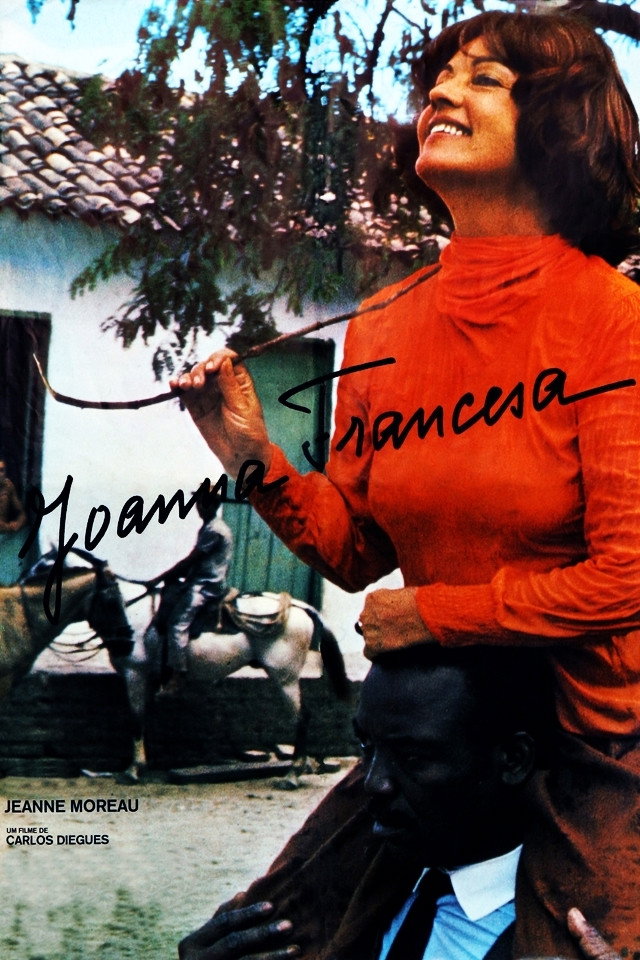
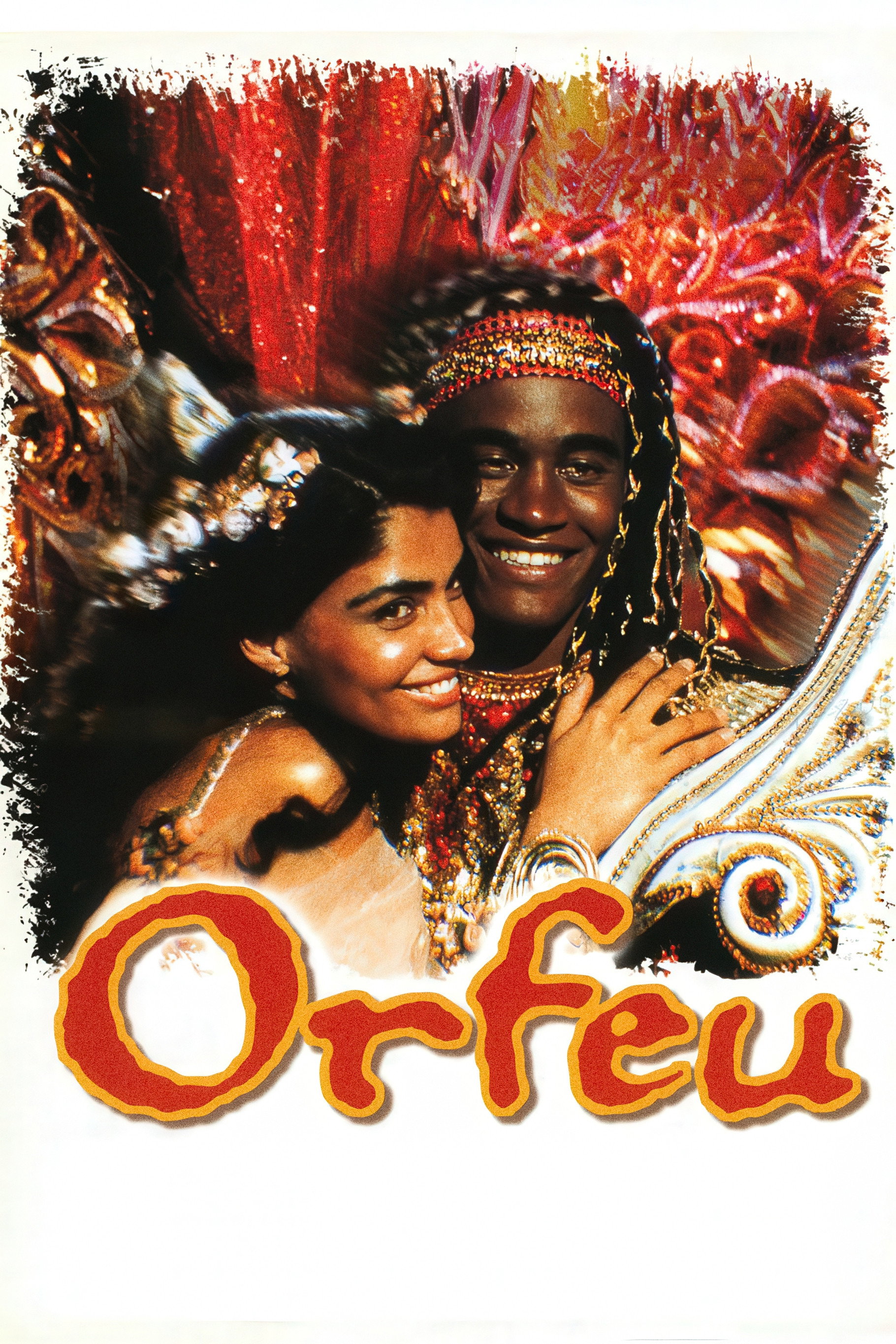
A former poet, journalist and film critic, Carlos Diegues emerged as one of the foremost proponents of Brazil's Cinema Novo movement (akin to the French New Wave). Since making his first features in the early 1960s, he has explored various aspects of Brazilian life in political, social and historical contexts, with particular emphasis on slavery and its legacy to his native land's culture. Diegues is nothing if not passionate, but that passion comes at a price. Perhaps the most common criticism of his work is that his films are not audience friendly; they demand scrupulous attention but to those willing to make the commitment, they yield many riches. This son of anthropologist/sociologist Manuel Diegues Jr. studied law in Rio de Janeiro before segueing to a career as a journalist. His father's influence coupled with the detective skills needed to ferret out stories dovetail in his screenplays which often take actual historical events and use them as backdrops. Diegues began experimenting with filmmaking in the late 1950s, producing a handful of amateur shorts and marking his professional debut with a segment of the 1961 omnibus feature "Cino vezes favela". His first full-length movie, "Ganga Zumba" (1964) is considered a landmark in Cinema Novo and introduced some of the director's recurring themes, notably slavery and politics. "Ganga Zumba" was a fact-based drama about the first slave uprising in the New World which led to the formation of an independent state. Diegues examined similar ideas in 1966's "Earth Entranced", in which an idealistic poet discovers that the elite and those in a radical movement have more in common than might be previously thought. His historical drama "Os Herdeiros" (1969) traced the rise in power of a journalist's son that was bookended by the 1930s coffee crisis and a 1964 coup d'etat. Diegues enjoyed an international success with "Bye Bye Brazil" (1980), which tracked a troupe of travelling performers in northern Brazil and lovingly detailed the landscape. He returned to the historical epic with "Quilombo" (1984), which married his major themes as it recounted yet another true tale of a slave uprising and the subsequent formation of "the first democratic society we know of in the Western Hemisphere". For many, this films ranks as one of the director's best. Several of Diegues' films have been built around strong central female figures. "Joanna Francesca" (1973), for example, traced how a French whore's marriage to a wealthy landowner led to ruin and destruction, and "Xica da Silva" (1975) followed the fortunes of a former slave who rises to the position of unofficial Empress through seduction and other machinations. "Dias Melhores Virao" (1990) followed a struggling actress while "Tieta" (1996) details the homecoming of a village girl now the widow of a wealthy industrialist. On occasion, Diegues has attempted more eclectic fare, like "Rio's Love Songs" (1994), an anthology that used four popular songs as the basis for the stories. Three of the four tales involved couples coming to recognize love while the fourth focused on street kids in Rio de Janeiro. The writer-director realized a long-held dream with "Orfeu" (1999), based on the Vincius de Moraes' play which in turn retold the Greek legend of Orpheus and Eurydice. while not a remake of Marcel Camus' "Black Orpheus" (1959), it did share some similarities as they both utilized the same source material. Diegues, who first saw the play in 1956, has called the drama "the myth that best explains the destiny and frustrated vocation of the Brazilian nation." For his take on the material, Diegues returned to the original and stressed its emphasis on Orpheus' familial and communal relations. Set in contemporary Brazil, "Orfeu" has an edge to it, including unscrupulous and violent characters like drug dealers and corrupt policemen and a musical score encompassing samba, love ballads and hip-hop. Brazilian audiences embraced the film, making it a certified box-office hit which partly restored Diegues' reputation, which received an added boost when Brazil selected "Orfeu" as its official entry for the 1999 Academy Award for Best Foreign-Language Film.
Movie

Subway to the Stars (1987)
Um Trem para as Estrelas WikiData IMDb TMDB
other title: Um Trem Para as Estrelas / Un train pour les étoiles …
In this highly stylized Brazilian drama a sax player fondly remembers one wonderful night spent with his life's love and decides to find her again. He embarks upon a quest through the wild streets of Rio to find her. Along the way he meets an assortment of odd urban underworld characters.

Movie

God Is Brazilian (2003)
Deus é Brasileiro WikiData IMDb TMDB Douban
卡洛斯·迭戈 actor: 安东尼奥·法古德斯
other title: 上帝是巴西人 / Deus É Brasileiro …
God decides to take a vacation - but, first, He has to find a saint who can rule the universe while He's away. For that, He goes to Brazil's northeast, where He believes there's a very good man for the job - but, during His mission, He becomes friend of a very smart young man, Taoca.

Movie

The Big City (1966)
A Grande Cidade Douban
other title: 大城市 / A Grande Cidade
The theme deplores the conditions of the slum quarters of Rio (and ghettos everywhere) and finds a young girl from the provinces who comes to Rio de Janiero in search of her fiance and finds he is a feared and hunted criminal. The scenes between the idealistic-but-trapped young lovers is depicted in soft images of tenderness and sensitivity that leads to a climax of shocking violence in the Rio slums.

Movie

Tieta of Agreste (1996)
Tieta do Agreste WikiData IMDb TMDB Douban
other title: 衣锦还乡 / Tieta do Agreste …
Brazilian town of Santa An-du-Agreshte welcomes his "prodigal daughter" Tieta, after a very long absence. When Tieta was 17, her father and older sister threw her out of the house "for bad behavior." And she returns home - very beautiful and, most importantly, fabulously rich. Her appearance causes a stir in the small town lost in time and space. After all, Tieta has more money than all of its residents, and she becomes the main benefactor of the town. But her older sister, burning with envy and dreaming to bring Titus "to light", suits against her a conspiracy ...

Movie

The Great Mystical Circus (2018)
O Grande Circo Místico WikiData IMDb TMDB Douban
other title: 伟大的神秘马戏团 / O Grande Circo Místico …
The story of five generations of the Austrian-Brazilian Knieps family, from the inauguration of their family-owned Great Mystical Circus in the 1910s up to the early 21st century, following both the family and the circus from their prime through to their decadence.

Movie

Bye Bye Brazil (1980)
Bye Bye Brasil WikiData IMDb TMDB Douban
other title: 再见巴西 / Bye Bye Brasil …
The Caravana Rolidei rolls into town with the Gypsy Lord at the mike: he does magic tricks, the erotic Salomé dances, and the mute Swallow performs feats of strength. A young accordion player is completely enamored of Salomé, and he begs to come along. The Gypsy Lord shrugs, and the accordionist and his pregnant wife, Dasdô, join the troupe.

Movie

贫民区的五个故事 (1962)
Cinco vezes Favela Douban
Miguel Borges / 瓦基姆·佩德罗·德·安德拉德 …
other title: Cinco vezes Favela / Favela Five Times
《Cinco vezes Favela》是巴西新电影时期最重要的一部集锦片,正如《海底的珍珠》于捷克新浪潮,或《联华交响曲》于三十年代的上海影坛一样。由五位新浪潮导演各自执导一部讲述发生在里约贫民区的短篇故事,其中既有成年人的彷徨,也有孩子们的清新,摄影和镜头语言沿袭前辈纳尔逊-佩雷拉-多斯桑托斯在《里约40度》里的新写实主义风格,音乐上采用当时流行的BOSSANOVA、SAMBA等怀旧曲风,是对60年代初里约大都市繁华与贫穷共存的社会景象的真实写照。 Runtime: 92 min Country: Brazil Language: Portuguese Color: Black and White Sound Mix: Mono Plot Outline: Five segments about the hardships faced by people living in slums on hills in Rio de Janeiro. Directed by Miguel Borges (segment "Ze da cachorra") Joaquim Pedro de Andrade (segment "Couro de Gato") Carlos Diegues (segment "Escola de Samba Alegria de Viver") Marcos Farias (segment "Um favelado") Leon Hirszman (segment "Pedreira de Sao Diego") Writing credits Miguel Borges segment "Ze da cachorra" Joaquim Pedro de Andrade segment "Couro de Gato" Domingos de Oliveira segment "Couro de Gato" Carlos Diegues segment "Escola de Samba Alegria de Viver" Carlos Estevao segment "Escola de Samba Alegria de Viver" Marcos Farias segment "Um Favelado" Leon Hirszman segment "Pedreira de Sao Diego" Flavio Migliaccio segment "Pedreira de Sao Diego" Produced by Marcos Farias .... producer Leon Hirszman .... producer Paulo Cesar Saraceni .... producer Original Music by Carlos Lyra (segments "Escola de Samba Alegria de Viver" and "Couro de Gato") Helcio Milito (segment "Pedreira de Sao Diego") Mario Rocha (segments "Um Favelado" and "Ze da Cachorra") Geraldo Vandre (segment "Couro de Gato") Cinematography by Mario Carneiro (segment "Couro de Gato") George Dusek (segment "Ze da Cachorra") Ozen Sermet (segments "Um Favelado", "Escola de Samba Alegria de Viver", "Pedreira de Sao Diego") Film Editing by Jacqueline Aubrey (segment "Couro de Gato") Ruy Guerra (segment "Escola de Samba Alegria de Viver") Saul Lachtermacher (segments "Um Favelado" and "Ze da Cachorra") Nelson Pereira dos Santos (segment "Pedreira de Sao Diego") Art Direction by Flavio Imperio Production Management Eduardo Coutinho .... production manager Ivan De Souza .... production manager Second Unit Director or Assistant Director Celso Luiz Nunes Amorim .... assistant director (segment "Pedreira de Sao Diego") Domingos de Oliveira .... assistant director (segment "Couro de Gato") Henrique Meyer .... assistant director (segment "Ze da cachorra") Flavio Migliaccio .... assistant director (segment "Pedreira de Sao Diego")