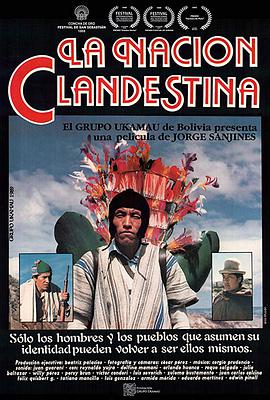
Jorge Sanjinés — Playwright (6)

Movie

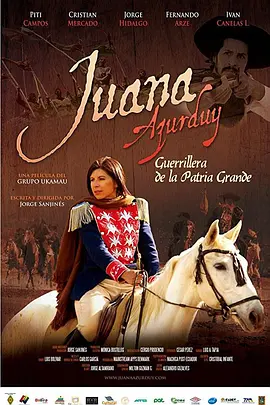
朱安娜·阿祖杜利,伟大祖国的游击队员 (2016)
Juana Azurduy, Guerrillera de la Patria Grande IMDb Douban
豪尔赫·圣希内斯 actor: 更多...
other title: Juana Azurduy, Guerrillera de la Patria Grande
In November 1825, in the Bolivian city of Chuquisaca, doña Juana Azurduy Bermúdez de Padilla, heroine of the independence war against the Spanish army, receives the visit of the liberators Simón Bolívar, Antonio José de Sucre and José Miguel Lanza. Throughout a long conversation, the woman will receive the admiration of the rulers, while reminiscing the most significant episodes of her career as a patriot and commander of the armed forces

Movie

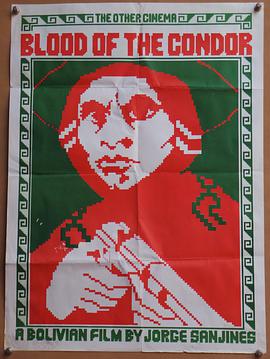
Blood of the Condor (1969)
Yawar mallku WikiData IMDb TMDB Douban
other title: 秃鹰之血 / Yawar mallku …
"The Bolivian fiction feature Yawar Mallku is one of the most famous examples of Latin American militant cinema. Like most of these American militant films, this one was made on a modest budget in spite of major obstacles. Bolivia has no significant filmmaking traditions or facilities. Mules had to be used to transport the filmmakers and their equipment to a high and remote Indian community where parts of the film were shot. The Quechua-speaking Indians of this Andean community were initially hostile to the filmmakers until a coca-leaf divination ritual confirmed the filmmakers' good intentions. "It is in cultural and ideological terms that Yawar Mallku is most important. This controversial film is a powerful and thorough attack on United States imperialism. In the film, members of a Progress Corps (read Peace Corps) working, ironically, in an obstetric clinic, surgically sterilize unsuspecting Indian women. Jorge Sanjinés, aware of Bolivia's historic underpopulation and high infant mortality rate, had been deeply disturbed by media reports that the U.S. Peace Corps operated in such a fashion in his country. Though U.S. officials denied such activities, the film created a furore and, in the opinion of Sanjinés, was a major factor in the expulsion of the Peace Corps from Bolivia in 1971. "In Yawar Mallku, U.S. imperialism is not depicted solely as an attempt to biologically eliminate an "inferior" race, but also as a more subtle yet all-pervasive force. The theme of cultural imperialism is amply illustrated: the rock music played in the clinic (in contrast to the indigenous flute music), the American-style clothes donated to the Indians (in contrast to the traditional, hand-woven garb), the pin-ups in the house of the Indian who has migrated to La Paz. Linguistic imperialism is exemplified in a sequence in which an upper-class Bolivian mother addresses her children in English, a language commonly used by the upper classes but generally not available for study by the Indians. Sanjinés emphasizes the ties of Bolivia's ruling classes to U.S. imperialism in a banquet sequence where leading Bolivian doctors and their U.S. counterparts fail to supply the blood that a wounded Indian needs to survive. For Sanjinés, U.S. imperialism is literally and figuratively robbing Bolivian Indians of their blood—their right to life according to their own traditions and customs."

Movie

The Principal Enemy (1973)
El enemigo principal WikiData IMDb TMDB Douban
other title: 第一公敌 / El enemigo principal …
No stranger to controversy in his Bolivian homeland, Jorge Sanjines aims his films at his country's poor and working class in an attempt to inspire them to fight for equality and freedom. His best-known film is Yawar Mallku (Blood of the Condor) (1968), a scathing look at the terrible effects of U.S. imperialism on Bolivia's Indians. Sanjines worked as the director of the Bolivian Film Institute when he made his first feature, Ukamau, in 1965. A look at the plight of Andean peasants, he filmed it in Aymara, the local Indian language. The film caused controversy and he was fired from the Institute. A staunch leftist, Sanjines has gone on to make more films decrying the continued exploitation of the lower classes. Notable examples include El Coraje del Pueblo (The Courage of the People) (1971) and El Enemigo Principal (The Principal Enemy) (1973), which was released while Sanjines was exiled in Peru.

Movie

听!鸟儿在歌唱 (1995)
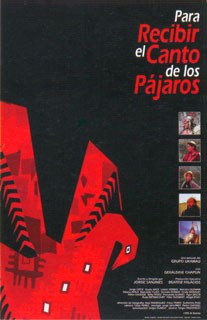
Para recibir el canto de los pájaros Douban
other title: Para recibir el canto de los pájaros
Rodrigo, a film director, intends to make a film about the Conquest in a remote village in the Bolivian altiplano. Initially receptive to the idea, the Indian community living there reacts violently when some local wildlife is destroyed. Para recibir el canto de los pájaros is a little more subtle in its portrayal of cultural conflict than Sanjinés's earlier film, Yawar Mallku — where violence is seen as the only legitimate response to western cultural domination — for it not only shows that not all that is western is bad, but it even highlights negative elements within Andean culture. Most important for this discussion, Para recibir el canto de los pájaros plays with the film-within-a-film convention inherited from Hollywood, but it sometimes tricks the spectator making him unsure as to whether a scene is part of the film or part of the everyday reality of a film crew from La Paz in the Andes. Underlying the scene in which the producer, Pedro Barrón, emerges from the pit in which he has been trapped, and sees his Conquistador double walk nonchalantly past him, is the crucial notion of self-consciousness. Pedro realizes that his role as film producer in the late twentieth century is a re-enactment of 'his' role as Conquistador in the early sixteenth century. The spectator is drawn into this playing-off of two time-continuums, and in effect achieves a double-consciousness in which he can see Aymara culture from within and also from without. A heavy-handed allegory by a veteran Bolivian film-maker about the racism endemic in his country and the more universal inability to learn from history. It opens with masked conquistadors (the harquebus angels) lined against the Andean altiplano skyline, as a mainly mestizo film crew track up the hill like Aguirre's invading army in Herzog's Wrath of God. Thus begins a series of broad parallels, culminating in a siege, whereby the crew, assailed by the Indian community (who have refused to be in their historical movie), almost resort to the use of the ancient harquebuses in their possession. The song of the title refers to the birds of the Indians' annual music festival: the crew shoot them for sport. Beautiful scenery.
Movie

Ukamau (1966)
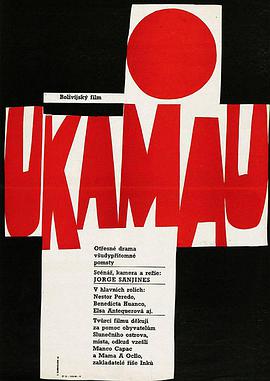
Ukamau Douban
other title: 它就是如此 / And So It Is …
When a Bolivian Indian travels to town to sell his produce, a half-caste who usually buys his goods visits the man's hut. He finds the man's wife alone and he is miffed when the husband is not there. After she explains that the town market will pay for the goods, the half-caste lusts after the wife and attacks her after she rejects his lecherous advances. The husband returns home to find his wife mortally wounded, and she reveals the identity of her killer with her dying breath. The bereaved husband bides his time, killing the man after he has become wealthy.