William Kentridge — Director (11)

Movie

Second-hand Reading (2013)
Second-hand Reading IMDb Douban
other title: 二手阅读
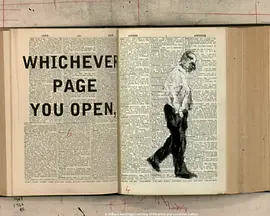
A flipbook / stop-motion animation film composed of hundreds of drawings by artist William Kentridge superimposed on pages of the Shorter Oxford English Dictionary and other lexicons and encyclopedias.

Performance

The Nose
Нос Douban
Dmitri Shostakovich / Yevgeny Zamyatin … genre: Opera
other title: 鼻子 / Нос director: William Kentridge / Luc de Wit … actor: Alexander Lewis / Paulo Szot / Andrey Popov / Anton Rositskiy / Boris Pinkhasovich
Dmitri Shostakovich composed his satirical opera The Nose, based on a story by Nikolai Gogol, between 1927 and 1928. Opera in 3 acts and 10 scenes, without intermission Act 1 Prologue St Petersburg. Kovalyov, a Collegiate Assessor is being shaved by Ivan Yakovlevich (a barber). He is one of Yakovlevich's regular customers. The next morning, Yakovlevich finds a nose in his bread. His wife, believing he has cut off one of his customers' noses, requests him to dispose of it. He tries to dispose of it in the street, but is foiled by running into people he knows, then he throws it into the Neva River, but he is seen by a police officer and taken away for questioning. Meanwhile, Kovalyov wakes and finds his nose missing. His first reaction is disbelief, then shock, and he sets out to find it. He later sees his nose praying in the Kazan Cathedral, now the size of a human being. Since the nose has acquired a higher rank (State Councillor) than he, it refuses to have any dealings with him, and leaves. Act 2 In his search, Kovalyov finds himself at the Chief of Police's apartment, but he is not at home. Next he visits the newspaper office to place an advertisement about the loss of his nose, where they are dealing with a missing dog. After explaining his loss, his request is refused on the grounds of the newspaper's reputation. Upon demonstrating his loss, the clerk suggests he tell his story. Kovalyov feels insulted and leaves. He returns to his apartment, where his servant is playing the balalaika, he dismisses him and wallows in self-pity. Act 3 The police take up the search. A group of policemen are at a railway station, in order to prevent the nose from escaping, where an inspector rallies them. The nose runs in and tries to stop the train, and a general pursuit ensues, resulting in its capture. The nose is then beaten into its normal size, wrapped and returned to Kovalyov by the inspector, but Kovalyov is unable to reattach it. Nor can a doctor. He then suspects that he has been placed under a spell by a woman called Madame Podtochina, because he would not marry her daughter. He writes to ask her to undo the spell, but she misinterprets the letter as a proposal to her daughter. She convinces him that she is innocent. In the city, crowds fuelled by rumours gather in search of the nose till the police restore order. Epilogue Kovalyov wakes up with his nose reattached, and dances a polka in joy. Yakovlevich has been released from prison and arrives to shave him. Afterwards Kovalyov wanders along Nevsky Prospekt greeting acquaintances, while people discuss the story.
Movie

Self-Portrait as a Coffee Pot (2022)
Self-Portrait as a Coffee Pot Douban
威廉·肯特里奇 actor: 威廉·肯特里奇
other title: 作为咖啡壶 / 這不是咖啡壺(港)
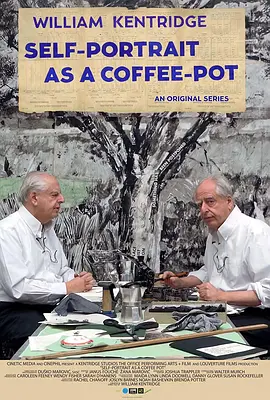
Inspired in part by Charlie Chaplin, Dziga Vertov and the innovative wit of early cinema, pioneering South African artist William Kentridge offers a cinematic experience of the creative process during the plague years of COVID. Interconnected yet distinct episodes introduce us to William and his collaborators in action, inviting us to step inside the intimacy of the studio as shared discoveries about culture, history and politics, and profound truths about the ways we live and think today are uncovered through the making of works of art.

Movie

Mine (2000)
Mine Douban
other title: 矿井
Mine is Kentridge's third film, although it is often shown by the artist as second in the series, before Monument (Tate T07483). It was made from eighteen drawings and is set to Dvorak's Cello Concerto in B minor, Opus 104. In it, Kentridge develops the analogy between landscape and mind begun in the earlier films. A journey into the mines provides a visual representation of a journey into the conscience of Kentridge's invented character, Soho Eckstein, the white South African property owner who exploits the resources of land and black human labour which are under his domain. Throughout the film the imagery shifts between the geological landscape underground inhabited by innumerable black miners and Soho's world of white luxury above ground. When Soho, breakfasting in bed, pushes down the plunger of his cafetière, its movement is transformed into a rapid descent through the tray, through the bed and into the mine-shaft. Here the miners' world of overwhelming misery is depicted in claustrophobic tunnels where they are trapped digging, drilling and sleeping, embedded in rock. Above ground, Soho sits at his desk in his customary pin-stripe suit and punches adding machines and cash registers, creating a flow of gold bars, exhausted miners, blasted landscapes and blocks of uniform housing. At the end of the film a tiny, live rhinoceros is carried up from underground to appear on Soho's desk. This, like the image of a Nigerian Ife head which appears at the beginning of the film, alludes to exoticising colonialist attitudes towards Africa and its people, which reduce human and animal resources to trinkets and symbols of wealth. It also refers to the ecological damage caused by industry, a theme common to this series of films.

Movie

More Sweetly Play the Dance (2015)
More Sweetly Play the Dance IMDb TMDB Douban
other title: 更甜美地表演舞蹈
The short animated movie shows a column of people, mainly refugees, carrying all kinds of symbolic objects with them. The movie criticizes the injustice and violence done in the South African past. The movie is shown on eight big screens and is supported by African brass music.

Movie

The Refusal of Time (2012)
The Refusal of Time Douban
other title: 对时间的拒绝
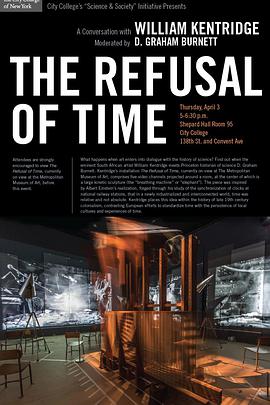
A new joint acquisition by the Met and SFMOMA, William Kentridge's five-channel video installation The Refusal of Time (2012) is a thirty-minute meditation on time and space, the complex legacies of colonialism and industry, and the artist's own intellectual life. Kentridge was born in 1955 in Johannesburg, where he still lives and works. After drama school, Kentridge was active in theater and television production in the 1970s and 1980s. By the 1990s—coinciding with the abolishment of apartheid in South Africa—Kentridge's live theater work and the stop-motion animated films he developed from charcoal drawings found an increasingly international audience. Kentridge's recent interest in the nature of time was given focus through the work of Peter Galison, a Harvard-based historian of science. Galison studied a 1905 paper on relativity in which Albert Einstein hypothesized that, due to the delay in signals relayed via telegraph wire, peripheral railway stations synchronized on a centralized clock were forever fated to operate seconds behind schedule. Einstein's nascent theories about the relativity of time converged with French mathematician Henri Poincaré's development, as president of the Bureau des Longitudes, of global time zone maps at the dawn of the twentieth century. Both scientists faced the radical idea, in a newly industrialized and interconnected world, that time is not absolute but relative and resistant to control. At the center of the installation is a moving sculpture—the "breathing machine" or "elephant"—an organ-like automaton with a pumping bellows. Plans from the 1870s for copper pneumatic tubes under the streets of Paris that would pump regular bursts of air to calibrate the city's clocks reminded Kentridge of a passage from Charles Dickens's novel Hard Times (1854). Dickens describes a factory machine moving "monotonously up and down, like the head of an elephant in a state of melancholy madness"—a metaphor for the often convulsive developments in science and industry during the modern era and a reminder of the vain impulse to control time.