Paula Gaitán — Director (5)

Movie

The Volcano Exiles (2013)
Exilados do Vulcão WikiData IMDb TMDB Douban
other title: Exilados do vulcão / Exilados do Vulcão
She menage to save from a fire a bunch of pictures and a diary written by hand. Those words and faces becomes the last traces left from the man she one day knew and loved. Crossing mountains and roads, she tries to remake his steps. The places she vists bring people, gestures, memories and histories that slowly become part of her life.

Movie

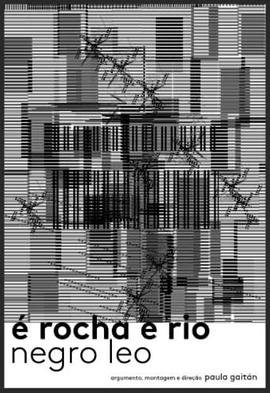
É Rocha e Rio, Negro Leo (2020)
Douban
宝拉·盖坦 actor: Negro Leo / Ava Rocha
Intimately shot in his home, and emerging somewhere between artist portrait and testimony, Riverrock is a conversation with the musician, poet, sociologist and thinker Negro Leo. He articulates his ideas about the development of music, Brazilian and international politics, the ascension of neo-Pentecostal religions and his obsession with social media, all while making parallels with his own life and work. This film focuses not only on his ideas but on their evolution. Gaitán’s formal approach mirrors the shape of an improvised musical performance. Consisting of varying, shifting tones, and inflected with different rhythms, the film moves fluidly, allowing us to follow the multiple connections Leo makes between very different topics. Riverrock is the latest in an extensive series of film portraits by Gaitán, which includes musician and performer Arto Lindsay, composer Eliane Radigue and filmmaker Agnès Varda.

Movie

Days in Sintra (2008)
Diário de Sintra Douban
other title: 辛特拉的时光 / Diário de Sintra
罗恰的妻子葆拉首次执导拍摄的一部先锋纪录片,讲述自己与丈夫曾经度过的美好时光,颇有诗意的8毫米家庭记录影像,都是葆拉当年亲手拍摄下来的。 Filmmaker Paula Gaitán was married to Glauber Rocha (1938-1981), a key figure in the Brazilian Cinema Novo movement, which embodied politically engaged filmmaking that resisted colonialism in Latin America. Rocha's signature films include Barravento (1961), Black God, White Devil (1964), Land in Anguish (1967), and Antonio das Mortes (1969), all remarkably influential films at the time and overdue for revival today. In Days in Sintra, Gaitán creates a deeply moving meditation on memory and time as she chronicles her return from Brazil to Sintra, Portugal, where she lived in exile with her husband and their children before his untimely death. In the form of an experimental narrative, she deftly interweaves Super 8 home movie footage and photographs taken of Rocha in 1981 with beautifully composed, evocative contemporary images of the Portuguese landscape. In this manner, Gaitán both weaves together place, uniting past and present, and highlights remembrance. Long, silent passages are gently overlaid with Gaitán's own voice meditating on memory, loss, and death, as well as with recordings of Rocha's voice, articulating his philosophies of life, politics, and filmmaking. Days in Sintra represents Gaitán's own voyage of discovery, which allows her to bring alive the physical, sensual, and even spiritual essence of her long-deceased companion. On a deeper level, the filmmaker also captures the mournful, atmospheric ether of the Portuguese nation. The proud country that launched the voyages of discovery in the 15th century has found its global position diminished with time, just as Rocha's fiercely independent, awardwinning filmmaking had faded to a faint memory-until it was justly revived by his companion in this exquisite diary film.

Movie

Light in the Tropics (2020)
Luz nos trópicos IMDb TMDB Douban
宝拉·盖坦 actor: 卡里托·科塔 / Clara Choveaux …
other title: 热带之光 / Luz nos trópicos …
In Luz nos trópicos, Paula Gaitán weaves together a dense fabric of storylines, timelines and settings, intermingled with indigenous cosmologies, travelogues and anthropological literature. Initially, the director follows a young man of indigenous origin. At the beginning, he is standing on the banks of the East River in winter. Soon he is travelling upriver through the Brazilian jungle to a village, where he is greeted like an old friend. In a second storyline, the director accompanies a group of European settlers. They are also travelling upriver, collecting, possessing and searching for a position from which they can survey the forest and the river. Some 150 years separate the two layers; sometimes, a dive into the water dissolves this separation in the space of a second. Later on, the film wanders northwards again and the layers collapse into one another. Between Walden Pond and the Amazon lies just a cut. Luz nos trópicos is an homage to the abundant greenery of the Amazon region, the woods of New England in winter and the indigenous populations of both Americas. A film that is as free-flowing as a winding river.