Virginia Eubanks — 作者 (2)
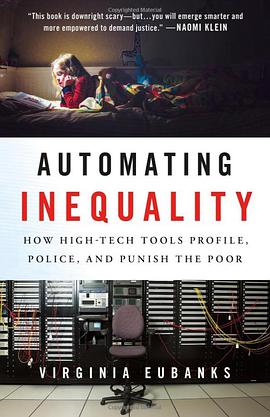
Automating Inequality [图书] 豆瓣
作者: Virginia Eubanks publishing house: St. Martin's Press 2018 - 1
A powerful investigative look at data-based discrimination―and how technology affects civil and human rights and economic equity
The State of Indiana denies one million applications for healthcare, foodstamps and cash benefits in three years―because a new computer system interprets any mistake as “failure to cooperate.” In Los Angeles, an algorithm calculates the comparative vulnerability of tens of thousands of homeless people in order to prioritize them for an inadequate pool of housing resources. In Pittsburgh, a child welfare agency uses a statistical model to try to predict which children might be future victims of abuse or neglect.
Since the dawn of the digital age, decision-making in finance, employment, politics, health and human services has undergone revolutionary change. Today, automated systems―rather than humans―control which neighborhoods get policed, which families attain needed resources, and who is investigated for fraud. While we all live under this new regime of data, the most invasive and punitive systems are aimed at the poor.
In Automating Inequality, Virginia Eubanks systematically investigates the impacts of data mining, policy algorithms, and predictive risk models on poor and working-class people in America. The book is full of heart-wrenching and eye-opening stories, from a woman in Indiana whose benefits are literally cut off as she lays dying to a family in Pennsylvania in daily fear of losing their daughter because they fit a certain statistical profile.
The U.S. has always used its most cutting-edge science and technology to contain, investigate, discipline and punish the destitute. Like the county poorhouse and scientific charity before them, digital tracking and automated decision-making hide poverty from the middle-class public and give the nation the ethical distance it needs to make inhumane choices: which families get food and which starve, who has housing and who remains homeless, and which families are broken up by the state. In the process, they weaken democracy and betray our most cherished national values.
This deeply researched and passionate book could not be more timely.
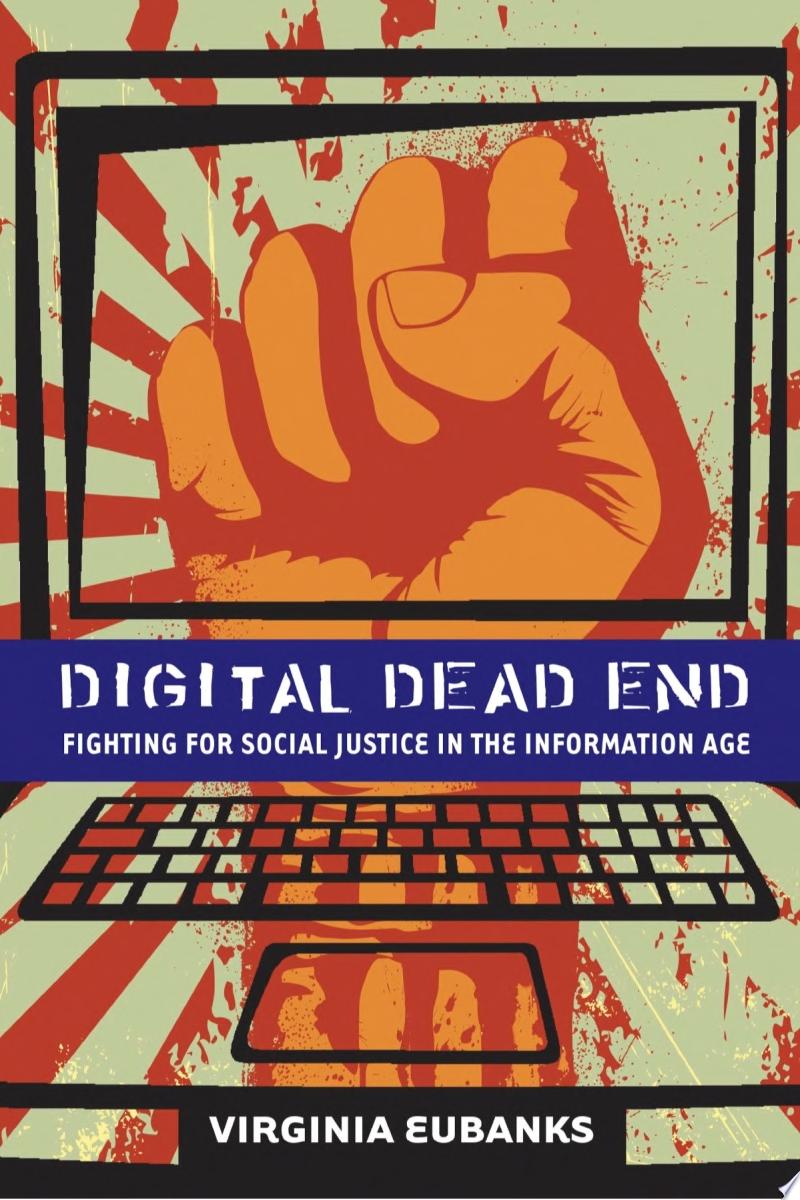
Digital Dead End [图书] 谷歌图书
作者: Virginia Eubanks publishing house: MIT Press 2012 - 09
The realities of the high-tech global economy for women and families in the United States.The idea that technology will pave the road to prosperity has been promoted through both boom and bust. Today we are told that universal broadband access, high-tech jobs, and cutting-edge science will pull us out of our current economic downturn and move us toward social and economic equality. In Digital Dead End, Virginia Eubanks argues that to believe this is to engage in a kind of magical thinking: a technological utopia will come about simply because we want it to. This vision of the miraculous power of high-tech development is driven by flawed assumptions about race, class, and gender. The realities of the information age are more complicated, particularly for poor and working-class women and families. For them, information technology can be both a tool of liberation and a means of oppression.But despite the inequities of the high-tech global economy, optimism and innovation flourished when Eubanks worked with a community of resourceful women living at her local YWCA. Eubanks describes a new approach to creating a broadly inclusive and empowering “technology for people,” popular technology, which entails shifting the focus from teaching technical skill to nurturing critical technological citizenship, building resources for learning, and fostering social movement.Important Notice: The digital edition of this book is missing some of the images found in the physical edition.