other title:
羽翼
/
The Wings
…
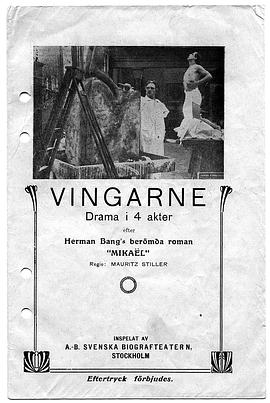
Based on Herman Bang's novel Mikael, Vingarne is a silent melodrama about an artist's love for his newfound male model. Radically, the film opens with director Stiller and his cinematographer coming across a sensual staue of Icarus in the gardens in Stockholm. Then the movie proper begins, with artist Claude Zoret struck by love at first sight for the young Mikael in a woodland; he adopts Mikael, who serves as inspiration for his latest sculpture. Inevitably Mikael gets his wings burnt when he starts courting Zoret's patron, the unscrupulous Lady Lucia; pained by Mikael's desertion, Zoret dies during a fierce storm before his staue of the naked boy.
Watching Vingarne 75 years after its production is an extraordinary experience. It's easy to get caught up in the fragmentary feel of the narrative, to work too hard at following the story instead of giving up to its original allusiveness. So, some tips to tap into that intended sense: First, bear in mind that both novelist Bang and director Stiller were known to be gay.
Second, it's interesting to compare Vingarne with Carl Dreyer's film of the same novel (also called Mikael). Many of the greatly sensual scenes from Dreyer's film are foreshadowed in the first version.
Finally, the most startling--and infuriatingly brief--thing about Vingarne is the framing device and the idea of a film-within-a-film. Confronted by the barest remains of his extraordinary conceit, we can only imagine what the original felt like.
##from: