Humanitarian Internationalism Under Empire [Book] Douban
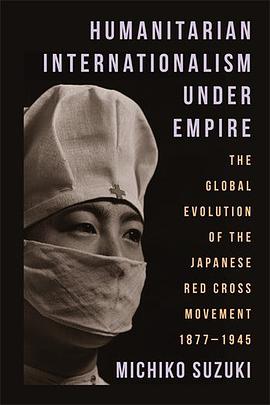
This book examines the history of the Japanese Red Cross Society (JRCS) and through it offers a new account of the humanitarian movement in modern Japan. Michiko Suzuki argues that contrary to its typical portrayal, the JRCS was not wholly subordinate to the government and the Imperial Family, nor was it derivative of Western values and institutional models. Instead, the JRCS operated within a transnational discourse, both contributing to and borrowing from peacetime and wartime international humanitarianism.
Grounded in extensive research in the JRCS archives and archives outside Japan, this book explores the melding of Western and Japanese humanitarian traditions and organizational forms. Suzuki examines the role of grassroots efforts in the steady growth of the JRCS, showing how the society became Japan’s largest international organization by the First World War, as well as its pioneering role in Red Cross disaster relief. She traces the inclusion of non-Western national societies in the International Red Cross and Red Crescent Movement and the evolution of the JRCS from a national into a transnational organization with branches in Japan’s overseas empire as well as in the Asia Pacific and the Americas. A comprehensive chronicle of the JRCS, Humanitarian Internationalism Under Empire provides a fresh vantage point on major historical questions relating to Japanese modernization and internationalism before the Second World War.
Grounded in extensive research in the JRCS archives and archives outside Japan, this book explores the melding of Western and Japanese humanitarian traditions and organizational forms. Suzuki examines the role of grassroots efforts in the steady growth of the JRCS, showing how the society became Japan’s largest international organization by the First World War, as well as its pioneering role in Red Cross disaster relief. She traces the inclusion of non-Western national societies in the International Red Cross and Red Crescent Movement and the evolution of the JRCS from a national into a transnational organization with branches in Japan’s overseas empire as well as in the Asia Pacific and the Americas. A comprehensive chronicle of the JRCS, Humanitarian Internationalism Under Empire provides a fresh vantage point on major historical questions relating to Japanese modernization and internationalism before the Second World War.