Michael Blackwood — Director (12)

Movie

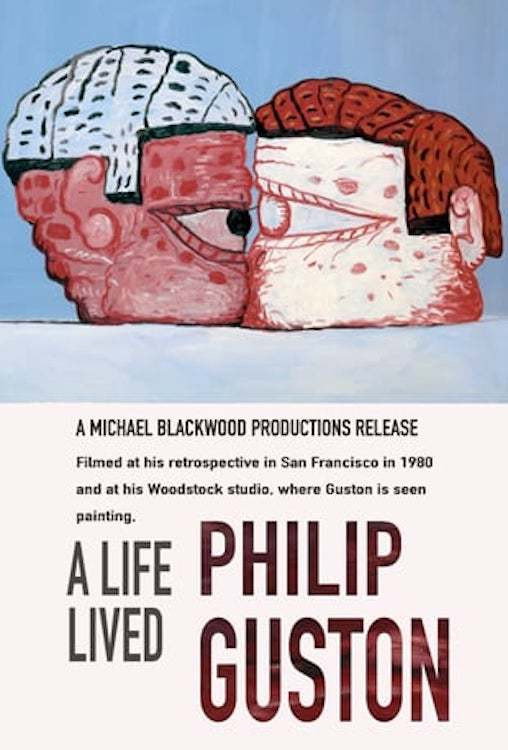
Philip Guston: A Life Lived (1982)
Philip Guston: A Life Lived IMDb TMDB
Late in life, the artist looks back over a career that originated in social realism during the '30s, moved to the center of Abstract Expressionism, and culminated in a return to figuration. Filmed at his retrospective in San Francisco in 1980 and at his Woodstock studio, where Guston is seen painting, the artist speaks candidly about his philosophy of painting and the psychological motivation for his work.
Movie

Robert Rauschenberg: Retrospective (1979)
Robert Rauschenberg: Retrospective IMDb TMDB
This film includes important examples of the Robert Rauschenberg's diverse and extraordinary accomplishments, tracing his development from his student years and his earliest experiments to a retrospective of his work at the Museum of Modern Art in New York. It features Rauschenberg, John Cage and Merce Cunningham, and was released in 1979.

Movie

安藤忠雄 (1988)
Tadao Ando Douban
other title: Tadao Ando
Japanese architect, Tadao Ando, roots himself in cultural visions of space, landscape, and juxtaposition. Inspired deeply by his home and heritage, Ando proposes an international architecture that he believes can only be conceived by someone Japanese. Believing in the importance of carpentry and craftsmanship, Ando pays tribute to his culture and the way in which architecture is approached through the body. Showcasing his individuality through urban complexes, residences and chapels, Ando presents the work of his formative years, before embarking on projects in Europe and the United States.

Movie

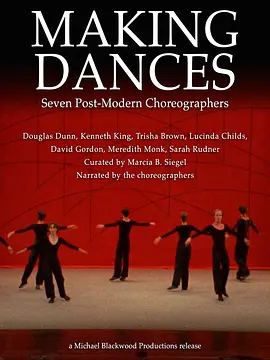
Making Dances: Seven Post-Modern Choreographers (1980)
Douban
Made in 1980, this film explores the contemporary dance scene through the work of seven New York-based choreographers. They discuss the nature of dance and the evolution of their own work. Filmed at rehearsals, performances, and during interviews, the film is a unique primary source. The artistic roots of these seven artists can be found in Martha Graham's concern with modern life as a subject for dance and in Merce Cunningham's emphasis on the nature of movement. In the 1960s, the interaction of art forms generated choreographic innovations. Especially influential was John Cage, whose radical ideas served as a point of departure for much of the new choreography. Each of the choreographers in Making Dances draws inspiration from the Graham/Cunningham tradition, yet each makes a highly distinctive statement. Structure, movement in non-fictive time and space, and the nature of movement itself are recurring themes. Making Dances reflects the diversity of contemporary dance and documents the work and ideas of seven outstanding artists.

Movie

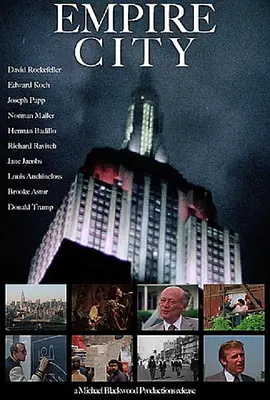
Empire City (1985)
Douban
Michael Blackwood actor: Brooke Astor / 路易斯·奥琴克劳斯 …
Guided by seasoned New Yorkers, political figures, and cultural connoisseurs, "Empire City" examines Manhattan and its surrounding boroughs in order to paint a portrait of the ever-evolving metropolis. Appearing to be both adaptable and stubbornly stagnant, New York is a city of juxtapositions. As our narrator notes, "The city is too big, too diverse, and too complex for anyone to comprehend. New York is many cities interlaced with one another, each in constant independent motion." In "Empire City" we see proof of this dynamic through both footage and discussion of extreme wealth, economic success and increasingly expensive real estate versus the hardships faced by the city's minorities such as people of color, immigrants, and the lower class. Leaders and residents such as David Rockefeller, Edward Koch, Norman Mailer, Jane Jacobs, and Herman Badillo offer their insight into the best and worst of New York while tenderly noting the pride and loyalty it's inhabitants hold onto.

Movie

The Cremaster Cycle: A Conversation with Matthew Barney (2004)
Douban
Michael Blackwood actor: 马修·巴尼
For his five Cremaster films Matthew Barney's created a multitude of sculptural forms and structures. Recently both the sculptures and the films traveled to museums in Cologne, Paris and New York's Guggenheim. In THE CREMASTER CYCLE: A Conversation with Matthew Barney, the artist guides the camera through this remarkable creation at the Guggenheim Museum while being questioned by Michael Kimmelman, chief art critic of the New York Times, who has called Barney "the most important artist of his generation". The ramps of Frank Lloyd Wright's museum are filled with Barney's sculptures complemented by plasma screens showing the Cremaster films. The sculptures - constructed from the artist's signature materials, including plastic, metal, and Vaseline - are three-dimensional incarnations of the characters and settings. They exist independently from the films, but embody the same content, now expressed in space rather than time. This documentary provides insight into Matthew Barney's work and his mythic Cremaster Cycle.

Movie

Butoh: Body on the Edge of Crisis (1991)
Butoh: Body on the Edge of Crisis IMDb TMDB Douban
Michael Blackwood actor: 天児牛大 / 芦川羊子 …
other title: 黑暗舞踏:危机边缘上的肉体
Although Butoh is often viewed as Japan's equivalent of modern dance, in actuality it has little to do with the rational principles of modernism. Butoh is a theater of improvisation which places the personal experiences of the dancer on center-stage. The dancer is used as a medium to his or her inner life, but not for the portrayal of day to day existence. A Dionysian dance of nudity, eroticism, and sexuality, Butoh's scale of expression ranges from meditative tenderness to excessive grotesqueness. By reestablishing the ancient Japanese connection of dance, music, and masks, and by recalling the Buddhist death dances of rural Japan, Butoh incorporates much traditional theater. At the same time, it is a movement of resistance against the abandonment of traditional culture to a highly organized consumer-oriented society. An alliance of tradition and rebellion, Butoh is one of the most fascinating underground dance movements. "Butoh: Body on the Edge of Crisis" is a visually striking film portrait shot on location in Japan with the participation of the major Butoh choreographers and their companies.

Movie

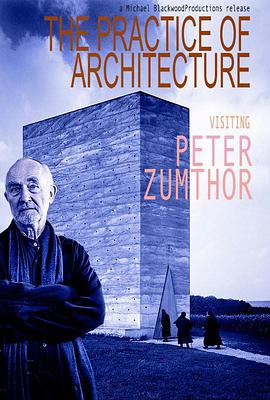
The Practice of Architecture: Visiting Peter Zumthor (2012)
Douban
The architect Peter Zumthor lives and works in the remote village of Haldenstein in the Swiss Kanton of Graubünden. Here, keeping the politics of architecture at a comfortable distance, Zumthor enjoys the status of "world-class" architect for his unique modernist buildings. They can be found in many parts of Europe, soon to be followed by a public building in Los Angeles, where he is in charge of a new master plan for LACMA. Visiting him in his studio, where he would be surrounded by drawings and marquettes turned out to be a good idea. Critic Kenneth Frampton questioned him during a tour of his current work and about his pioneering earlier works, such as the Spa in Vals, for which he received much early recognition, and the recent much acclaimed Kolumba, the museum of the archdiocese of Cologne, Germany. He showed us and discussed his models for his Zink-Mine-Museum in Almannajuuvet, Norway; Memorial to the Burning of Witches in the Finnmark, Vardo, Norway; The Chivelstone House, A ...

Movie

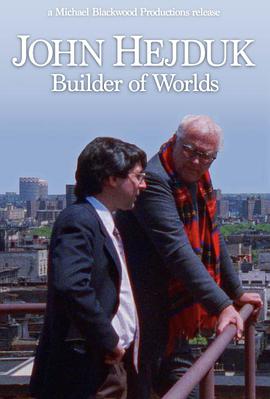
John Hejduk: Builder of Worlds (1992)
John Hejduk: Builder of Worlds Douban
Michael Blackwood actor: John Hejduk / David Shapiro
other title: 海杜克与萨丕罗对谈
Renowned American architect, John Hejduk, has built a riveting career around his unique and striking creations. A poet among architects and an innovator among educators, Hejduk sits down for a conversation with poet David Shapiro at The Cooper Union where the two review Hejduk's sketches and structures. While discussing the mystery and spirit of architecture, Shapiro and Hejduk confront the intricate poetry that stems from the building of worlds.—Michael Blackwood Productions