Movie
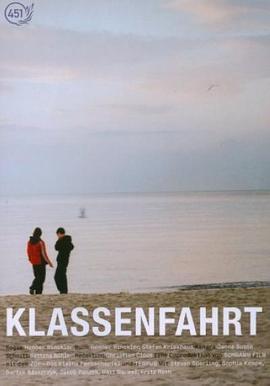
Klassenfahrt (2002)
Klassenfahrt WikiData IMDb TMDB Douban
汉纳·温克勒
actor:
Steven Sperling
/
Sophie Kempe
other title:
郊游
/
School Trip
…
World cinema has never been short of films about alienated teenagers, but it’s extremely rare to find one so consistently well-observed as School Trip, an enormously promising debut from director Winckler, who co-wrote the script with Stefan Kriekhaus. Their sympathetic understanding of the rhythms and details of adolescent life recalls Lukas Moodysson’s Fucking Amal – School Trip is very strong on the children’s sudden jealousies and friendships, the harsh insider/outsider dynamics of teenage cliques, their self-contained worlds designed to shut out blundering adults – the teacher “in charge” is a spectacularly ineffectual, peripheral, pretty much irrelevant figure.
But while Moodysson tricked up his movie with a distracting reliance on clumsy zooms and a wobbly hand-held camera, Winckler plays it mercifully straight. As the bald, informative title suggests, this isn’t a project that calls out for visual flash, sand Winckler’s strengths lie elsewhere – principally in his handling of his young cast. He shows a rare knack with actors, from the tiniest bit part to the three main leads, and he conjures a sensational performance out of Sperling.
His Ronny is a sustained feat of characterisation, mostly internalised, but also packed full of amusing, revealing bits of business – the ‘solo ping pong’ scene is worth the price of admission on its own. This is a young man who moves between being the class clown, an idiot-savant, an artistic-genius-in-embryo, and a would-be sociopath – sometimes all in the same scene. His young face obscured by a bum-fluff moustache and encroaching sideburns, it’s hard to tell his exact age, but he’s more mature than the rest of the gang - his biggest problem isn’t that he doesn’t think enough, it’s that he thinks far too much, although he actually says very little, and when he does speak it’s largely to voice his contempt for these ‘jerks.’ He’s so sardonic, in fact, that we can probably take the slogan emblazoned across the back of his cheap nylon jacket, ‘Free Spirits Party Place’ as an intentional bit of irony on his part.
It’s no accident that one of the museum trips see the bored-to-tears class being told about the habits of ‘an early stone age tribe.’ They endure the tedious lecture – only Ronny has the nerve to actually do something about it. He’s also the only one who has enough ambition and daring to break free of the resort’s dismal confines and explore the wider world, if only for a few hours, just as he’s careful to liberate a wasp that’s flown into one of the hotel rooms and keeps buzzing against the window, anxious for freedom.
What Ronny finds out there is sufficiently weird and funny (in an excellent hitch-hiking scene) to make breaking free seem like the only sensible option, even if the other kids see his tendency to ‘run away’ as a weakness. By the end, however, things aren’t so clear-cut – events take a tragic (though admirably unsentimental) turn, forcing Ronny into a searching self-examination and ending the film on a sober, satisfyingly ambiguous note, even as the credits roll to the upbeat racket of raucous Polish rock. Winckler could do worse than to return to this character, and this actor, in future years – Ronny could turn out to be the 21st century’s Antoine Doinel, and then some.