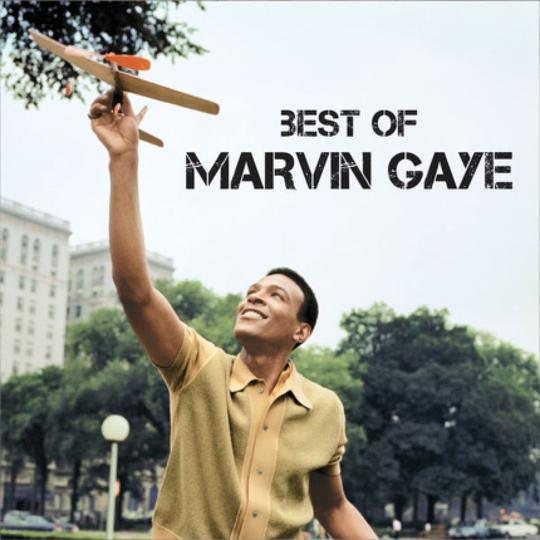
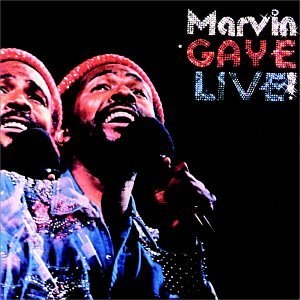
马文·盖伊 — 艺术家 (55)
I Want You [音乐] 豆瓣
9.4 (10 个评分) Marvin Gaye 类型: 放克/灵歌/R&B
发布日期 1998年4月7日 出版发行: Motown
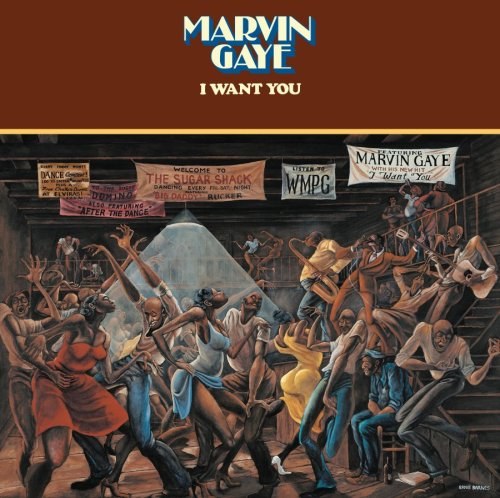
180 Gram Vinyl Record LP. I Want You is a 1976 album by Marvin Gaye. The album was his first recorded studio material released in three years and marked a change in direction for Gaye, leaving his trademark Motown soul for funky, light-disco soul. Much of Gaye's music encompassed spirituality, sexuality, and vulnerability. With a career spanning over more than a decade, it's no wonder that many of today's artists continue to honor and emulate Gaye. Although no longer a physical presence, his existence as an artist is one that is sure to be a vital part of the millennium and beyond.
Let's Get It On [音乐] 豆瓣
9.5 (35 个评分) Marvin Gaye 类型: 放克/灵歌/R&B
发布日期 1973年1月1日 出版发行: Motown
在一张伟大的What's Going On之后,Mavin Gaye似乎就像很多退伍的越战老兵一样颓废了下来。大师明确表态不再对政治发表见解。他要把精力放在男女性爱上。同样经典的Lets Get It On诞生了。
这张LP里8首格的标题都很sexy, 首推的还是标题作品。Marvin一上来就把他的欲望燃烧到了沸点。如此挑逗的单曲卖出了4百万张的销量。与之相辉映的是You Sure Love To Ball。 Mavin得演绎可谓如丝一样顺滑。他把男女的性唱成了爱。枕边语式的Slow Jam让人飘飘然。到了结尾,大师还不忘后戏,Just To Keep You Satisfied无疑是现在很多喜欢情色主题的歌手需要学习的。千万不要草草了事。
情色的主题显得不够伟大,但是Slow Jams的风格给日后10年的R&B的发展以很好的蓝本。另外,此张专辑也是Quiet Storm曲风的鼻祖。Smokey Robinson1975年的Quiet Storm正是受了Let's Get It On唱腔的启发。
So, Remember it and Let's Get It On。。。。。。。。。。
Sexual Healing [音乐] 豆瓣
发布日期 2000年12月5日 出版发行: Import [Generic]
Reissue of the 1996 compilation 'Midnight Lover' with a new title & a bonus track, 'Third World Girl'. The remaining original 13 tracks consist of live versions from 1983 of many of the late great soul vocalist's best, including 'I Heard It Through The Grapevine', 'Let's Get It On', 'What's Going On', 'Inner City Blues', 'Ain't Nothing Like The Real Thing' and 'Sexual Healing'. Recorded in concert in Indianapolis, IN.
Here, My Dear [音乐] 豆瓣
8.3 (7 个评分) Marvin Gaye 类型: 放克/灵歌/R&B
发布日期 1978年12月15日 出版发行: Motown
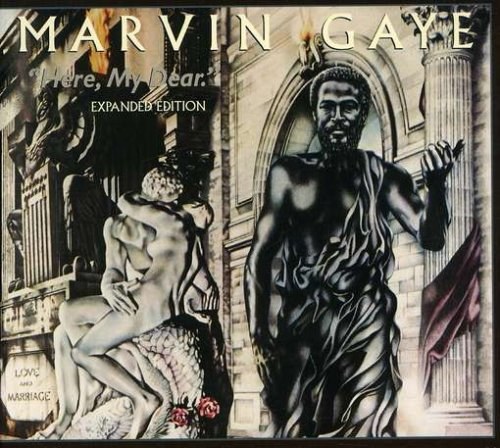
Here, My Dear is a studio double album by soul musician Marvin Gaye, released December 15, 1978 on Tamla Records. Recording sessions for the album took place at Marvin's Room in Hollywood, California from 1976 to 1977. A deeply personal and controversial album, Here, My Dear is notable for chronicling Gaye's ill-fated first marriage to Anna Gordy. Here, My Dear was initially a commercial failure, while receiving some critical favor from music writers. However, critical recognition of the album has improved significantly following further examinations by critics and compact disc-reissues. In 2003, the album was ranked number 462 on Rolling Stone magazine's list of the 500 greatest albums of all time.
By 1976, the relationship between Marvin Gaye and his first wife, Anna Gordy, had become estranged and was far from being repaired. Marvin, who was now carrying on an open relationship with singer Janis Hunter, and Anna often accused each other of infidelity over the years before his relationship with Hunter. Shortly after Marvin and Janis welcomed the second of their two children, Frankie, in November 1975, Anna filed for divorce. At this time, Marvin was running low on money because of an extravagant spending habit to support his lifestyle which included, among other things, a fleet of cars, several homes in and outside the country, and an increasing cocaine habit. Marvin's spending habits had made it impossible for the singer to pay Anna money for alimony and child support for the couple's only son, Marvin III. Marvin's attorney Curtis Shaw came up with a solution to Marvin to give half the royalties he would earn from his next project to Anna. After agreeing to the deal, the singer went into his recording studio in an effort to give Motown a "lazy, bad" album starting sessions in the spring of 1976. However, as Marvin set on making the "lazy" album, the singer's deep emotions and bittersweet feelings for his soon-to-be former wife took over the music.
Songs included in the album didn't just deal with the singer's troubling marriage ("I Met a Little Girl", "Anna's Song", "You Can Leave, But It's Going To Cost You") but with other deep issues including anger management ("Anger"), Jesus ("Everybody Needs Love", "Time to Get It Together"), solace ("Sparrow"), space (the loosely funky "A Funky Space Reincarnation") and new love ("Falling In Love", the one song dedicated to Marvin's new wife, Janis). An Allmusic reviewer later wrote of the music:
...the sound of divorce on record — exposed in all of its tender-nerve glory for the world to consume... Gaye viciously cuts with every lyric deeper into an explanation of why the relationship died the way it did... Musically the album retains the high standards Gaye set in the early '70s, but you can hear the agonizing strain of recent events in his voice, to the point where even several vocal overdubs can't save his delivery.[1]
—Allmusic
The project was worked on for a year and was initially held back by Marvin, fearing that the project was too personal to be released. However, because of Motown's demands for Marvin to put out an album, as he had often delayed releases and it had been over two years since his last record, the sensually erotic I Want You, the singer decided to put out the album as promised in December 1978.
When Here, My Dear was released in the end of 1978, it was panned by consumers and critics alike, who called the album "bizarre" and "un-commercial". The album's lack of success angered Gaye to the point that he refused to promote it any further. Motown stopped promoting Here, My Dear in early 1979, by which point Gaye had gone into self-imposed exile. Ironically, around the same time, Marvin's relationship with second wife Janis had also fallen apart and the couple separated sometime in 1979. Upon hearing the album, a visibly upset Anna Gordy considered suing Marvin for invasion of privacy but, according to People magazine, later recanted that decision. In 1994, the album was re-released due to increased attention on Marvin's life to commemorate the tenth anniversary of the singer's untimely death, and reached number-one on Billboard's R&B catalog chart. The original album peaked at number four R&B and number twenty-six pop becoming Gaye's lowest-charting studio album of the 1970s. Initial response to the album was mixed, as most critics described it as weird. However, Gaye's lyrical honesty over the laid back disco grooves of Here, My Dear was praised by many. Robert Christgau of The Village Voice wrote of the album:
...this is a fascinating, playable album. Its confessional ranges from naked poetry ("Somebody tell me please/Why do I have to pay attorney fees?" is a modernist trope that ranks with any of Elvis Costello's) to rank jive, because Gaye's self-involvement is so open and unmediated, guileless even at its most insincere, it retains unusual documentary charm. And within the sweet, quiet, seductive, and slightly boring mood Gaye is at such pains to realize, his rhythmic undulations and whisper-to-a-scream timbral shifts can engross the mind, the body, and above all the ear. Definitely a weird one.[14]
—Robert Christgau
The album was re-evaluated in the years following its original release, and is today seen as a landmark in Gaye's career. It was voted one of the greatest albums in music history by Mojo Magazine (1995) and Rolling Stone magazine's critics poll (500 Greatest Albums of All-Time) (2003), among others. This reassessment was influenced by the album's subsequent re-release. On February 15, 2008, Hip-O Select reissued Here, My Dear as a two-disc Expanded Edition including a song cut from the original album, "Ain't It Funny How Things Turn Around", which was remixed by funk legend Bootsy Collins. Disc two featured remastered and alternate versions of the songs from the album remixed by contemporary soul producers such as Salaam Remi, Questlove, Prince Paul, DJ Smash and others.
Side one
"Here, My Dear" – 2:48
"I Met a Little Girl" – 5:03
"When Did You Stop Loving Me, When Did I Stop Loving You" – 6:17
"Anger" (Delta Ashby, Gaye) – 4:04
Side two
"Is That Enough" – 7:47
"Everybody Needs Love" (Ed Townsend, Gaye) – 5:48
"Time to Get It Together" – 3:55
Side three
"Sparrow" (Ed Townsend, Gaye) – 6:12
"Anna's Song" – 5:56
"When Did You Stop Loving Me, When Did I Stop Loving You (Instrumental)" – 6:03
Side four
"A Funky Space Reincarnation" – 8:18
"You Can Leave, But It's Going to Cost You" – 5:32
"Falling in Love Again" – 4:39
"When Did You Stop Loving Me, When Did I Stop Loving You (Reprise)" – 0:47
Sexual Healing (Kygo Remix) [音乐] 豆瓣
Kygo / Marvin Gaye 类型: 电子
发布日期 2015年4月28日 出版发行: Sony
Marvin Gaye was an American singer, songwriter, and record producer. He helped to shape the sound of Motown in the 1960s, first as an in-house session player and later as a solo artist with a string of hits, earning him the nicknames "Prince of Motown" and "Prince of Soul".
R&B巨星马文·盖伊金曲 [音乐] 豆瓣
发布日期 2005年1月11日 出版发行: Motown
Marvin Gaye出生在一个宗教气氛浓厚的家庭,他是最有天赋、最富幻想、最长久不衰的明星。作为Motown公司销量最好的艺人,他用热情的嗓音塑造了“Motown之声”。他能够同时兼顾艺术要求和商业成功。

他的代表作What''s Going On融合了自己深藏的信念,探究了贫穷、社会歧视、毒品泛滥、政治腐败等问题;歌曲以他从越南战场归来的兄弟Frankie的视点为主线。Marvin Gaye是那种能谈论自己关心的事物并为千万人代言的艺术家。
The Very Best of Marvin Gaye [音乐] 豆瓣
Marvin Gaye 类型: 放克/灵歌/R&B
发布日期 2001年7月17日 出版发行: Universal UK
马文·盖伊(Marvin Gaye,1939年4月2日—1984年4月1日),原名Marvin Pentz Gay, Jr.,美国摩城唱片著名歌手、曲作者,有“摩城王子”之称,对许多灵歌歌手都有巨大影响,可说是黑人流行音乐史上一个最受人敬重及喜爱的超级巨星。
马文·盖伊出生在一个宗教气氛浓厚的家庭,他是最有天赋、最富幻想、最长久不衰的明星。作为Motown公司销量最好的艺人,他用热情的嗓音塑造了“Motown之声”。他能够同时兼顾艺术要求和商业成功。
1961年与当时黑人音乐大厂Motown(摩城)签约,并且在Smokey Robinson的乐团中担任鼓手,随后也开始个人演唱生涯。马文·盖伊在Motown被塑造成情歌王子,唱了很多超级畅销的歌曲。这位在舞台上极为羞涩的歌手,成为了Motown史上最杰出的歌手之一,被喻为“摩城王子”。
1962年他以一支叙事曲“Stubborn Kind Of Fellow”(顽固的家伙)崭露头角,之后一直活跃在歌坛前沿,成为了当代黑人音乐中极有影响的人物。
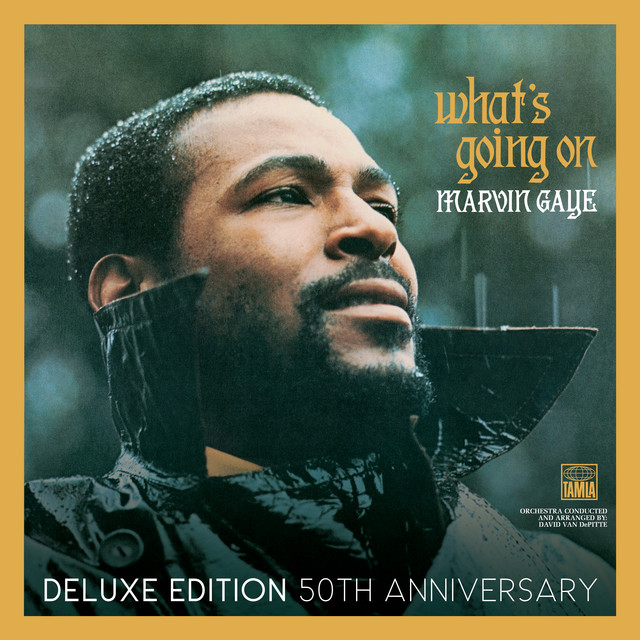
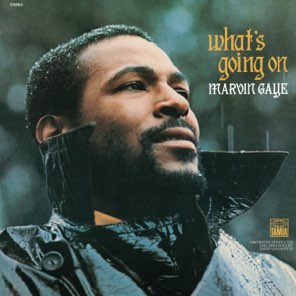
他在1971年发表了代表作——专辑《What's Going On》,融合了自己深藏的信念,探究了贫穷、社会歧视、毒品泛滥、政治腐败等问题;歌曲以他从越南战场归来的兄弟Frankie的视点为主线。盖伊是那种能谈论自己关心的事物并为千万人代言的艺术家。
1982年马文·盖伊离开Motown加盟哥伦比亚公司,推出了他最有影响的单曲“Sexual Healing”(性的治疗)。
1984年4月1日,马文·盖伊因与其父发生争执而被父亲枪杀在自己家中,这一天距离他的45岁生日仅有一天。
Together [音乐] 豆瓣
Marvin Gaye / Mary Wells 类型: 放克/灵歌/R&B
发布日期 1964年1月1日 出版发行: Motown
Together was the first and only album released by the duo team of American Motown artists Marvin Gaye & Mary Wells. It was released on Motown's Tamla label on April 15th, 1964. The album brought together the rising star Gaye with Wells, an established star with a number-one pop hit to her name (1964's "My Guy"), in hopes that Gaye would benefit from the exposure.
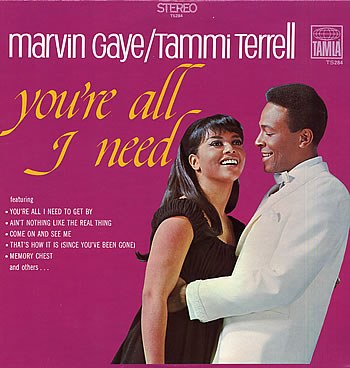
This album became the first charted album credited to Gaye, peaking at #42 on the Billboard Pop Albums Chart and yielding two Top 20 singles, "Once Upon a Time" and "What's the Matter With You Baby". Shortly afterwards, Wells, who was frustrated with the direction the label wanted her to go, left Motown. The label had to find another duet partner for Gaye, enlisting Kim Weston for one album, (Take Two), but later yielding a longer-lasting paring of Gaye with Tammi Terrell.