Emma Roldán — Actor (58)

Movie

Prisoner 13 (1933)
El prisionero 13 WikiData IMDb TMDB
other title: El prisionero 13 / El prisionero trece …
Colonel Carrasco's wife Marta leaves him taking his young son. The child, Juan, grows into an admirable and well-mannered young man. Having been promoted to a higher rank of power amidst the Mexican Revolution, the indulgent and corrupt Colonel accepts a bribe to free a revolutionary, Felipe Martinez, from his prison. Martinez has been sentenced to execution at the hands of a firing squad. Carrasco asks to have the revolutionary replaced by absolutely anyone. In a twist of fate, that anyone turns out to be his own long lost son Juan. Upon receiving this news, Marta races to the prison and explains the predicament to Carrasco. He subsequently desperately attempts to prevent the gunning down of his son by his very own government officials.

Movie

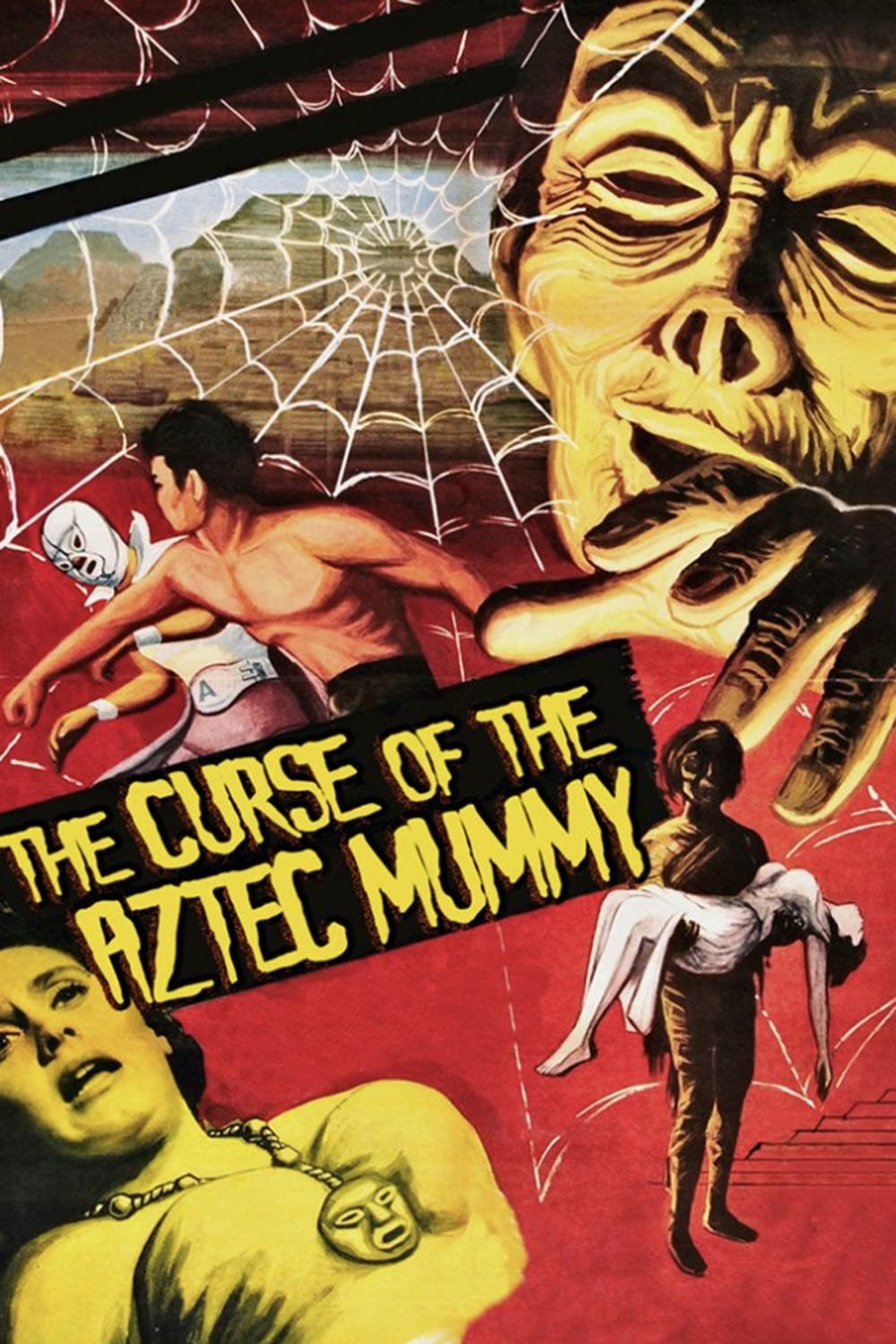
The Curse of the Aztec Mummy (1957)
La maldición de la momia azteca WikiData IMDb TMDB
other title: Der Fluch der aztekischen Mumie / La Malédiction de la momie aztèque …
The evil Dr. Krupp, once again trying to get possession of the Aztec princess Xochitl's jewels, hypnotizes her current reincarnation, Flor, to get her to reveal the jewels' location - Xochitl's tomb. Confusion reigns as Krupp and his thugs are opposed by Flor's lover, Dr. Almada, his assistant, and wrestling superhero, El Angel. Krupp finally meets his match, however, when he comes up against Popoca, the warrior mummy who guards Xochitl's tomb.

Movie

Two Monks (1934)
Dos Monjes WikiData IMDb TMDB Douban
other title: 两个僧侣 / Dos Monjes …
Masterpiece precedes 'Rashomon'. One of the greatest films of all time is Kurosawa's 'Rashomon', which features an unusual narrative structure: the same events are shown in flashback four times, each time from the viewpoint of a different character. The subtle differences in each flashback compel the viewers to decide for themselves the truth of what actually happened. 'Rashomon' (1950) proved to be so innovative that several later films have used the same idea. I can think of at least three different sitcoms, each of which has done an episode ripping off the 'Rashomon' premise. The 1934 Mexican film 'Two Monks' uses precisely this same narrative gimmick, 16 years before it was used in 'Rashomon'. Unfortunately, because 'Two Monks' uses only two conflicting flashbacks (rather than four, as in 'Rashomon'), the audience are put in an "either/or" situation rather than a pick'n'mix. Still, it's intriguing to see that one of the most famous narrative innovations in the entire history of film was used in an obscure Mexican movie more than a decade before it was employed in the film that brought it to greatness and prominence. Juan and Javier are two young men, rivals for the charms of pretty Anita. She dies, in circumstances which are intentionally kept obscure, and the rivals go their separate ways. Javier becomes a monk, and puts his painful memories behind him ... until, one day in the priory, he encounters a monk who turns out to be Juan. Straight away, Javier is so angered that he attacks Juan, giving him a near-fatal blow. The kindly old prior confesses each of the two men separately. Each confession is shown in flashback, with first one man and then the other telling the story of the tragic triangle from his own self-serving viewpoint. Now we learn -- from two conflicting viewpoints -- what happened to Anita. The art direction throughout this film is astonishing, and there is the clever touch of having each of the rivals dressed in white in his own flashback, but garbed in black in the other man's flashback: a splendid way of helping the audience to remember that this narrative is subjective. 'Two Monks' deserves to be much, much better known, and I eagerly rate this film 10 out of 10.

Movie

Naufragio (1978)
Naufragio WikiData IMDb TMDB Douban
other title: 海难 / Jutro …
And I was so surprised at how well Joseph Conrad works in a MexicCity setting. I noticed that there were no comments on this movie so far, and, since I liked it a lot when I saw it around 15 years ago (it's 2006 now)I want to draw people's attention to it. I can't go into much detail about it after that long a time. It's an understated but fascinating story of the relationship between the two women (the mother of the guy who ran off to sea years earlier and has never come back) and her co-worker in a large office. The younger woman becomes interested, even romantically, in him just from hearing about him, and you, the audience, do, too. Then when he suddenly appears one day, both she and you are in for having your romantic illusions shattered. I was very struck by the last visuals, involving scenes from the ocean, apparently invading a Mexico City apartment. I found on the web that the English title was Shipwreck (though I don't recall that title), and that it was based on Conrad's short story: Tomorrow, which I must try to find and read. I hope my comments will inspire others to find this affecting "little" movie. Note to IMDb: Could "Shipwrecked" be added as an alternative title, or cross reference?

Movie

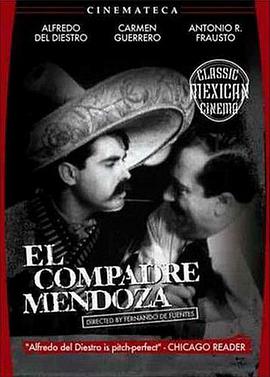
El compadre Mendoza (1934)
El compadre Mendoza WikiData IMDb TMDB Douban
胡安·布斯蒂略·奥罗 / 费尔南多·德·福恩特斯 actor: Alfredo del Diestro / Carmen Guerrero …
other title: 门多萨老兄 / Godfather Mendoza
During Mexican Revolution, Rosalio Mendoza (Del Diestro) survives by making and winning favors from both factions, the governmental forces and Zapata's Army. His hacienda welcomes everybody, and Mendoza is considered a good friend of his guests. Eventually, the situation becomes unsustainable and he has to take sides. Betrayal and deception overcome and Mendoza's dark side surfaces.

Movie

罗密欧与朱丽叶 (1943)
Romeo y Julieta Douban
米格尔·M·德尔加多 actor: 坎丁弗拉斯 / María Elena Marqués …
other title: Romeo y Julieta
There have been many versions of Shakespeare's masterpiece, but none like the one starring Cantinflas. This delightful and humorous version also carries a powerful message to today's parents, showing them how to approach the problems of their children with understanding, firmness, and tolerance.