Teresa Wright — 作者 (5)
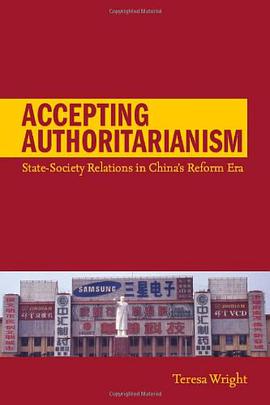
Accepting Authoritarianism [图书] 豆瓣
作者: Teresa Wright 出版社: Stanford University Press 2010 - 3
Why hasn't the emergence of capitalism led China's citizenry to press for liberal democratic change? This book argues that China's combination of state-led development, late industrialization, and socialist legacies have affected popular perceptions of socioeconomic mobility, economic dependence on the state, and political options, giving citizens incentives to perpetuate the political status quo and disincentives to embrace liberal democratic change.
Wright addresses the ways in which China's political and economic development shares broader features of state-led late industrialization and post-socialist transformation with countries as diverse as Mexico, India, Tunisia, Indonesia, South Korea, Brazil, Russia, and Vietnam.
With its detailed analysis of China's major socioeconomic groups (private entrepreneurs, state sector workers, private sector workers, professionals and students, and farmers), Accepting Authoritarianism is an up-to-date, comprehensive, and coherent text on the evolution of state-society relations in reform-era China.
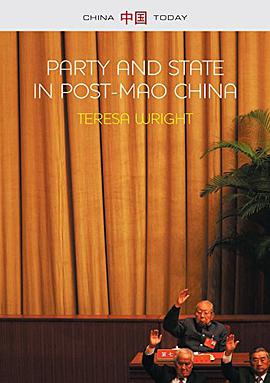
Party and State in Post-Mao China [图书] 豆瓣
作者: Teresa Wright 出版社: Polity 2015 - 4
In recent decades, China has become a quasi-capitalist economic powerhouse. Yet it continues to be ruled by the same Communist Party-dominated government that has been in power since 1949. But how has China’s political system achieved such longevity? And what does its stability tell us about the future of authoritarian versus liberal democratic governance?
In this detailed analysis of the deeply intertwined relationship between the ruling Communist Party and governing state, noted China expert Teresa Wright provides insightful answers to these important questions. Though many believe that the Chinese party-state has maintained its power despite its communist and authoritarian features, Wright argues that the key to its sustained success lies in its careful safeguarding of some key communist and authoritarian characteristics, while simultaneously becoming more open and responsive to public participation. She contends that China’s post-Mao party-state compares well to different forms of political rule, including liberal democratic government. It has fulfilled the necessary functions of a stable governing regime: satisfying key demographic groups and responding to public grievances; maintaining economic stability and growth; and delivering public services - without any real reduction in CCP power and influence.
Questioning current understandings of the nature, strengths, and weaknesses of democracy and authoritarianism, this thought-provoking book will be essential reading for all students and scholars of Chinese politics and international relations.
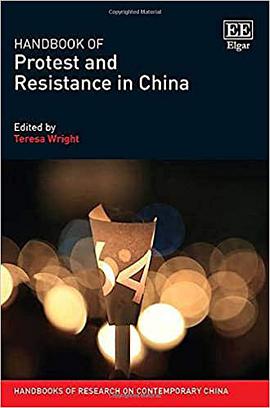
Handbook of Protest and Resistance in China [图书] 豆瓣
作者: Teresa Wright 出版社: Edward Elgar Publishing Limited 2019 - 6
Featuring contributions from top scholars and emerging stars in the field, the Handbook of Protest and Resistance in China captures the complexity of protest and dissent in contemporary China, while simultaneously exploring a number of unifying themes. Examining how, when, and why individuals and groups have engaged in contentious acts, and how the targets of their complaints have responded, the volume sheds light on the stability of China’s existing political system, and its likely future trajectory.
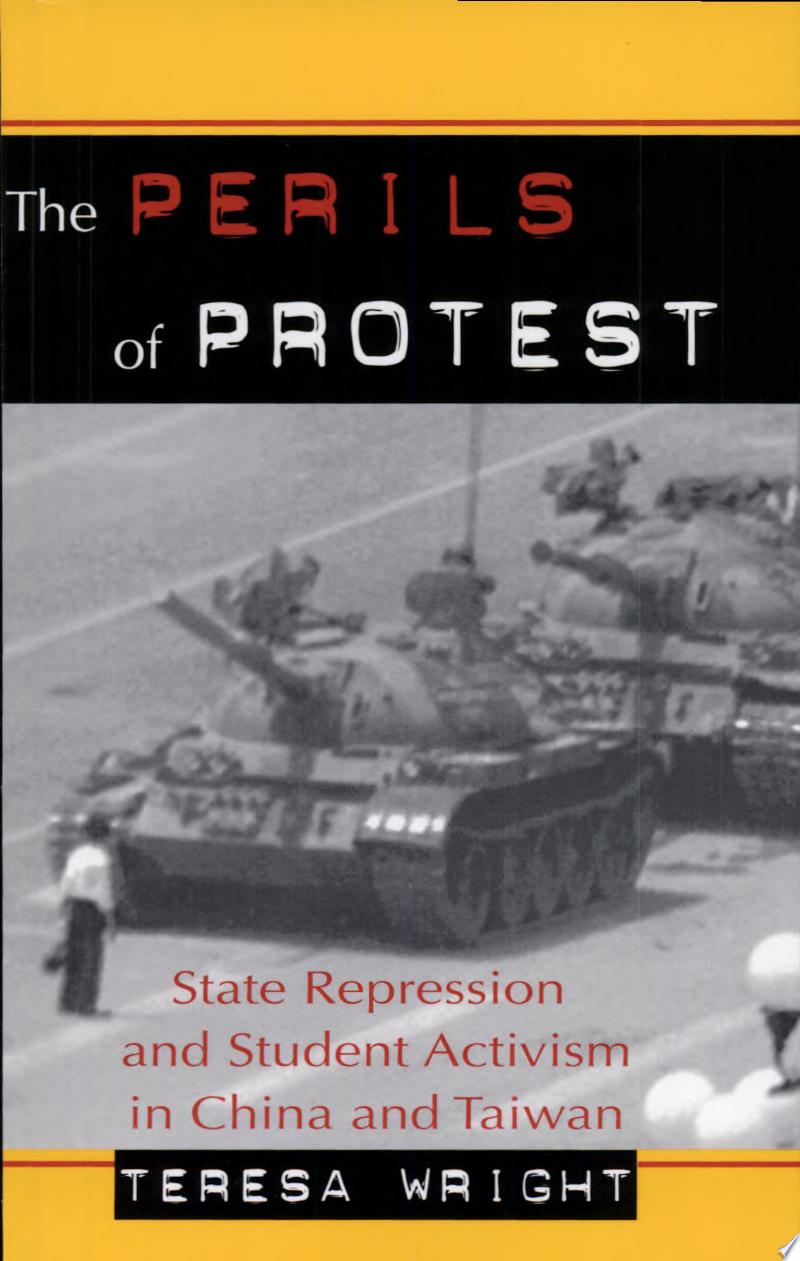
The Perils of Protest [图书] 谷歌图书
作者: Teresa Wright 出版社: University of Hawaii Press 2001 - 03
China's student movement of 1989 ushered in an era of harsh political repression, crushing the hopes of those who desired a more democratic future. Communist Party elites sealed the fate of the movement, but did ill-considered choices by student leaders contribute to its tragic outcome? To answer this question, Teresa Wright centers on a critical source of information that has been largely overlooked by the dozens of works that have appeared in the past decade on the "Democracy Movement": the students themselves. Drawing on interviews and little-known first-hand accounts, Wright offers the most complete and representative compilation of thoughts and opinions of the leaders of this student action. She compares this closely studied movement with one that has received less attention, Taiwan's Month of March Movement of 1990, introducing for the first time in English a narrative of Taiwan's largest student demonstration to date. Despite their different outcomes (the Taiwan action ended peacefully and resulted in the government addressing student demands), both movements similarly maintained a strict separation between student and non-student participants and were unstable and conflict-ridden. This comparison allows for a thorough assessment of the origins and impact of student behavior in 1989 and provides intriguing new insights into the growing literature on political protest in non-democratic regimes.