Pere Portabella — Director (8)

Movie

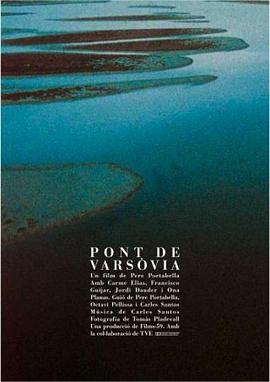
The Bridge of Warsaw (1990)
Pont de Varsòvia WikiData IMDb TMDB Douban
佩雷·波尔塔贝利亚 actor: 卡梅·埃利亚斯 / Francisco Guijar …
other title: 华沙的桥 / Pont de Varsòvia …
西班牙先锋导演Pere Portabella的代表作之一,这可不是波兰的华沙而是西班牙的"华沙"... Pere Portabella (b. 1929, Barcelona) is a veteran Spanish filmmaker whose narrative features—rich in interludes, plot diversions, atmosphere, and unexpected synchronies between sight and sound—limn the avant-garde and expand the expressive potential of cinema. Portabella, who began his cinematic career as a producer of fiction films implicitly critical of General Francisco Franco, had his passport revoked when Luis Buñuel's Viridiana (1961), which he helped to make, "embarrassed" Spain at the Cannes Film Festival in 1962. When democracy returned to Spain, Portabella served as a senator in the Catalan government. However, throughout his various careers, Portabella continued to make cinema, investigating meaning in the moving image and flexing the notion of genre—particularly for horror films, fantasy films, and thrillers. Warsaw Bridge. 1990. Spain. Directed by Pere Portabella. The idea for Warsaw Bridge, a less conceptual film than Accío Santos, started from a line in a newspaper: "The body of a scuba diver was found in a burnt forest." Portabella elaborates narrative fragments from this kernel in a procedure that recalls that of the French nouveau roman. Made as the Cold War was ending, the film critiques the Spanish intelligentsia's indifference to political and historical change. Warsaw Bridge is dated 1989, the year of the fall of the Berlin Wall. If the predominant look in Nocturno 29 was that of the upper classes in the sixties, in Warsaw Bridge we have shining images of the new intellectuals and the amnesic, progressive, European political classes. But beneath that sparkling surface of spectacular socio-cultural events and the frivolous life in a happy Europe, lies the tension of broken memories and personal and historical cataclysms. Filmed as meticulously as contemporary commercial cinema, Warsaw Bridge shatters the plot into a thousand fragments in a European landscape broken by the return of History. It is therefore not strange that two years later Godard should be the author of a sibling film, Germany Year 90 Nine Zero, explicitly the heir to Rossellini’s Germany Year Zero in 1947 post-war Europe. Regardless this film is incredible visually and emotionally. Definitely not for the fan of Hollywood films, or even independent films, or actually any film with any type of structured narrative. But if you let the film take you and suspend and expectation the reward is very worthwhile.
Movie

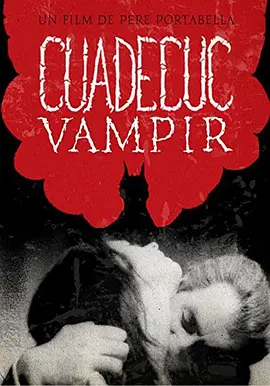
Vampir (1972)
Cuadecuc, Vampir WikiData IMDb TMDB Douban
other title: 吸血鬼 / Cuadecuc, Vampir …
Vampir-Cuadecuc is possibly a key film in understanding the transition in the Spanish film world from the period of the “new cinemas” (permitted by the Franco government) towards the illegal, clandestine or openly antagonistic practices against the Franco regime. It consists of shooting the filming of a commercial film Count Dracula by Jesús Franco. Portabella practices two types of violence on the standard narrative: he totally eliminates color and substitutes the soundtrack with a landscape of image-sound collisions by Carles Santos. Filmed provocatively in 16mm. and with sound negative, the tensions between black and white favor the strange “fantasmatic materialism” of this revealing analysis of the construction mechanism for the magic in dominant narrative cinema, which at the same time constitutes a radical intervention in the Spanish cinematographic institution.

Movie

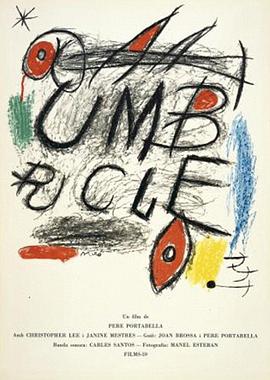
Umbracle (1972)
Umbracle WikiData IMDb TMDB Douban
other title: 长廊 / 長廊
In Umbracle, an aleatory horror film that paints a critical image of Francoist Spain, Portabella continues his exploration of the language of experimental cinema and develops his aesthetic of combining documentary with reenactment. He worked with Christopher Lee to produce an "ideal and predetermined cliché[d]" image of an actor: "Lee offered to perform my ideas with pleasure. I even managed to get him to do the hardest thing an actor can do: nothing." Low-budget horror-film star Christopher Lee makes a second appearance as the iconic centerpiece of a Portabella film (CUADECUC--VAMPIR was his first), this time as an imposing but ghostly figure wandering the streets of Barcelona. Through film clips that evoke Chaplin and other silent-era comedians, Dadaist poetry, and mysterious melodrama, Portabella makes a bid for unfettered artistic freedom calculated to scramble the brains of Franco-regime censors. Pere Portabella (b. 1929, Barcelona) is a veteran Spanish filmmaker whose narrative features—rich in interludes, plot diversions, atmosphere, and unexpected synchronies between sight and sound—limn the avant-garde and expand the expressive potential of cinema. Portabella, who began his cinematic career as a producer of fiction films implicitly critical of General Francisco Franco, had his passport revoked when Luis Bunuel's Viridiana (1961), which he helped to make, "embarrassed" Spain at the Cannes Film Festival in 1962. When democracy returned to Spain, Portabella served as a senator in the Catalan government. However, throughout his various careers, Portabella continued to make cinema, investigating meaning in the moving image and flexing the notion of genre—particularly for horror films, fantasy films, and thrillers. MoMA first screened a Portabella work—Vampir Cuadecuc (1970)—on January 27 and 28, 1972, in its Cineprobe program. After a thirty-five year absence, the Department of Film is honored to welcome Portabella back to introduce the New York premiere of his recently completed The Silence before Bach (2007). Roundtable discussions will also be held at New York University, September 27–28. All films directed by Portabella.

Movie

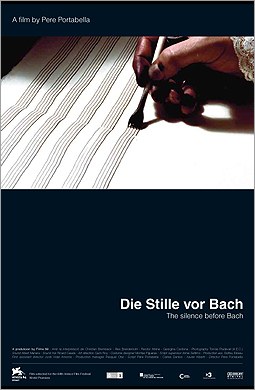
The Silence Before Bach (2007)
Die Stille vor Bach WikiData IMDb TMDB Douban
other title: 巴赫前的寂静 / Die Stille vor Bach …
“The Silence before Bach” is an approach to music and the trades and subjects that surround it through Bach’s works. A look at the profound dramaturgic relationship between image and music where the latter is not merely conceived as subsidiary to the image but as a subject of the narration in its own right. The film springs from a previously defined musical structure. The soundtrack feeds on works by J.S Bach and two of Felix Mendelssohn’s sonatas to create an architectural vault beneath which the story of the film unfolds ; a promenade through the XVIIIth, XIXth and XXIth centuries led by the hand of J.S. Bach.