David Lyon — 作者 (8)
The Culture of Surveillance [图书] 豆瓣
作者: David Lyon 出版社: Polity Press 2018 - 3
From 9/11 to the Snowden leaks, stories about surveillance increasingly dominate the headlines. But surveillance is not only 'done to us' – it is something we do in everyday life. We submit to surveillance, believing we have nothing to hide. Or we try to protect our privacy or negotiate the terms under which others have access to our data. At the same time, we participate in surveillance in order to supervise children, monitor other road users, and safeguard our property. Social media allow us to keep tabs on others, as well as on ourselves. This is the culture of surveillance.
This important book explores the imaginaries and practices of everyday surveillance. Its main focus is not high-tech, organized surveillance operations but our varied, mundane experiences of surveillance that range from the casual and careless to the focused and intentional. It insists that it is time to stop using Orwellian metaphors and find ones suited to twenty-first-century surveillance — from 'The Circle' or 'Black Mirror.'
Surveillance culture, David Lyon argues, is not detached from the surveillance state, society and economy. It is informed by them. He reveals how the culture of surveillance may help to domesticate and naturalize surveillance of unwelcome kinds, and considers which kinds of surveillance might be fostered for the common good and human flourishing.
Surveillance Studies [图书] 豆瓣
作者: David Lyon 出版社: Polity 2007 - 7
The study of surveillance is more relevant than ever before. The fast growth of the field of surveillance studies reflects both the urgency of civil liberties and privacy questions in the war on terror era and the classical social science debates over the power of watching and classification, from Bentham to Foucault and beyond. In this overview, David Lyon, one of the pioneers of surveillance studies, fuses with aplomb classical debates and contemporary examples to provide the most accessible and up-to-date introduction to surveillance available. The book takes in surveillance studies in all its breadth, from local face-to-face oversight through technical developments in closed-circuit TV, radio frequency identification and biometrics to global trends that integrate surveillance systems internationally. Surveillance is understood in its ambiguity, from caring to controlling, and the role of visibility of the surveilled is taken as seriously as the powers of observing, classifying and judging. The book draws on international examples and on the insights of several disciplines; sociologists, political scientists and geographers will recognize key issues from their work here, but so will people from media, culture, organization, technology and policy studies. This illustrates the diverse strands of thought and critique available, while at the same time the book makes its own distinct contribution and offers tools for evaluating both surveillance trends and the theories that explain them. This book is the perfect introduction for anyone wanting to understand surveillance as a phenomenon and the tools for analysing it further, and will be essential reading for students and scholars alike.
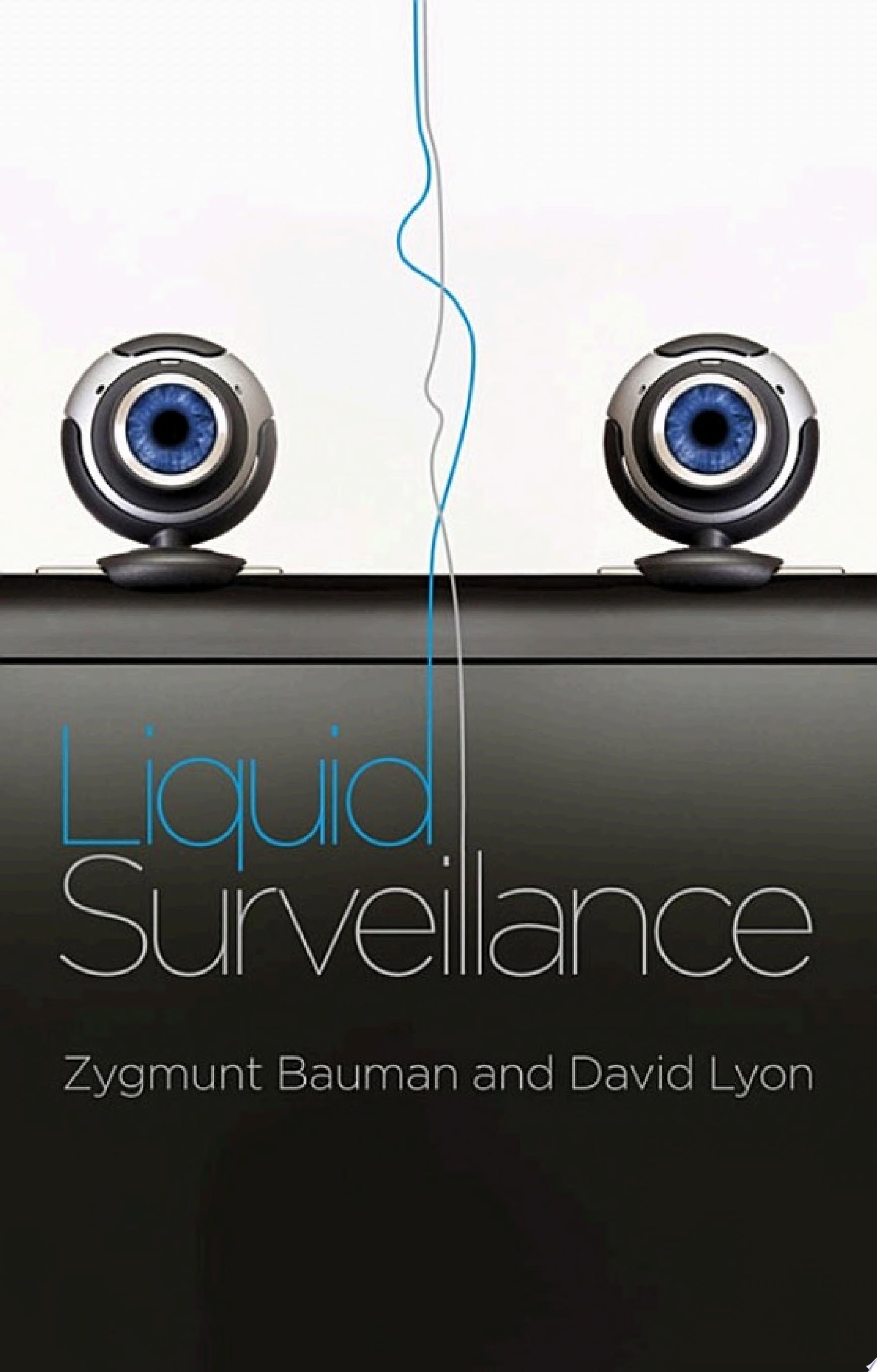
Liquid Surveillance [图书] 豆瓣
作者: Zygmunt Bauman / David Lyon 出版社: Polity 2012
'Today the smallest details of our daily lives are tracked and traced more closely than ever before, and those who are monitored often cooperate willingly with the monitors. From London and New York to New Delhi, Shanghai and Rio de Janeiro, video cameras are a familiar and accepted sight in public places. Air travel now commonly involves devices such as body-scanners and biometric checks that have proliferated in the wake of 9/11. And every day Google and credit-card issuers note the details of our habits, concerns and preferences, quietly prompting customized marketing strategies with our active, all too often zealous cooperation. In today's liquid modern world, the paths of daily life are mobile and flexible. Crossing national borders is a commonplace activity and immersion in social media increasingly ubiquitous. Today's citizens, workers, consumers and travellers are always on the move but often lacking certainty and lasting bonds. But in this world where spaces may not be fixed and time is boundless, our perpetual motion does not go unnoticed. Surveillance spreads in hitherto unimaginable ways, responding to and reproducing the slippery nature of modern life, seeping into areas where it once had only marginal sway. In this book the surveillance analysis of David Lyon meets the liquid modern world so insightfully dissected by Zygmunt Bauman. Is a dismal future of moment-by-moment monitoring closing in, or are there still spaces of freedom and hope? How do we realize our responsibility for the human beings before us, often lost in discussions of data and categorization? Dealing with questions of power, technology and morality, this book is a brilliant analysis of what it means to be watched -- and watching -- today.
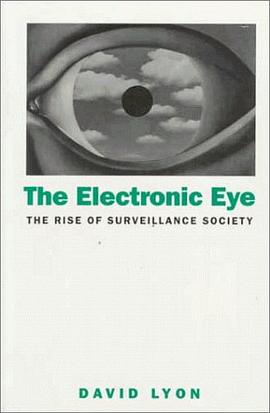
The Electronic Eye [图书] 豆瓣
作者: David Lyon 出版社: Univ Of Minnesota Press 1994 - 3
In this book David Lyon analyses the various contexts of surveillance activity and offers a balanced account of the influence electronic information systems have on the social order today.
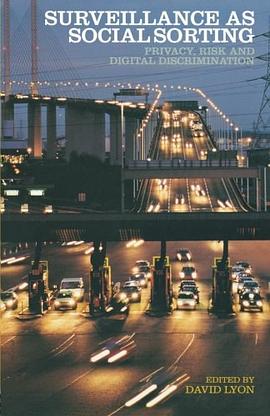
Surveillance as Social Sorting [图书] 豆瓣
作者: David Lyon 出版社: Routledge 2002 - 10
This book examines some crucial aspects of surveillance processes with a view to showing what constitutes them, why the growth of surveillance is accelerating and what is really at stake personally and politically. It scrutinizes individual surveillance systems - CCTV, biometrics, intelligent transportation systems, smart cards, on-line profiling - and discusses their implications for our future. Surveillance as Social Sorting is a fascinating contribution to a relatively new field - surveillance studies.
Liquid Surveillance [图书] 谷歌图书
作者: Zygmunt Bauman / David Lyon 出版社: John Wiley & Sons 2013 - 04
‘Today the smallest details of our daily lives are tracked and traced more closely than ever before, and those who are monitored often cooperate willingly with the monitors. From London and New York to New Delhi, Shanghai and Rio de Janeiro, video cameras are a familiar and accepted sight in public places. Air travel now commonly involves devices such as body-scanners and biometric checks that have proliferated in the wake of 9/11. And every day Google and credit-card issuers note the details of our habits, concerns and preferences, quietly prompting customized marketing strategies with our active, all too often zealous cooperation. In today’s liquid modern world, the paths of daily life are mobile and flexible. Crossing national borders is a commonplace activity and immersion in social media increasingly ubiquitous. Today’s citizens, workers, consumers and travellers are always on the move but often lacking certainty and lasting bonds. But in this world where spaces may not be fixed and time is boundless, our perpetual motion does not go unnoticed. Surveillance spreads in hitherto unimaginable ways, responding to and reproducing the slippery nature of modern life, seeping into areas where it once had only marginal sway. In this book the surveillance analysis of David Lyon meets the liquid modern world so insightfully dissected by Zygmunt Bauman. Is a dismal future of moment-by-moment monitoring closing in, or are there still spaces of freedom and hope? How do we realize our responsibility for the human beings before us, often lost in discussions of data and categorization? Dealing with questions of power, technology and morality, this book is a brilliant analysis of what it means to be watched – and watching – today.
Pandemic Surveillance [图书] 豆瓣
作者: David Lyon 出版社: Polity 2021 - 11
The COVID-19 pandemic has disrupted life as we knew it. Lockdowns, self-isolation and quarantine have become a normal part of everyday life. Pandemic surveillance allows governments and corporations to monitor and surveil the spread of the virus and to make sure citizens follow the measures they put in place. This is evident in the massive, unprecedented mobilization of public health data to contain and combat the virus, and the ballooning of surveillance technologies such as contact-tracing apps, facial recognition, and population tracking. This can also be seen as a pandemic of surveillance.In this timely book, David Lyon tracks the development of these methods, examining different forms of pandemic surveillance, in health-related and other areas, from countries around the world. He explores their benefits and disadvantages, their legal status, and how they relate to privacy protection, an ethics of care, and data justice. Questioning whether this new culture of surveillance will become a permanent feature of post-pandemic societies and the long-term negative effects this might have on social inequalities and human freedoms, Pandemic Surveillance highlights the magnitude of COVID-19-related surveillance expansion. The book also underscores the urgent need for new policies relating to surveillance and data justice in the twenty-first century.