Tariq Ali — Author (7)

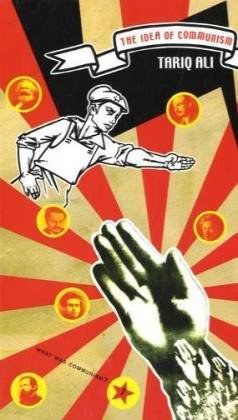
The Idea of Communism (What Was Communism?) [Book] Douban
November 9, 2009 will mark 20 years since the fall of the Berlin Wall, the monumental event that signaled the beginning of the end of Communism in the former Soviet Union. Yet, why was this collapse of Communism considered final, but the many failures of capitalism are considered temporary and episodic? In The Idea of Communism, Tariq Ali addresses this very question.
The idea of Communism, argues Ali, was simple and noble. The Communist Manifesto, which advocated the creation of a society based on the principle of “from each according to his ability, to each according to his need” rather than a system based on greed and profit, appealed to millions all over the globe. However, Ali argues that the vision of society adumbrated by the founders of Communism was a far cry from what became known as actually existing socialism in the Soviet Union and China. The Communist system that developed ignored Engels’s belief that a workers’ movement and its victory were inconceivable without freedom of the press and assembly. This freedom, Engels insisted, “is the air it needs to breathe.
Here, in a thought-provoking re-evaluation, Ali argues that a new form of socialism and global planning is vital to save the planet from capitalist and environmental degradation.
The idea of Communism, argues Ali, was simple and noble. The Communist Manifesto, which advocated the creation of a society based on the principle of “from each according to his ability, to each according to his need” rather than a system based on greed and profit, appealed to millions all over the globe. However, Ali argues that the vision of society adumbrated by the founders of Communism was a far cry from what became known as actually existing socialism in the Soviet Union and China. The Communist system that developed ignored Engels’s belief that a workers’ movement and its victory were inconceivable without freedom of the press and assembly. This freedom, Engels insisted, “is the air it needs to breathe.
Here, in a thought-provoking re-evaluation, Ali argues that a new form of socialism and global planning is vital to save the planet from capitalist and environmental degradation.
The Dilemmas of Lenin [Book] Douban
Critical Theory at a Crossroads [Book] Douban
We are living in an age of crisis—or an age in which everything is labeled a crisis. Financial, debt, and refugee “crises” have erupted. The word has also been applied to the Arab Spring and its aftermath, Brexit, the 2016 U.S. election, and many other international events. Yet the term has contradictory political and strategic meanings for those challenging power structures and those seeking to preserve them. For critics of the status quo, can the rhetoric of crisis be used to foment urgency around issues like climate change and financialization, or does framing a situation as a “crisis” play into the hands of the existing political order, which then seeks to tighten the leash by creating a state of emergency?
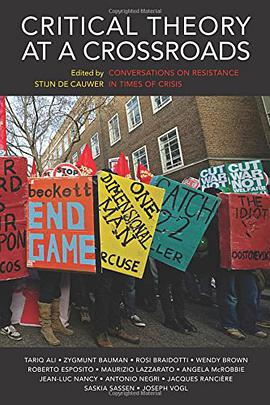
Critical Theory at a Crossroads presents conversations with prominent theorists about the crises that have marked the past years, the protest movements that have risen up in response, and the use of the term in political discourse. Tariq Ali, Rosi Braidotti, Wendy Brown, Maurizio Lazzarato, Angela McRobbie, Jean-Luc Nancy, Antonio Negri, Jacques Rancière, Saskia Sassen, and Joseph Vogl offer their views on contemporary challenges and how we might address them, candidly discussing the alternatives that new social movements have offered, alongside an exchange between Zygmunt Bauman and Roberto Esposito on theories of community. Sparring over crucial developments in these past years of catastrophe and the calamity of everyday life under capitalism, they shed light on how crises and the discourse of crisis can both obscure and reveal fundamental aspects of modern societies.
Critical Theory at a Crossroads presents conversations with prominent theorists about the crises that have marked the past years, the protest movements that have risen up in response, and the use of the term in political discourse. Tariq Ali, Rosi Braidotti, Wendy Brown, Maurizio Lazzarato, Angela McRobbie, Jean-Luc Nancy, Antonio Negri, Jacques Rancière, Saskia Sassen, and Joseph Vogl offer their views on contemporary challenges and how we might address them, candidly discussing the alternatives that new social movements have offered, alongside an exchange between Zygmunt Bauman and Roberto Esposito on theories of community. Sparring over crucial developments in these past years of catastrophe and the calamity of everyday life under capitalism, they shed light on how crises and the discourse of crisis can both obscure and reveal fundamental aspects of modern societies.
Fear of Mirrors [Book] Douban
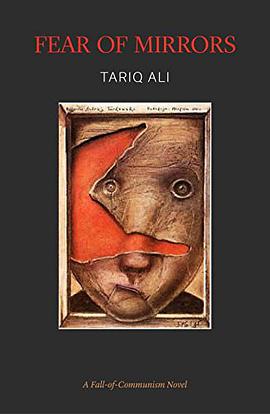
With the fall of Communism, East German dissident Vlady Meyer’s life begins to fall apart. As the German nation unifies, his wife splits up with him. He loses his university job now that the times have turned against his Marxist views. He wants to tell his alienated son, Karl, what his family’s long and passionate involvement with communism really meant, but he can’t. Vlady’s story is interwoven with that of Ludwik, Kim Philby’s recruiter, and his four comrades, brilliant Galician secret agents working for the Fourth Department of the Red Army.
Thoughtful and intimate, Fear of Mirrors unfolds an expansive plot that touches on the greatest political upheavals of the twentieth century. Its protagonist captures the hopes once roused by the Bolshevik Revolution and the hard realities that followed; Vlady Meyer is a mirror reflecting impeccably the intellectual milieu of an incomparable period.
Thoughtful and intimate, Fear of Mirrors unfolds an expansive plot that touches on the greatest political upheavals of the twentieth century. Its protagonist captures the hopes once roused by the Bolshevik Revolution and the hard realities that followed; Vlady Meyer is a mirror reflecting impeccably the intellectual milieu of an incomparable period.