Jaromír Hanzlík — Actor (21)

Movie

Summer with the gentleman (2019)
Léto s gentlemanem WikiData IMDb TMDB
other title: Léto s gentlemanem
Anna spends every summer with her husband in a neighborhood a few dozen kilometers outside Prague. They've been together for ages, so their marriage, as is so often the case, has become routine and stereotyped. For a long time, the man has divided his time fairly between drinking with friends in the pub and making ship models of matches in bottles; His wife is virtually invisible to him. Anna spends several days each summer and enjoys regular meetings with her friends and colleagues who visit her in picturesque Central Bohemia on bike tours around Kamýk Castle.

Movie

Oldrich and Bozena (1985)
Oldrich a Bozena IMDb Douban
other title: Oldrich a Bozena / 奥尔德里奇和博泽纳 …
"At the turn of the 10th and 11th centuries Boleslav's kingdom fell apart in the fratricidal war between the Premyslovci and the other clans the main profiteer of this being the German emperor. At that time it seemed as if the Czech state and the lineage of its princes was awaiting its end..." It is with these words that the tale of this film begins, whose narrative is based upon the the play by Frantisek Hrubín of the same name.

Movie

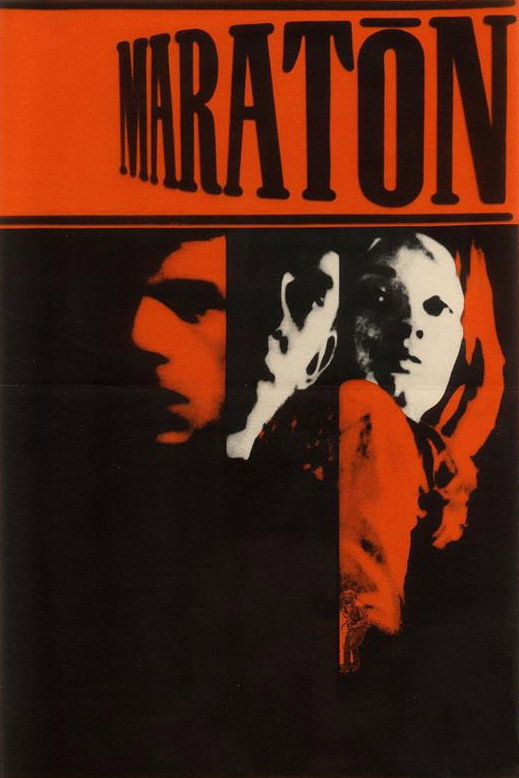
Marathon (1968)
Maratón WikiData IMDb TMDB
other title: Maratón
It is 5 May 1945 and the uprising against the hated German occupiers has broken out in Prague. The Czech guards open the gate of the Pankrác prison to allow the prisoners to escape en masse. Many of them are shot dead by the German guards but young Ruda (Jaromír Hanzlík) manages to run away. He is taken care of by one of the Prague fighters, concierge Kytka. Kytka hides him in the flat of the house's owner where only the young maid Karla (Jana Brejchová) is left, ordering her to take care of Ruda.

Movie

钻石利剑 (1993)
Diamond swords Douban
other title: Diamond swords / Les épées de diamants …
This movie deals with a young soldier of the German army during World War II. Being one of the best pilots of the Luftwaffe, he receives the ultimate decoration from the hands of Hitler: the Diamond Swords. After the ceremony, Hitler tells him about his plans of holocaust and mass murder. The young soldier remains shocked by this interview and Hitler's aims. He meets an attractive Swedish woman working for the Red Cross and he quickly falls in love with her. Actually, she's part of an underground organization working against the Nazi regime. They finally go to Italy, where he's meant to receive another decoration by Mussolini. There, an Italian officer explains him that his last name "Avignon" has Jew origins...

Movie

How to Drown Dr. M. or the End of Water Spirits in Bohemia (1974)
Jak utopit doktora Mrácka aneb Konec vodniku v Cechách Douban
瓦茨拉夫·沃利契克 actor: 亚罗米尔·汉兹利克 / 利布谢·沙弗兰科娃 …
other title: 如何淹死M博士或波西米亚水精灵的终结 / Jak utopit doktora Mrácka aneb Konec vodniku v Cechách
There are still water spirits among us. One group lives in Prague, led by Mr. Wassermann, who is using his wife's family as a servants. All they need is their old house near the river. But the house is to be demolished. They have to stop it. And the only way is to drown Dr. Mrácek, who is responsible for the demolition. But he falls in love with Wassermann's niece Jana. He changes to fish, is mistaked for water spirit from Germany, is drowned and revived again. The other problem is the flour with ears... and so on... =) i realised that there are many fans of oldskool czech comedies from 70's like Limonadovy Joe, Adela jeste nevecerela, The Mysterious Castle In The Carpathians and other.... this one is the same cup of tea. Vaclav Vorlicek keep the style of Oldrich Lipsky and mixed great romantic-comedy-fantasy movie about hard life of czech water spirits... i hope you enjoy it. Whole name of this piece is: "How to drown Dr. Mracek aka the end of water spirits in Bohemia"

Movie

Every Young Man (1967)
Každý mladý muž Douban
other title: 每个年轻人 / Každý mladý muž …
Jurácek's feature debut is shot in two parts. In the first, a corporal accompanies a new recruit with a sore Achilles tendon for his physical, and all the girls or young women they see are played by the same actress (Ruzickova). In the longer second segment, shot with the help of the Czechoslovakia army, the soldiers pass the time during basic training and maneuvers by talking about girls. At the end of their training they plan a large dance on their base with women bused in from the local village.

Movie

The End of Old Times (1989)
Konec starých časů Douban
★ 7.6 5 ratings
伊日·门泽尔 actor: 约瑟夫·阿布汉姆 / 马里安·洛布道 …
other title: 再见,旧时光 / Konec starých časů …
1918年,捷克斯拉夫成立,这是捷克人民首次拥有自己的祖国。伊利·曼佐藉古喻今地运用了出身卑微、亟欲挤身上流阶层的暴发户,总是能让女人们神魂颠倒的风流公爵,一群被利欲薰心的凡夫俗子,以及热恋中的年轻男女,编织出这部甚具魅力的卧房喜剧。新时代来临了,还是美好的往日不复存在呢?曼佐完成本片的同年,捷克也发生了“丝绒革命”。

Movie

Contract with the Devil (1968)
Zmluva s diablom Douban
Jozef Zachar actor: 西尔薇·图尔博娃 / Viera Simekova …
other title: 魔鬼的契约 / Zmluva s diablom …
"It’s kind-of small town and big boredom…” is the sharp judgment that a character in Jozef Zachar’s film, Contract With the Devil, passes on any Slovak town (including its capital city). At the point when storyline examines and explains the events that have already taken place, this comment reveals the main theme of the film, namely the forms of our boredom, the protagonists of our boredom, and what to do about our boredom. It is a theme that many viewers by the end of the 1960s appreciated as interesting, provocative, or daring. However, Zachar’s film certainly does not mark a breakthrough in filmic resolution of the theme. More than anything else, this trifle of a comedy—popular with viewers—is an interesting and emblematic battlefield of carelessly wasted opportunities. It holds viewers’ attention through a series of mere hints at insubordination to the societal constraints imposed or petrified by Communism. But the unfinished, careless filmic execution of those hints shows in high definition, so to say, the limits of many filmmakers’ thinking during the precious period of relaxed Communism in the 1960s. The storyline is mundane, or as Pavel Branko characterized it, “a prurient story calculated for commercial success. [1] ” It begins with the discovery by high-school officials that five female students left erotic photos (presumably theirs) in a classroom, along with a contract with the devil that they would lose their virginity before graduation. Their parents’ reactions range from “Our Eva has the best upbringing, austere and Christian… and Communist!” to “I used to have a body like this, too!” The parents try to annul the contract with the devil by their own avowal to supervise and discipline their offspring more severely. But the girls run away from the gynecological exam that was to confirm their virginity, and from their model homes and school. What follows is a series of episodes of their “courageous,” hopeful, as well as embarrassing attempts to breech the interdiction imposed by the two basic educational institutions—school and family. The film’s wasted potential is most palpable in two scenes that strive to assault the viewers’ presumed, unprincipled, small-town provincialism, summed up in the phrase “don’t get involved and you’ll be fine.” These scenes are “counterattacks” against the operation of schools and families. The first scene is a variation on the device of a film-within-a-film: a family screens their “morally uplifting” 16-mm home movie for Marcela, one of the girls. The father operates the small gadget, the family projector, hoping to affirm the workings of the basic societal contraption, the family. However his projector, just like his family, keeps breaking off. The second scene is the party at the home of the son of “big-league parents,” where Emma, another of the girls, performs a striptease. According to The History of Slovak Film, at that time “formerly quite prudish filmmaking, which, of course, tabooed a naked female body in the name of Communist—and Catholic—norms, now incorporated striptease and love scenes that were not exactly copied from a handbook of appropriate behavior.”[2] But the erotic charge of the scene is not the only issue. The interesting, tension-creating polarization between the characters (abandon versus corruption), the use of characteristic dialogue, and the overall, vividly acted “playfulness”—all of these contain the potential for a better film. The daring culmination of the scene is not the image of a naked student, but the heretical burning of a cross in a glass of cognac that is set on fire. The paradoxical reception of Contract with the Devil at the time of its release is often forgotten. While Juraj Jakubisko’s Crucial Years (also known as Christ’s Years; Kristove roky, 1967), released in the same year, was met with acclaim by reviewers and has remained a common topic in works on Slovak cinema, at the same time its popular reception was lukewarm, attendance low, and some viewers even criticized it as immoral. By comparison, Contract with the Devil generated good ticket sales. On the one hand, this was indicative of the level of the relaxation of communism in 1967, but also, on the other, of the degree to which Contract with the Devil was behind the times: the film, which clearly intended to offend what it saw as ossified prudish morality, actually received praise from Ctibor Štítnický, the communist-appointed Director of the Koliba studios, as a “decent” film, both in terms of its commercial success and its content. [3] Paradoxically then, Contract with the Devil, conceived as a piercing thematic breakthrough, merely became a popular entertainment film by the time of its release due to the quick pace of political changes in the country, and it did not contain enough artistry to sustain a reputation among cinéastes afterwards.


Movie

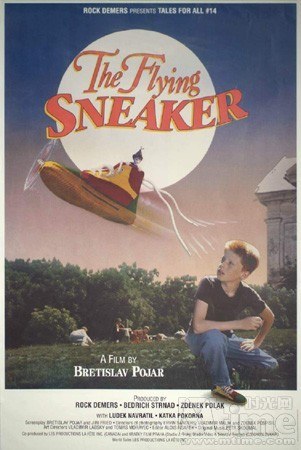
The Flying Sneaker (1990)
Motýlí cas Douban
布雷梯斯拉夫·波杰 actor: Ludek Navratil / Katerina Machácková …
other title: 飞翔的梦 / Motýlí cas …
十一岁的阿历克是个性格孤僻的孩子,他白天的时候总是很想念当随船大夫的父亲,希望像父亲一样四海为家,到处去旅行……有一天,一位陌生人给阿历克带来他父亲送他的礼物。这是一包他父亲搜集的「蝶蛹」卡通画。 第二天清晨醒来,阿历克发现满屋子飞舞著五颜六色的蝴蝶,其中之一不同寻常,大大的双眼,长长的头发,她是一个「蝶仙」小精灵,阿历克称她为《乌鲁咕》,她有著神奇的力量,能使任何东西飞起来,阿历克和她形影不离,上学、睡觉都带著她。